


Anima arrives as a sci-fi drama that privileges pulse over pyrotechnics, a road movie where the big effects are emotional rather than digital. Centered on a terminal client opting to upload his consciousness and the young engineer tasked with ferrying him to that irreversible appointment, the film turns a speculative premise into a study of longing, regret, and the fragile bonds that form when time is almost up.
A High-Concept Premise Anchored In Intimacy
Writer-director Brian Tetsuro Ivie frames the future as familiar: ride-share seats, snack wrappers, side streets you could swear you’ve taken before. In that lived-in context, Beck, a technically gifted but socially docked junior hire, is told to retrieve Paul, a wealthy manufacturer who has purchased a one-way ticket to a server-side afterlife. She is the courier; he is the cargo; the company line is that the copy will be perfect and the offboarding humane.
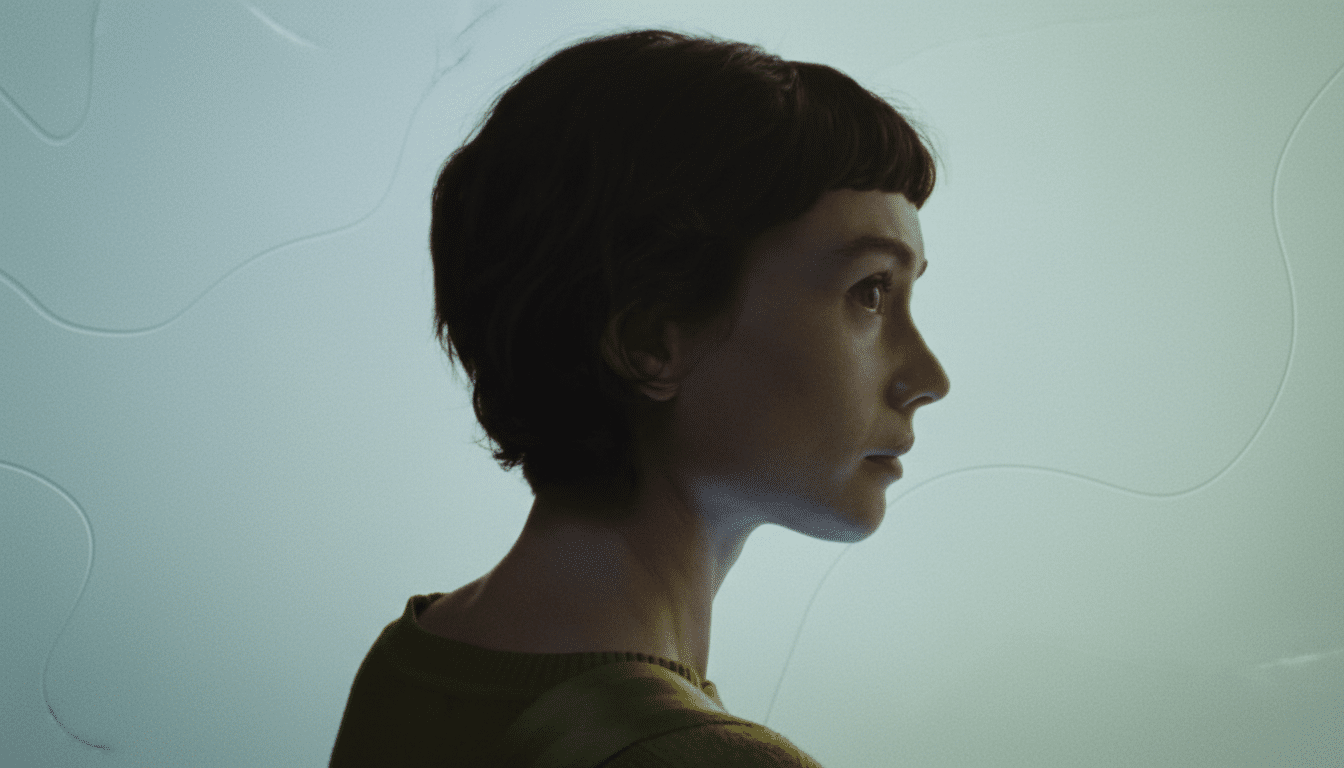
Of course, nothing stays procedural. Paul insists on detours to reconcile what can be reconciled and to inventory what can’t. Beck bristles, then listens. The pair move through homes and haunts populated by people who are vividly, messily alive—friends, colleagues, antagonists—where every handshake and hesitation doubles as an ethical checkpoint. The premise of digital immortality is the hook; the human inventory is the point.
By keeping the tech largely offstage—no white rooms full of blinking servers, few exposition dumps—Anima resists the urge to lecture. It understands that the most persuasive science fiction is often financed by ordinary texture: the sting of an old slight, the pull of a favorite song, the way a stranger’s silence can say more than a sales pitch.
Performances And Direction That Keep It Human
Sydney Chandler’s Beck carries the quiet posture of someone who has learned to solve problems faster than people. Her reactions—tight smiles, darting calculations—slowly unspool as the drive becomes personal. Opposite her, Takehiro Hira plays Paul not as a futurist evangelist but as a man bargaining with legacy, toggling from cantankerous to contrite without losing the throughline of pride. Marin Ireland, in a coolly exact turn as a company executive, embodies the corporate rationales that make irreversible choices sound routine.
Ivie’s control of tone is the film’s stealth special effect. Dialogue starts clipped, then warms, then wavers. The palette shifts from cool greys to domestic ambers as the car’s stops put distance between pitch deck promises and kitchen-table truths. Even the soundscape is selective—sometimes a pop track sneaks in with a grin, other times the road hums and a river whispers. It’s worldbuilding that whispers, not shouts.
Technology Themes With Real-World Resonance
Anima’s speculative engine—consciousness capture paired with planned death—sits credibly in the slipstream of today’s neurotech and AI debates. Brain-computer interface companies like Neuralink and Blackrock Neurotech have already publicized first-in-human implants, while mainstream companion chatbots have made synthetic intimacy a consumer product. A Pew Research Center survey found 52% of Americans are more concerned than excited about the spread of AI, a mood that tracks with the film’s wary curiosity rather than breathless hype.

The film nods to the culture we’ve built around talking machines—an employee chatting with a character-inspired bot feels equal parts sweet and unsettling—while steering clear of techno-moral panic. Instead, it asks an older question with new tools: if you could edit your ending, would that repair what came before? Viewers who admire character-first sci-fi like Her, After Yang, or Black Mirror’s San Junipero will recognize the tradition: intimate dilemmas draped over near-future scaffolding.
Ethically, Anima lands on ambiguity with intention. It respects how end-of-life choices are adjudicated in the real world—across policy, medicine, and family rooms—without litigating them on-screen. What matters is how the prospect of a “perfect copy” reframes accountability. If a digital you carries your preferences and memories, does confession gain or lose urgency? The film’s answer is to let the living keep their weight.
A Road Movie About Risking Human Connection
Beneath the speculative packaging is a time-honored narrative: two strangers, one car, a shared deadline. The detours function like stress tests for empathy, mapping how proximity can convert contempt into comprehension. By the time the pair near their destination, what’s at stake is less the technology and more the tender algebra of who owes whom what before goodbye.
That structure lets Anima avoid the spectacle trap that snares so much tech-forward cinema. When revelation comes, it’s not accompanied by swirling code or a monologue about the cloud; it’s a look, a choice, the soft click of a door. The film trusts small gestures to carry big questions, and it’s right to.
Verdict: A Warm, Thoughtful Sci-Fi Journey Worth Taking
Anima is lean, assured science fiction that privileges feeling over flash without skimping on ideas. Chandler and Hira give performances calibrated to register micro-shifts in trust, and Ivie’s direction corrals an ethically thorny premise into something accessible, meditative, and, crucially, warm. For audiences weary of tech-as-dystopia and craving stories where the future is a mirror, not a maze, this is a journey worth taking.

