


Amazon is widening its healthcare footprint by rolling out its Health AI assistant on Amazon.com and within the Amazon app, moving the tool beyond its initial home inside One Medical. The company says the assistant can field everyday health questions, explain records, manage prescription renewals, book appointments, and connect users to clinicians—without requiring a Prime membership or a One Medical subscription.
What Amazon’s Health AI Assistant Can Do for Users Daily
Health AI is built to handle general queries out of the box, like what a lab value means or how to manage common symptoms. Amazon says the assistant becomes more useful when users grant permission to review personal health data, enabling tailored guidance that references actual lab results, diagnoses, and medication lists.
- What Amazon’s Health AI Assistant Can Do for Users Daily
- How Personalization and Interoperability Power Tailored Care
- Privacy Guardrails and Risks of AI in Consumer Health
- Access and Pricing for Amazon’s Health AI Assistant Service
- Why This Move Matters for Virtual Care and Patient Access
- Competitive Landscape for Health AI Assistants and Tools
- What to Watch Next as Amazon Expands Its Health AI Plans
The tool can also take actions: renewing eligible prescriptions, scheduling care, and facilitating connections to One Medical providers when professional help is warranted. Example prompts include “Can you explain my recent cholesterol results and what they mean for me?” or “I’m feeling congested and have a sore throat. What should I do?”
How Personalization and Interoperability Power Tailored Care
Amazon says users can authorize access to their records through established health information exchange networks that power secure sharing among hospitals, labs, and clinics. That interoperability is crucial: it lets an assistant interpret a CBC, reconcile medications from multiple providers, and flag potential interactions in context rather than in isolation.
Under the hood, this approach aligns with national efforts to make data portable and useful across systems, including frameworks championed by the Office of the National Coordinator for Health IT. Done well, it can reduce the friction patients face when navigating siloed portals, scattered PDFs, and opaque lab ranges.
Privacy Guardrails and Risks of AI in Consumer Health
Large language models in healthcare raise legitimate privacy questions, and researchers have cautioned that user conversations can be repurposed to improve systems. Amazon says it trains Health AI on abstracted patterns rather than directly identifiable information—learning, for instance, from recurring medication-interaction questions without storing names.
Consumers should know that HIPAA protections typically apply to covered entities like providers and health plans, not always to consumer apps. The Department of Health and Human Services’ Office for Civil Rights and the Federal Trade Commission have both reminded companies that transparency, consent, and breach notification rules still apply. Before granting access, users should review the product’s privacy notices, data retention practices, and opt-out controls.
Access and Pricing for Amazon’s Health AI Assistant Service
Anyone can sign up for Health AI through Amazon’s health portal and will receive an email when access is enabled. After creating or signing in to a personal Amazon Health profile, users can start chatting from the website or the app—no Prime identity required.
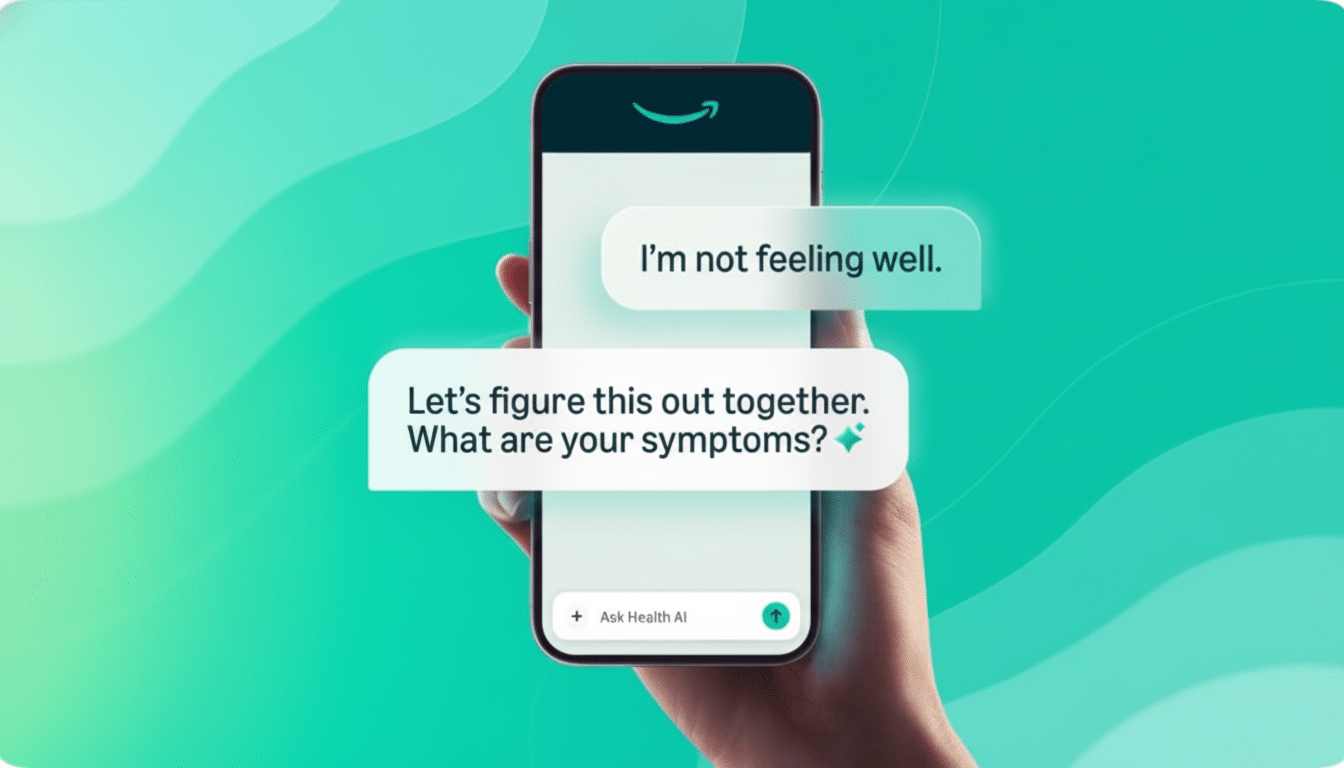
When professional care is needed, Health AI can route to One Medical. Amazon says Prime members in the U.S. get up to five free direct-message consultations covering dozens of common conditions, from UTIs and pink eye to allergies and reflux. Non-Prime users can connect via a pay-per-visit option.
Why This Move Matters for Virtual Care and Patient Access
Bringing Health AI to Amazon’s main surfaces puts a triage and navigation layer where millions already shop and manage subscriptions. It also ties together assets Amazon has been assembling—primary care via One Medical and pharmacy fulfillment—making it easier to go from question to action without juggling multiple logins.
The timing tracks broader shifts. The CDC has reported that roughly 37% of U.S. adults used telemedicine within a year, and industry estimates suggest as much as $250 billion in care spending could migrate to virtual or near-virtual models. But accuracy and safety are paramount: a JAMA Internal Medicine study found that AI-generated responses to patient questions were often rated highly for quality and empathy, yet they are not a substitute for clinical judgment.
Competitive Landscape for Health AI Assistants and Tools
Health AI enters a crowded field. OpenAI has introduced a health-focused version of its chatbot, and Anthropic has unveiled a product aimed at healthcare workflows. The differentiator for Amazon is distribution and integration: a consumer-grade assistant embedded in a retail app, with warm handoffs to a nationwide primary care network and a pharmacy service already capable of home delivery.
Regulators are also watching. The FDA has outlined pathways for AI and machine learning in software as a medical device, while the ONC’s recent rules emphasize transparency and safety for clinical algorithms. Although a general-purpose assistant answering health questions is not the same as a diagnostic device, the bar for reliability will rise as these tools influence real medical decisions.
What to Watch Next as Amazon Expands Its Health AI Plans
Key questions now: how quickly Amazon deepens links to electronic records via national exchanges, whether employers and insurers adopt the assistant for member navigation, and how well the system handles edge cases beyond common conditions. Integration with voice interfaces and tighter ties to pharmacy refills and prior authorizations would signal a more ambitious care platform.
If Amazon can pair trustworthy guidance with seamless handoffs to clinicians and medications—and explain its data practices in plain language—it could make the first stop for everyday health questions as simple as opening the shopping app most people already use.

