


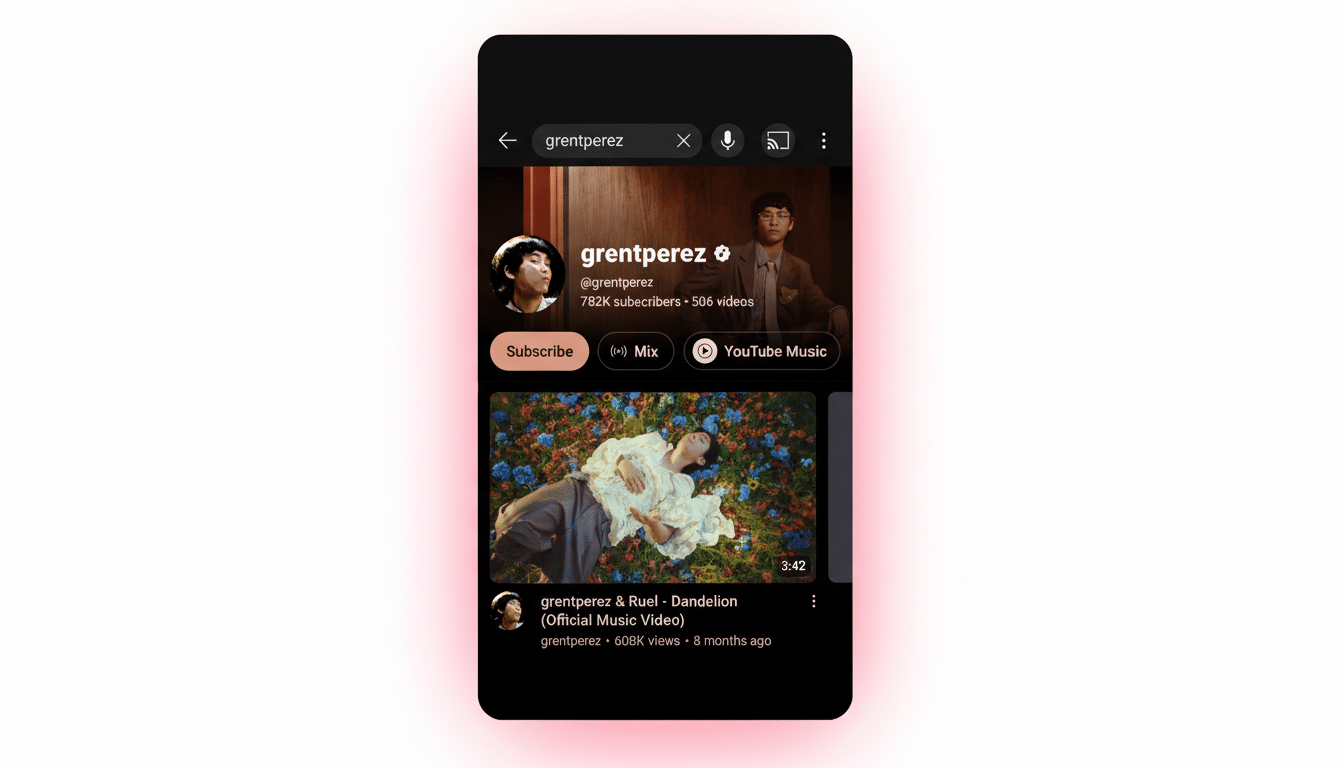
YouTube is quietly making binge-listening to a single artist effortless. A new Station badge is appearing on select artist pages and search results, signaling a 24/7 live stream that cycles through only that artist’s official music videos, complete with a live chat room. It’s a lean-back, one-click way to immerse in a catalog without algorithmic detours.
Unlike the platform’s auto-generated Mix playlists, which blend tracks from similar artists, Stations are tightly scoped: one artist, all day, on loop. Early sightings by users suggest the feature is rolling out gradually, with the interface behaving like any live stream—playback starts instantly, chat sits alongside, and the queue refreshes continuously.
What Artist Stations Are And How They Work
Stations behave like perpetual broadcasts of an artist’s catalog, stitching together official videos, lyric videos, and potentially live performances into a continuous flow. The Station badge helps fans spot these streams quickly in search or on artist channels, and entry is frictionless—tap the live thumbnail and the music is on.
Because Stations live inside YouTube’s standard live framework, the social layer matters. Live chat invites fans to react together, request deep cuts, and surface shared memories in real time—something static playlists can’t match. That ambient community vibe mirrors the energy of the platform’s long-running genre streams, but now it’s purpose-built for individual artists.
How It Differs From Mixes And Artist Radio
YouTube’s Mix and YouTube Music’s Radio features are discovery engines, adding adjacent artists to keep sessions fresh. Stations do the opposite: they remove decision fatigue and keep the focus on a single catalog. If you join a Radiohead Station, for example, you’ll only see Radiohead videos—no algorithmic hops to peers or influences.
This approach suits two use cases. First, lean-back fans who want reliable background music from a favorite act. Second, completists revisiting a full body of work. The live wrapper also avoids the playlist “end of queue” moment; the feed simply keeps rolling.
Why It Matters For Fans And Artists Alike
For listeners, Stations lower the cost of choosing. Behavioral research shows that too many options can shorten sessions; a single-artist stream can extend playtime by keeping decisions out of the way. YouTube has said more than 2 billion logged-in users consume music content on its platform each month, and even small gains in session length at that scale are significant.
For artists and labels, Stations could re-energize the back catalog. Luminate’s recent reporting indicates catalog tracks account for well over 70% of on-demand streaming in the US, underscoring the value of structured, always-on listening. A Station aggregates watch time, sustains comment activity, and may create new monetization surfaces typical of live formats, while reinforcing a single, brand-safe environment for advertisers.
The social layer is strategic, too. Real-time chat turns passive listening into a micro-community event, boosting sentiment and giving teams a direct read on fan reactions. It’s a lightweight way to prime audiences before a tour, anniversary release, or box set drop.
How It Stacks Up To Spotify And Apple Music
Rivals offer algorithmic artist stations in audio apps, but the video-plus-chat combo is YouTube’s advantage. Spotify’s Artist Radio and Apple Music’s similar features are great for discovery, yet they don’t deliver the shared presence of a live room or the visual storytelling of official music videos. Stations also tap into YouTube’s strength as a video-first music platform, where a single iconic video can pull viewers into extended sessions.
This plays neatly alongside YouTube Music’s growth. Google has announced YouTube Music and Premium have surpassed 100 million subscribers, and the main app continues to be a dominant destination for music video viewing. Stations bridge those worlds, leaning into video engagement while capturing the passive listening common on audio services.
Early Limitations And What To Watch For Next
Not every artist appears to have a Station yet, and the exact eligibility criteria remain unclear. Rollout pace, regional availability, and the extent of catalog included may vary based on rights and content policies. Because chat is live, moderation tools and slow mode settings will matter for larger fan bases.
YouTube recently addressed a quirky live chat issue that had interfered with English messages, a reminder that the live stack is evolving. As Stations expand, watch for experiments with scheduling themed blocks, integrating Shorts for interludes, or surfacing superfan badges and membership perks to deepen community ties.
Bottom line: Stations are a simple idea with outsized potential. They streamline the most common fan request—play everything from my favorite artist—while giving creators a 24/7, community-driven surface that keeps catalogs alive between big releases. If discovery drives growth, focus fuels loyalty, and Stations are built squarely for the latter.
