


Seen up close on the show floor at Mobile World Congress in Barcelona, Xiaomi’s Vision Gran Turismo hypercar concept looks even faster than it does in press renders. The bodywork hunkers low, with long, uninterrupted surfaces and razor-sharp aero details that read like a manifesto against drag. It is not a family EV with sporty aspirations; it is a ground-hugging sculpture built to slice air and light in equal measure.
Aero-First Design Built for Speed and Stability
The proportions are dramatic: ultra-low roofline, wide stance, and extensive channeling that guides airflow from nose to tail. Deep side tunnels, an aggressive rear diffuser, and a nose that seems to fuse splitter and wing signal a car designed from the wind tunnel outward. Xiaomi highlighted a low drag coefficient, though it did not share a figure. For context, the Mercedes-Benz Vision EQXX targets around 0.17 in testing, the Lucid Air is rated at 0.197, and the Mercedes EQS posts 0.20—benchmarks that help frame just how ambitious this concept aims to be.
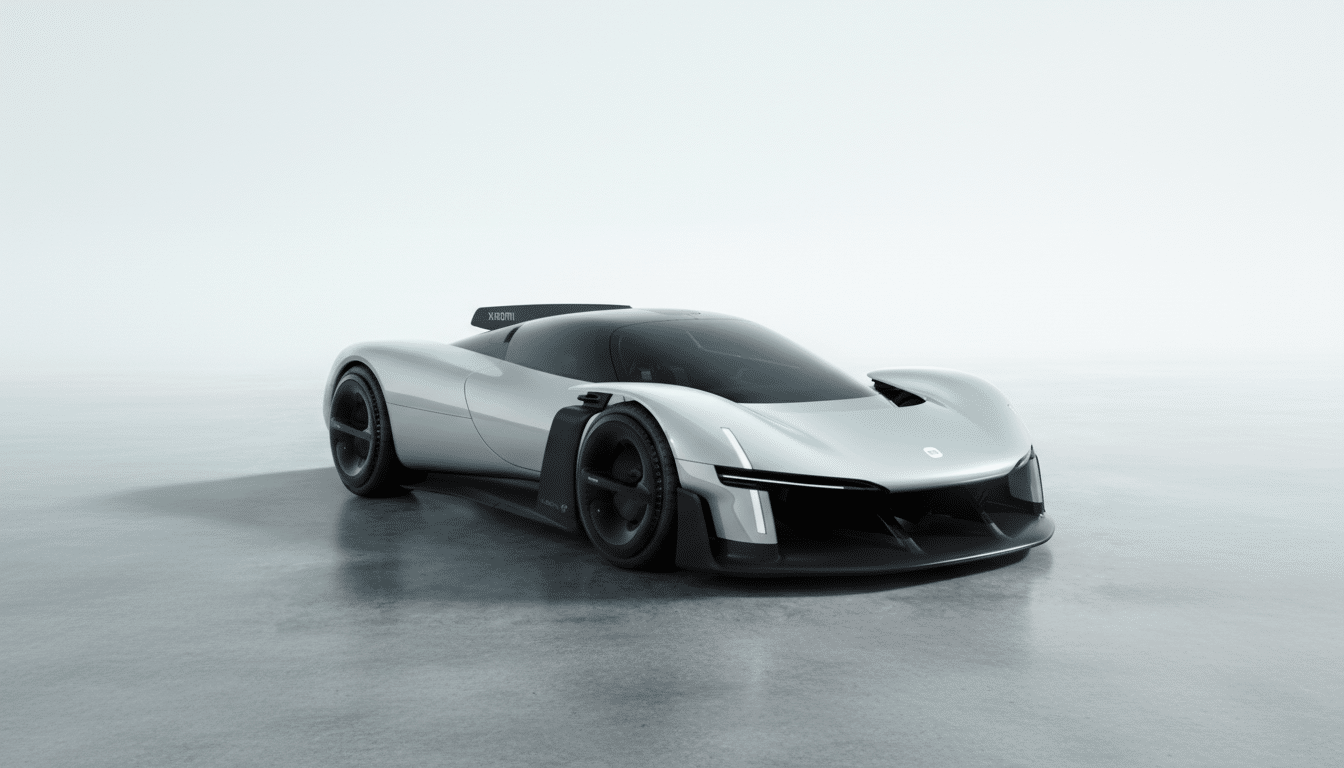
The “cocoon-shaped” cabin remained closed to attendees, but the greenhouse’s tight taper and minimal frontal area suggest interior packaging was compromised in service of aero purity. That decision aligns with the hypercar brief: prioritize airflow management, cooling, and stability over everyday practicality.
Made For Gran Turismo With Real-World Presence
The Vision Gran Turismo name places this concept inside Polyphony Digital’s long-running program, led by Gran Turismo creator Kazunori Yamauchi. The initiative has coaxed spectacular one-offs from top-tier automakers—Mercedes-AMG, Audi, Jaguar, Bugatti among them—into the Gran Turismo games, often with physics tuned from real design data. Xiaomi’s entry signals a consumer electronics giant confident enough to play on the same design stage as legacy performance brands.
Expect the car to arrive as a drivable model in Gran Turismo 7, where players will be able to interrogate its aero and balance virtually. Historically, Vision Gran Turismo projects rarely reach production; instead, they serve as rolling (and digital) manifestos that preview design languages, explore new materials, and test daring proportions without the drag of homologation rules.
Xiaomi’s Ecosystem Angle Meets Auto Tech
Beyond the form, Xiaomi framed the concept as a connected node in its broader device ecosystem. That pitch is familiar from the company’s phones, wearables, and smart-home gear: seamless handoff of media, cross-device authentication, and a consistent UI layer. The car’s software experience would logically tie into HyperOS, the firm’s cross-category platform, with features like digital keys, phone-as-dashboard extensions, and synchronized infotainment—ideas already maturing in premium EVs and well within Xiaomi’s software wheelhouse.

MWC is the ideal stage for that message. The show has evolved from a smartphone fest into a proving ground for edge computing, AI, and vehicle connectivity. A hypercar concept telegraphs where Xiaomi thinks those threads converge: high-bandwidth telemetry, rich graphics pipelines, and latency-sensitive control loops that benefit from its consumer tech DNA.
Specs and Performance Still Under Wraps at MWC
Key numbers remain unspoken: motor count, total output, battery capacity, curb weight, top speed, and estimated range. That silence is true to the Vision Gran Turismo tradition, where form and philosophy lead, and final spec sheets are secondary. Even so, the surfacing around the front ducts and rear haunches implies serious thermal management—clues that the virtual car in-game may lean on extended high-load performance rather than a single drag-strip hero run.
If Xiaomi wants the design narrative to feel credible to sim racers, it will likely publish at least baseline aero and weight targets alongside the Gran Turismo rollout. In the broader EV field, efficiency is the new horsepower; shaving a few counts of drag can translate into tangible gains in range, lap consistency, and cooling headroom.
Why It Matters for Xiaomi and the Future of EV Design
The concept doubles as brand signal. Xiaomi’s first production EV, the SU7, drew large early order volumes in China according to company disclosures, and the firm has been vocal about building its automotive credibility. A halo-grade Vision Gran Turismo car amplifies that effort at a venue crowded with global media and developers. It tells a story about software-defined vehicles, industrial design ambition, and a company eager to compete for attention well beyond smartphones.
For enthusiasts, the takeaway is simple: the Vision Gran Turismo looks quicker in person because its surfacing and stance have been optimized to an extreme rarely seen outside wind tunnels and racing paddocks. For Xiaomi, the lesson is strategic: in a market where design, UI, and efficiency co-author performance, a concept that excites gamers and engineers alike is worth its floor space in Barcelona—and its screen time on millions of consoles.
