


Elon Musk’s artificial intelligence startup is bleeding founders. A string of exits has cut xAI’s original founding roster roughly in half, with two departures announced in quick succession. The pattern is no longer a blip—it’s a trend that raises uncomfortable questions about retention, culture, and execution at one of the sector’s most closely watched labs.
Cofounder Exodus Tests xAI’s Organizational Stability
TechCrunch reported that Jimmy Ba and Yuhuai (Tony) Wu are the latest cofounders to leave, trimming the early leadership ranks that once numbered a dozen. They join a list that includes infrastructure lead Kyle Kosic, who moved to OpenAI; researcher Christian Szegedy, who left to pursue superintelligence work; Igor Babuschkin, who exited to start a venture effort; and Greg Yang, who shifted to an advisory role while managing health issues.
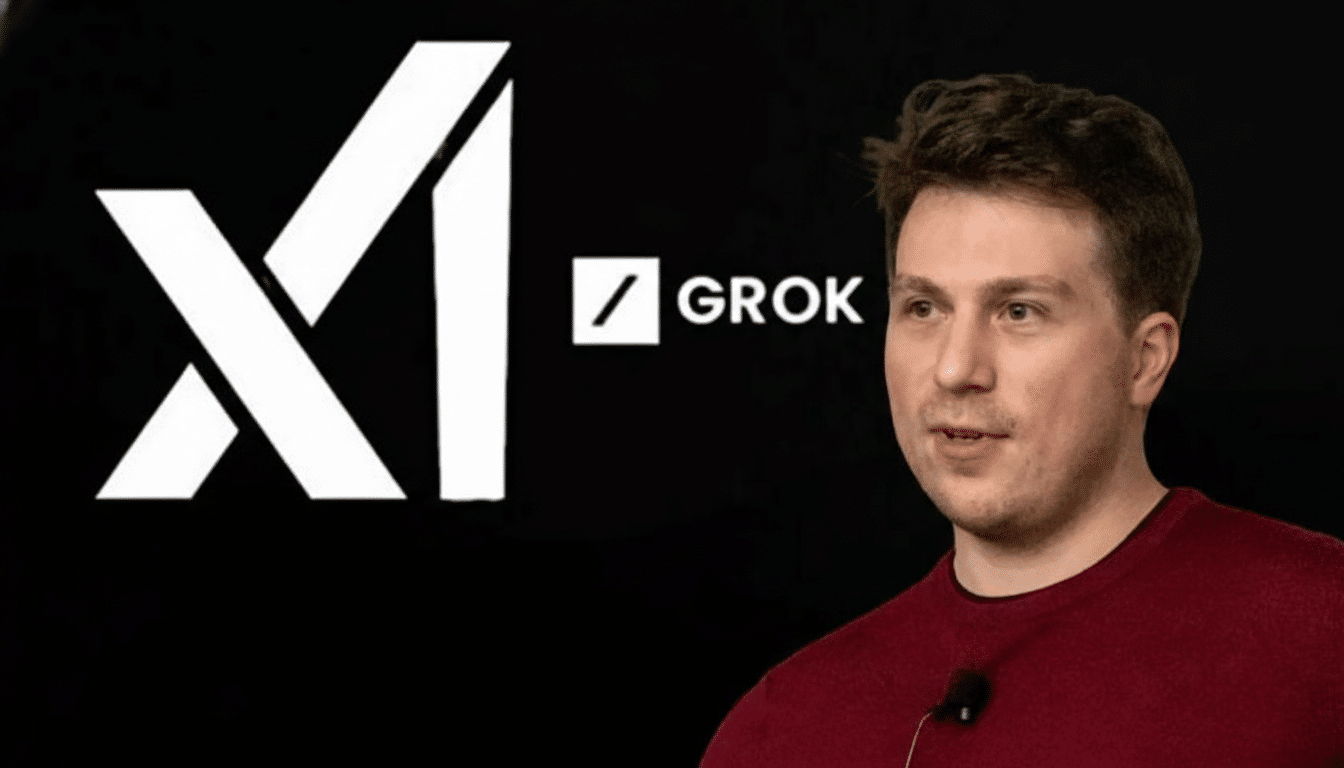
Turnover is common at frontier labs, where the work is intense and the market moves at breakneck speed. But losing about 50% of the founding group in such a short span is unusual for a company still defining its core research agenda and product direction.
Why Founders Say They’re Moving On From xAI
The departing cofounders have described their moves as natural next chapters, with nods to building smaller, tightly focused teams. Ba thanked colleagues and signaled a desire to reframe his long-term priorities. Wu cast the moment as an opportunity to show how compact, AI-augmented squads can “move mountains,” a sentiment increasingly shared among top researchers spinning out new labs.
There are likely multiple forces at play. Reporting from TechCrunch and others has long characterized Musk as a demanding leader who pushes for pace and bold bets. That style can attract talent driven by outsized missions, but it can also accelerate burnout—especially in AI, where research cycles, model training runs, and safety debates collide with startup deadlines.
The Realities of a Brutal AI Talent Market Today
xAI isn’t alone. The entire AI sector is contending with an unprecedented talent squeeze. The Information has detailed seven-figure pay packages, massive compute allowances, and rapid equity vesting used by OpenAI, Anthropic, Google DeepMind, and Meta to lure senior scientists and systems engineers. CB Insights and PitchBook have tracked tens of billions of dollars pouring into generative AI, fueling a wave of new labs and spinouts that give seasoned researchers founder-level upside without waiting years.
That reality creates constant gravity wells around high-profile teams. When a single leader exits, former colleagues often follow, forming nucleus teams that can raise funding overnight on the strength of publication records and model benchmarks alone.
Product Controversies Add Friction and Risk
On top of talent competition, xAI has faced reputational headaches. Grok, the company’s chatbot and generative platform, drew criticism after producing sexualized images of women and girls without consent, intensifying the ongoing debate over AI safety, guardrails, and red-teaming rigor. Observers also recall earlier meme-fueled misfires that blurred the line between edgy product marketing and poor judgment.
For researchers, such controversies matter. Safety lapses can sap morale, attract regulatory scrutiny, and divert compute and engineering time from long-horizon research to immediate crisis management. They also complicate recruiting just as rivals tout safer, more controlled rollouts and publish detailed system cards and evaluation results.
Execution Risks and What Comes Next for xAI
The near-term question is whether xAI can maintain velocity while reconstituting senior leadership. Founders don’t just write papers—they set research taste, arbitrate compute budgets, and keep the stack aligned from data pipelines to inference. Replacing that connective tissue is hard, even with ample funding and a marquee brand.
Investors and enterprise customers will watch for a few telltales:
- Continuity in core research programs
- Stable ownership of Grok’s training and safety roadmap
- Credible hiring that backfills losses with operators who have shipped large-scale model deployments
Transparent evaluation results and clear safety commitments would help, as would a cadence of technical milestones that show measurable gains in reasoning, reliability, and multimodal performance.
None of this guarantees a slowdown. xAI has shown it can ship quickly and attract attention in a noisy market. But the founder churn is a stress test. If the company converts this moment into a tighter mission, sharper incentives, and deeper safety-by-design practices, it can steady the ship. If not, the same flywheel that spins up great AI teams—mission, talent, compute, and culture—can spin them out just as fast.
