


The contemporary multi-client 3PL hub in the USA is under constant pressure to deal with fluctuating volumes, different client needs, and rapid turnaround requirements. The conventional fixed infrastructure often struggles to meet such requirements, especially during peak seasons or e-commerce spikes. With increasing competition and the standardisation of Just-In-Time delivery, warehouses require solutions that can rapidly adjust to changing workload requirements.
The adoption of a material handling conveyor system is becoming increasingly imperative for 3PL facilities. Proper product flow in cross-dock, sortation, and distribution centres requires flexible conveyor systems. In today’s fast-paced logistics environment, such a system is essential for accommodating diverse client demands while maintaining efficiency.
- How Do Flexible Material Handling Conveyor Systems Address 3PL Operational Variability?
- What Performance Benefits Do Conveyor Systems Bring to 3PL Hubs?
- How Does Warehouse Management System Integration Enhance Conveyor Effectiveness?
- How Addverb Supports Flexible Conveyor and Material Movement in 3PL Hubs
- Conclusion
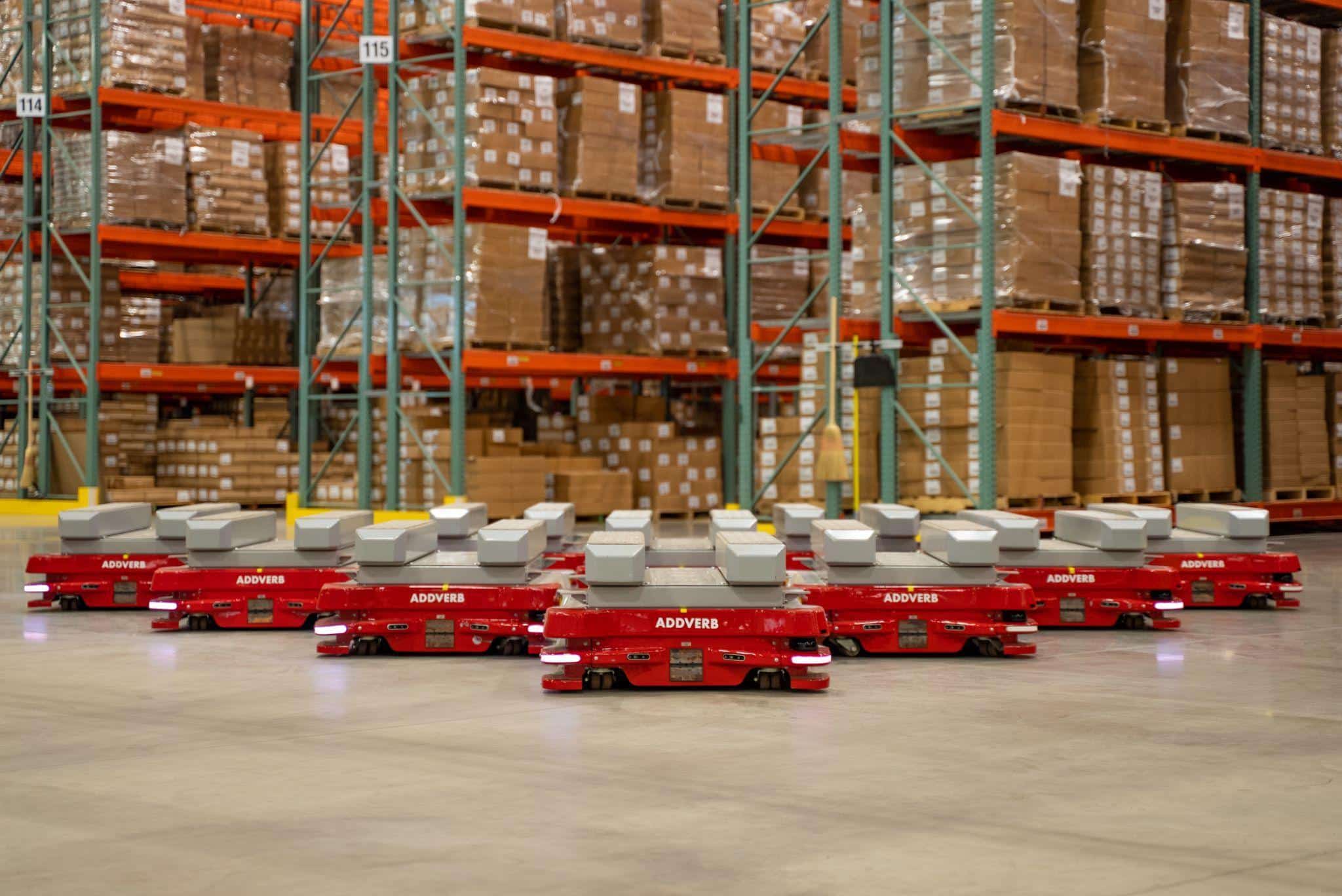
How Do Flexible Material Handling Conveyor Systems Address 3PL Operational Variability?
Flexible conveyors enable quick re-configuration to meet the evolving needs of clients and peak demand patterns in the USA. They enable loading, unloading, sorting, and cross-dock functions without the associated costs of fixed infrastructure.
By adapting line lengths and flow directions, bottlenecks are eliminated, reducing manual handling and improving workers' ergonomics. Space utilisation is enhanced to ensure efficient operation of multi-client footprints with different workflows, and the scalable conveyor paths enable hubs to handle new clients and peak demand without extensive downtime.
Flexible conveyors also enable 3PL companies to establish temporary zones for high-volume customers during peak seasons. The modular sections can be rearranged weekly without requiring construction.
What Performance Benefits Do Conveyor Systems Bring to 3PL Hubs?
The continuous flow of products on the conveyor system maximises throughput, which is essential in multi-client operations. Automation minimises labour costs and the associated risks of handling products through pathways. The system increases the accuracy of orders through warehouse control and sortation. Its scalability helps maintain service levels as the number of clients increases during peak seasons.
The automated conveyor system ensures a constant flow rate, making products less likely to be damaged than in manual processing. This is particularly true in the USA, where 3PL companies handle different SKUs, including those that are fragile or sensitive in nature.
What Are the Key Technical Considerations for Implementing Flexible Conveyor Systems in 3PL Hubs?
When deploying flexible conveyors, technical factors must be evaluated:
- Modular versus fixed design trade-offs for adaptability and maintenance
- Power and control architecture needs seamless integration with existing equipment
- Load capacity, belt type, and roller configurations tailored to the SKU mix
- Safety features, including sensors, emergency stops, and automated divergence
- Footprint changes and banked conveyor transitions for layout flexibility
It is important to factor scalability into 3PL hubs. The design of the conveyor system should facilitate the addition of a new lane or a diverter without having to shut down the system. A thorough analysis of integrating robotic picking, sortation, and pallet handling helps facilities avoid scalability issues as the number of clients grows in the future.
How Does Warehouse Management System Integration Enhance Conveyor Effectiveness?
A warehouse management system enhances the performance of the conveyor system as it offers real-time visibility into inventory and orders, which enables dynamic routing of products according to the client’s SLA, dock availability, and priority. Moreover, barcode and RFID scanning make it easier for hubs to reduce errors and maintain accuracy when it comes to tracking.
Workload balancing of the conveyor system and sortation equipment optimises product flow. Additionally, predictive alerts for stalled products and congestion allow the operator to take corrective action. These features ensure that multi-client 3PL facilities in the USA are able to handle throughput requirements and service levels effectively.
How Addverb Supports Flexible Conveyor and Material Movement in 3PL Hubs
Addverb’s modular conveyor solutions are integrated with robotic fleets and other material handling systems, allowing for scalable processing in multi-client 3PL facilities. Their systems are integrated with AS/RS, sorters, and goods-to-person stations to reduce manual intervention and optimise flow processing.
Addverb’s Warehouse Management System (WMS), Optimus, optimises inventory visibility and workflow management, ensuring seamless operations across the conveyor system. Their technology stack enables quick responsiveness to changes in the layout and capacity without significant downtime, making it suitable for 3PL facilities in the USA.
Conclusion
Flexible material handling conveyor systems are critical in 3PL hubs where multi-client operations and varying volumes are involved. The incorporation of advanced control systems quickly enhances the level of coordination and service performance, as well as paving the way for future automation expansion.
Addverb’s conveyor solutions are perfectly suited to meet these needs and enable 3PL hubs in the USA to scale efficiently, cut costs, and maintain high service levels.

