


The U.S. custom apparel industry has undergone a major transformation over the last decade. What once relied heavily on bulk screen printing and long production cycles has evolved into a fast-moving, digital-first environment driven by ecommerce, creator brands, and small business entrepreneurship.
Consumers now expect faster shipping, lower minimum order quantities, consistent quality, and personalized products. At the same time, businesses must manage costs, reduce waste, and maintain operational flexibility.
- The Shift Toward Flexible Production in the U.S.
- How DTF Printing Works Within Modern Production Systems
- Ecommerce Growth and Demand for On-Demand Printing
- Local Search Trends and Regional Demand
- Comparing DTF to Other Printing Methods
- Durability and Quality Considerations
- Economic Advantages for Small Businesses
- Integration With Modern Fulfillment Models
- The Future of Custom Apparel in the United States
- Conclusion
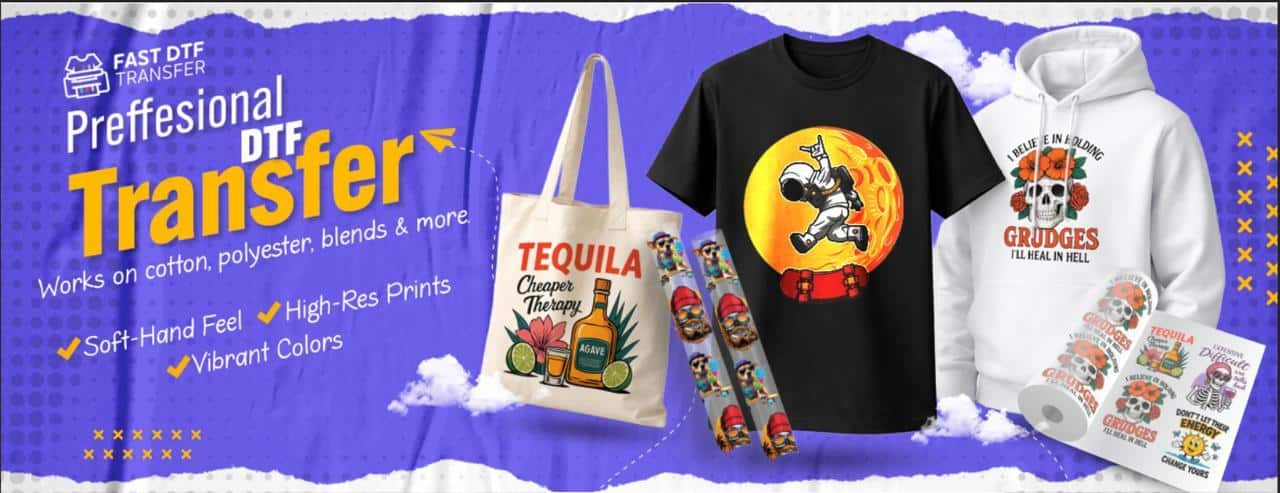
In response to these pressures, modern printing technologies have become central to production strategy. Among them, Direct-to-Film (DTF) printing has emerged as one of the most influential developments in the apparel decoration space.
Rather than simply introducing another printing method, DTF printing has fundamentally improved how production workflows operate — particularly in the United States, where localized demand and ecommerce-driven fulfillment dominate the market.
The Shift Toward Flexible Production in the U.S.
Historically, screen printing dominated custom apparel because it was cost-effective for large runs. However, it required:
- Setup time for each design
- Separate screens per color
- Larger minimum order quantities
- Longer preparation cycles
As ecommerce platforms like Shopify and Etsy empowered independent sellers, order sizes shrank while design variety increased.
Brands began releasing:
- Limited-edition drops
- Influencer merchandise
- Event-based apparel
- Seasonal collections
- State- and city-targeted designs
This new environment demanded a printing method that could:
- Handle short runs efficiently
- Maintain high durability
- Produce full-color designs
- Integrate into digital workflows
DTF printing met these criteria effectively.
How DTF Printing Works Within Modern Production Systems
Direct-to-Film printing involves printing artwork onto a specialized transfer film, applying adhesive powder, curing it, and heat pressing it onto garments.
Unlike traditional methods, it eliminates:
- Complex screen setup
- Pre-treatment requirements
- Multi-stage color separations
Because it is digitally driven, production can move from artwork approval directly to print stage with minimal preparation.
Businesses offering professional DTF printing services benefit from this streamlined workflow because it reduces turnaround time while preserving output quality.
This is particularly valuable in the U.S., where same-day and next-day fulfillment expectations continue to rise.
Ecommerce Growth and Demand for On-Demand Printing
The growth of ecommerce has created new production realities:
- Sellers often test new designs weekly
- Inventory risk must be minimized
- Storage costs must remain low
- Customization must remain accessible
DTF printing integrates naturally into print-on-demand systems because it allows small quantities without sacrificing efficiency.
Online brands can sell products before production begins, triggering fulfillment only after purchase. This model reduces overproduction and supports lean business structures.
As a result, custom transfers have become especially popular for small apparel brands and independent creators.
Products such as custom DTF transfers allow print shops and small operators to outsource production while maintaining control over final application.
This hybrid model expands opportunity without requiring full-scale manufacturing investment.
Local Search Trends and Regional Demand
Another major factor shaping the U.S. apparel market is localized search behavior.
Consumers increasingly search for:
- DTF printing near me
- Same day DTF transfers
- DTF services in [state]
- Local apparel printing companies
Optimized collection pages targeting localized search intent allow businesses to capture geographically relevant demand.
For example, pages structured around regional fulfillment — such as state-based DTF transfer collections — help align production capacity with marketing visibility.
This connection between SEO strategy and production workflow improves operational efficiency and conversion rates simultaneously.
Comparing DTF to Other Printing Methods
While several printing techniques remain relevant, workflow adaptability differs across methods.
Screen Printing
Best for large bulk orders, but setup-heavy and less flexible for short runs.
Direct-to-Garment (DTG)
Good for cotton-based garments but limited in fabric compatibility and slower for high output.
Heat Transfer Vinyl (HTV)
Suitable for simple graphics but labor-intensive and not ideal for complex, full-color designs.
Direct-to-Film (DTF)
Highly versatile, digitally integrated, works across fabric types, and scales efficiently from small to large orders.
This flexibility explains why DTF adoption has accelerated in the U.S. market over the past few years.
Durability and Quality Considerations
Beyond workflow improvements, product durability remains essential.
When properly applied, DTF transfers:
- Resist cracking
- Resist peeling
- Maintain color vibrancy
- Withstand repeated washing
This durability makes them suitable for retail-quality merchandise rather than novelty printing.
For brands building long-term customer relationships, consistency and reliability are non-negotiable.
Economic Advantages for Small Businesses
The rise of small apparel brands has shifted economic priorities.
Entrepreneurs now prioritize:
- Lower startup costs
- Faster production
- Lower inventory risk
- Scalable operations
DTF printing supports these goals by minimizing infrastructure requirements.
Instead of investing in large screen setups and storage space, small operators can rely on digital workflows and outsourced transfer production.
This lowers financial barriers to entry and encourages innovation.
Integration With Modern Fulfillment Models
U.S. apparel production increasingly operates within hybrid fulfillment systems:
- Centralized production hubs
- Regional distribution centers
- Drop shipping partnerships
- Direct-to-consumer shipping
DTF printing aligns well with these models because production can be scheduled in small or large batches without altering workflow complexity.
This stability allows businesses to forecast capacity and manage seasonal fluctuations more effectively.
The Future of Custom Apparel in the United States
Looking ahead, several trends will continue shaping the industry:
- Greater personalization
- Faster shipping expectations
- Regional targeting
- Lean inventory management
- Digitally integrated production systems
Printing technologies that support these demands will remain central to growth.
DTF printing stands out because it combines creative flexibility with operational scalability — two factors that define modern U.S. apparel businesses.
Rather than replacing traditional methods entirely, it complements them within more agile production strategies.
Conclusion
The U.S. custom apparel industry is no longer driven solely by bulk production efficiency. It is shaped by speed, flexibility, digital integration, and consumer expectations.
Direct-to-Film printing has become a foundational technology in this transformation because it simplifies production while maintaining quality and durability.
For businesses seeking scalable growth without excessive overhead, digitally driven printing solutions provide a practical advantage.
As ecommerce and regional search demand continue expanding, printing methods that align with modern workflows will remain essential in the evolving American apparel market.

