


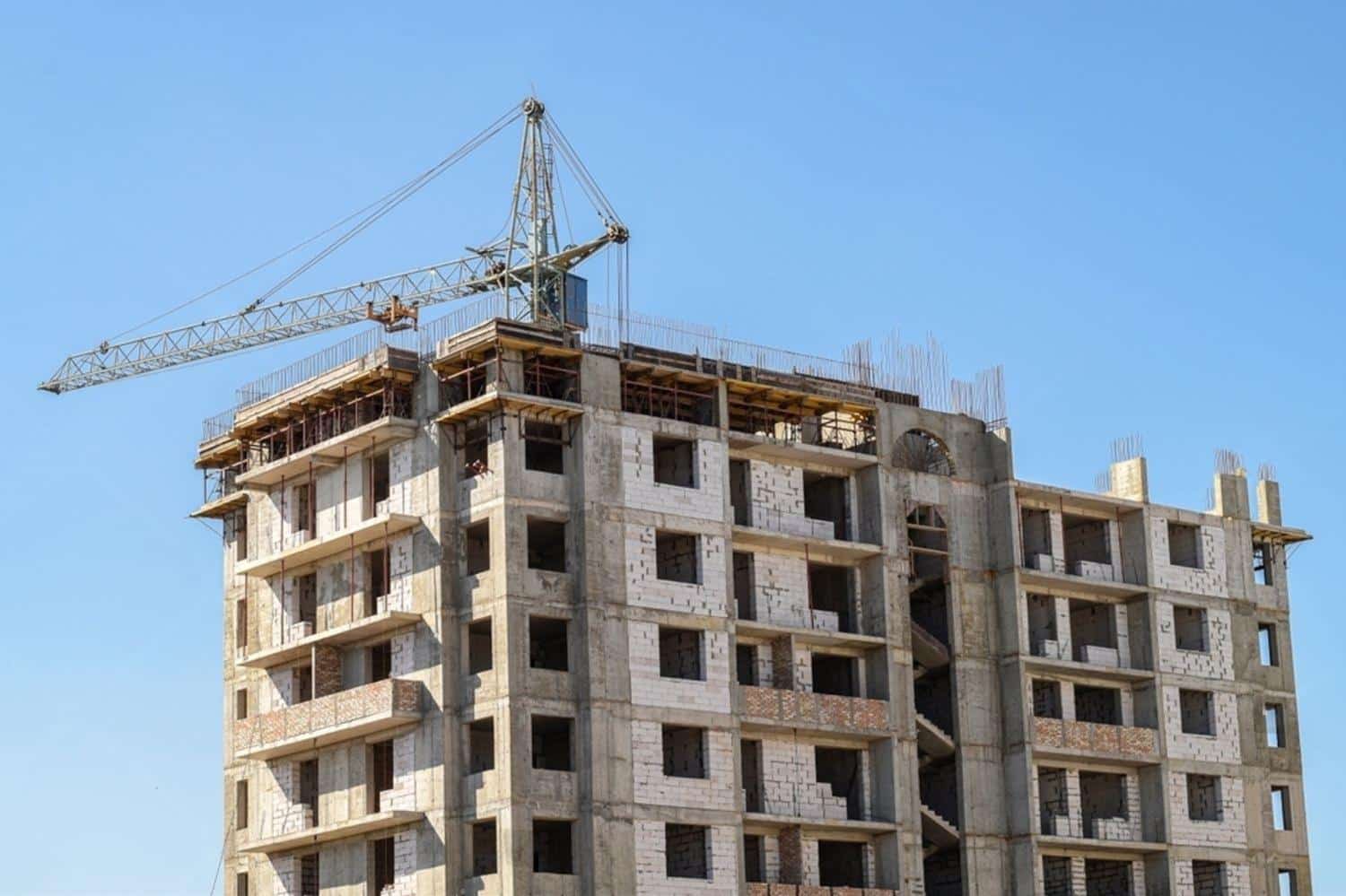
Commercial construction timelines are stretching across every sector. Nearly two-thirds of contractors reported at least one project postponed, scaled back, or canceled within six months, and project delays and cancellations have become more prevalent than in recent years. What once took 18 months now routinely extends to 24 or longer, and the causes are stacking faster than contractors can manage them.
The delays are not limited to a single trade or sector. 92% of construction firms report difficulty finding qualified workers, and 45% say labor shortages are directly causing project delays. Material costs for steel, concrete, lumber, and mechanical/electrical components remain elevated, and supply chain volatility keeps bids and change orders high. Add inspection bottlenecks, permit processing slowdowns, and quality control failures, and the result is an industry where meeting original schedules has become the exception rather than the rule.
Labor Shortages Are the Primary Driver
The construction industry needs approximately 454,000 additional workers beyond its usual hiring needs in 2025, yet the workforce continues to shrink. Immigration enforcement has directly or indirectly affected nearly one-third of construction firms, removing a significant portion of the labor pool at precisely the moment demand is highest.
The shortage is not evenly distributed. Electricians, plumbers, ironworkers, and specialized technicians are in critically short supply, and skilled labor shortages limit execution capacity across many trades. When a project lacks qualified workers for a critical path task, such as electrical rough-in, structural steel installation, or HVAC ductwork, the entire schedule stops. Contractors cannot accelerate what they do not have the workforce to execute.
The demographic reality compounds the problem. The retirement wave peaking in 2026 threatens to remove decades of experience from job sites, and there are not enough young people entering the trades to replace them. Wages are inflating 5 to 8 percent annually, yet the industry still struggles to attract new entrants who view construction as physically demanding, unpredictable, and lacking clear career advancement.
Material Costs and Supply Chain Volatility
Material pricing remains unpredictable, creating risk for contractors trying to lock in costs months before delivery. Continuing tariff disputes threaten to add 2.5% to structural packages by 2026, and 41% of firms report direct schedule impacts from switchgear and transformer delays.
Long-lead electrical equipment now routinely exceeds 12-month delivery windows. When critical path materials arrive late, entire projects can slip by months. Contractors maintaining detailed workforce availability data can pivot quickly when materials arrive late, but many still operate reactive systems that leave crews idle or reassigned to lower-priority work while waiting for deliveries.
Material availability issues impact 71% of contractors, and the delays cascade through schedules, forcing teams to work around missing components or halt progress entirely. Some firms now pre-purchase long-lead materials immediately after contract award, while others specify alternates in bids to avoid single-source dependencies, but these strategies add cost and complexity to already tight budgets.
Inspection and Quality Control Bottlenecks
Inspection delays create some of the most frustrating project slowdowns because they halt work that is otherwise ready to proceed. Permit approvals and inspection schedules are common bottlenecks that can significantly delay progress. When inspections are not scheduled in time or work does not meet code, rework compounds the schedule impact.
Quality failures discovered during inspection create cascading delays across multiple trades. Rework in construction projects often costs around 5% of the total project cost, and overruns compose approximately 7.1% of overall work hours. Work that fails inspection must be corrected and re-inspected before the next trade can begin, creating downtime that ripples through the schedule.
Welding and fabrication work is particularly vulnerable to inspection-driven delays. Most fabrication shops target weld reject rates of 1 to 2 percent, but when rates exceed that threshold, projects face increased inspection frequency, mandatory rework, and schedule slippage. Failed welds typically cost two to three times the original fabrication cost, and the schedule impact extends far beyond the welding crew.
“The projects that stay on schedule are the ones where quality control happens during the work, not after,” said Ruben Espinoza, founder of RAW Welding Inc. “We’ve had inspectors find issues two weeks after a weld was completed by then, other trades have already built around it. Now you’re tearing out finished work to access something that should have been caught immediately. That’s when a two-day fix becomes a two-week delay.”
Construction rework costs approximately 5% of total project budgets, but the real cost includes delayed occupancy, carrying costs, and loss of client confidence. Quality control failures discovered late in the process are exponentially more expensive to fix than those caught early.
Permit and Regulatory Delays
Permitting timelines have lengthened in many jurisdictions as staffing constraints slow review processes. Depending on the local jurisdiction, permits can take weeks or even months to process, and delays occur when inspections are not scheduled in time or when work does not meet code and requires rework.
Regulatory complexity has also increased. Projects must navigate zoning requirements, environmental reviews, fire code compliance, ADA accessibility standards, and energy efficiency mandates, each with its own approval process and timeline. When permit dependencies are not sequenced correctly, contractors face idle crews and extended mobilization costs while waiting for approvals that should have been completed months earlier.
Financing and Economic Uncertainty
Tighter lending standards combined with only gradual easing of interest rates are expected to constrain project financing and squeeze contractor margins, especially in commercial and residential sectors. This tighter environment means increased scrutiny and documentation, higher equity contributions, larger contingency reserves, and stronger borrower profiles.
Government job and spending cuts portend a sluggish 2026 for federal projects, and major cities across the United States are reporting flat revenue entering 2026, a significant change following the COVID-19 Relief years. Municipalities are proceeding cautiously, undertaking only construction projects necessary to maintain operations.
Private sector projects face similar constraints. High interest rates and financing costs continue to dampen new starts in certain residential and commercial segments, and some segments of office and retail construction remain weak as economic uncertainty lingers.
The Compounding Effect
What makes 2026 particularly challenging is that these factors do not occur in isolation; they compound. A project that starts with a labor shortage encounters a material delay, which creates an inspection backlog, which triggers overtime costs and compressed schedules that increase quality failures. Each problem makes the others worse.
When conditions change, the ability to adapt operations quickly may be the most important competitive advantage of all. Contractors who manage uncertainty through disciplined material procurement, flexible labor models, and coordinated execution are better positioned to maintain schedule reliability despite external volatility.
The construction industry is not facing temporary disruptions. Cost volatility, labor shortages, and supply chain risk are structural factors that must be planned for, not worked around. The firms succeeding in this environment are those treating delay risk as a core planning assumption rather than an unexpected complication and building processes, relationships, and contingencies that allow them to execute even when conditions are less than ideal.

