


The news of breast cancer can be a very devastating one for anyone, but knowing that there is an effective treatment option can raise your hopes. However, one of the many decisions that patients find themselves struggling with is whether to go for breast reconstruction surgery. Beyond the costs, many find the process and subsequent recovery really challenging. Interestingly, there has been a recent introduction of a technique known as SWIM surgery.
With SWIM surgery, patients can achieve a desirable outcome without having to go through as much trauma as they would with the conventional method. As such, this article discusses the fundamentals of SWIM surgery, highlighting key details patients should know about it.
- What Exactly Does Breast Reconstruction Involve?
- SWIM Surgery Explained
- How Does the SWIM Surgical Procedure Work?
- What Are Some Potential Limitations and Considerations When Choosing SWIM?
- SWIM is Not Suitable for All Breast Cancer Cases
- Radiation Therapy Considerations
- Scarring
- Surgical Complexity
- Conclusion
What Exactly Does Breast Reconstruction Involve?
When people want to restore their breasts to the shape and appearance it was before, they opt for breast reconstruction. This surgery type can be achieved through several ways, ranging from implants to using the patient’s tissue. There is no one-size-fits-all approach, as proper examinations are done to determine which option is best for each patient.
Breast reconstruction almost always follows a cancer removal surgery after evaluating all the medical and emotional considerations involved in the process. “Patients have the right to be informed about all relevant aspects of a procedure so they can decide whether it is appropriate for their medical needs and give proper consent,” says Dr. Matthew H. Steele of Matthew H. Steele, MD Cosmetic and Reconstructive Plastic Surgery.
SWIM Surgery Explained
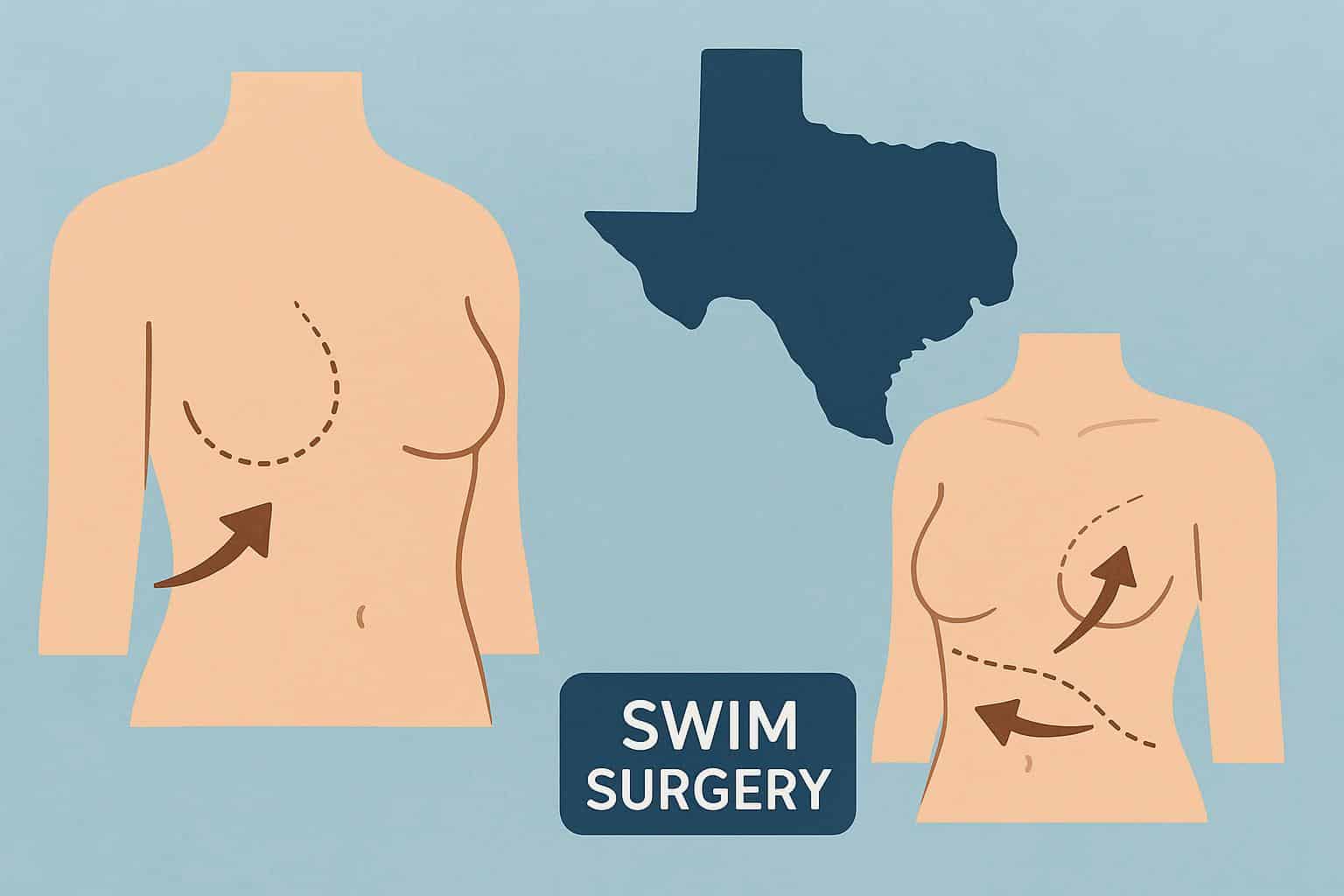
Skin-sparing Wise-pattern Immediate Mastopexy (SWIM) is one of the recently developed breast reconstruction techniques aimed at removing cancerous tissues without removing so much skin. In this technique, the surgeon ensures that the remaining skin is reshaped and lifted to create the natural breast look.
SWIM is a fine blend of reconstructive planning, oncologic surgery, and aesthetic breast lift techniques. It can be a suitable option for patients with drooping breasts and can be performed with tissue expanders, autologous tissue, or implants.
How Does the SWIM Surgical Procedure Work?
SWIM surgery typically begins with a skin-sparing mastectomy, in which the breast tissue is removed but the majority of the breast skin and the inframammary fold are preserved. The nipple may or may not be preserved, depending on tumor location and the oncologist’s recommendations.
Next, the surgeon uses the Wise-pattern incision, a design traditionally used in breast reduction or lift surgeries. This incision looks like an upside-down T and allows the surgeon to remove excess skin, tighten the breast envelope, and improve symmetry.
After the breast tissue is removed and the skin is reshaped, the surgeon places a breast implant, tissue expander, or autologous flap to restore volume. The result is a reconstructed breast with improved shape and projection compared to what is usually achieved with traditional mastectomy alone.
What Are Some Potential Limitations and Considerations When Choosing SWIM?
Although SWIM surgery offers many benefits, it is not ideal for every patient. Understanding the limitations helps ensure realistic expectations.
SWIM is Not Suitable for All Breast Cancer Cases
If the tumor is close to the nipple or involves multiple areas of the breast, nipple-sparing may not be possible. Some patients may need more extensive skin removal, which can limit the effectiveness of the SWIM approach.
Radiation Therapy Considerations
Radiation can affect skin elasticity, healing, and implant outcomes. Patients who are predicted to need radiation may be encouraged to use a staged approach involving tissue expanders.
Scarring
The Wise-pattern incision leaves more visible scarring than some other reconstruction techniques. Although scars often fade, patients should be aware of their placement and appearance.
Surgical Complexity
SWIM surgery requires a surgeon highly experienced in both reconstructive and oncologic breast procedures. Not all surgeons are trained in this technique, so Texas patients may need to seek care at specialized centers.
Conclusion
A cancer journey is a deeply personal experience for patients that can be further complicated by breast reconstruction. Patients need to be as informed as possible about the many options available to them, including SWIM surgery. If you or anyone you know is considering breast reconstruction surgery, it is recommended to consult with a breast surgeon in Texas to discuss whether SWIM surgery is right for you.
