


Dinner ends. A few crumbs slide under the table. A sock drags in grit from the hallway. Then comes the part nobody notices until it sticks to a bare foot. That thin, tacky film near the stove. A smudge by the sink. Pet hair that collects in the same corner like it pays rent.
This is where strong suction starts to sound like the only thing that matters. In real homes, it rarely works that way. A vacuum can pull hard and still leave behind the stuff that makes floors feel dirty. The tool, the floor type, and the kind of mess decide the result. Not one number on a box.
- “Strongest suction” Sounds simple, But it Gets Messy Fast
- What suction numbers actually measure (and what they don’t)
- What actually makes a vacuum clean well in daily life
- Match the Machine to the Mess
- Dry-only mess: dust, crumbs, and hair
- Wet mess: spills, sticky patches, and that “tacky floor” problem
- Steam: when it helps, when it annoys
- FLOOR ONE S9 Artist: built for everyday wet-and-dry resets
- FLOOR ONE S9 Artist Steam Pro: the same lane, plus steam for stuck-on mess
- Dreame vs Dyson vs Shark vs Tineco: A Fair Comparison
- Dyson: strong dry pickup, especially on rugs and carpet
- Shark: practical features, often aimed at hair and convenience
- Dreame: feature-heavy options across categories
- Where Tineco fits in this lineup
- Is a Wet-Dry Vacuum Worth It?
- Quick Checklist Before Choosing
- FAQ
- 1) What does “strong suction” actually mean in real cleaning?
- 2) Do suction numbers make it easy to compare brands?
- 3) Does a wet-dry cleaner replace a regular vacuum?
- 4) When does steam help on floors?
- 5) What’s the biggest mistake people make with wet-dry cleaners?
- 6) What’s the difference between a wet-dry vacuum and a steam mop, and which is better?
- 7) Is a wet-dry/steam vacuum safe for homes with kids or pets?
- 8) How do Tineco, Dyson, Shark, and Dreame compare for wet/dry/steam cleaning?
- 9) How to fix common wet-dry vacuum problems (weak suction, odor, not turning on)?
- 10) Which type of vacuum fits my home size?
- 11) Do I need a steam function, or is a basic wet-dry vacuum enough?
- 12) How does Tineco S7/S9 handle pet hair compared to other brands?
- 13) Can I use tap water in steam vacuums, or do I need distilled water?
- 14) What’s the lifespan of a wet-dry/steam vacuum, and how to extend it?
- 15) For renters or budget shoppers, is a wet-dry vacuum worth the investment?
- 16) How does Tineco’s self-clean + drying feature compare to other brands?
- Conclusion

This guide keeps things simple. It breaks down what strong suction can and can’t tell anyone, how wet-dry cleaners differ from dry vacuums, and what steam adds to the mix. It also puts Tineco’s new FLOOR ONE S9 Artist and FLOOR ONE S9 Artist Steam Pro next to familiar names like Dreame, Dyson, and Shark, with a fair look at where each one fits in day-to-day cleaning.
“Strongest suction” Sounds simple, But it Gets Messy Fast
A floor can look clean and still feel gritty. That usually comes down to how well a machine pulls dust out of cracks, lifts hair off rugs, and keeps airflow steady once the bin starts filling. Suction matters. It just doesn’t work alone.
What suction numbers actually measure (and what they don’t)
Brands throw around different units. Some show kPa. Some show Air Watts. Some skip the unit and just say “powerful.” Comparing one number across brands can turn into a weird math contest that doesn’t match real cleaning.
A few practical points help:
- Sealed suction (often shown as kPa) hints at how hard the motor can pull when airflow gets restricted.
- Airflow matters when dirt needs to travel up the tube without getting stuck.
- The floor head decides what gets lifted and what stays behind, especially near edges.
This also explains why a wet-wash machine and a dry stick vacuum don’t line up in a clean comparison. A unit built as a wet dry vacuum focuses on picking up liquid and washing at the same time, so the design priorities shift.
What actually makes a vacuum clean well in daily life
Real cleaning comes down to a few boring details. The boring details win.
- Seal and contact with the floor: If the head doesn’t sit right, suction leaks out and results drop fast.
- Brush and anti-tangle design: Hair wraps, slows the brush, and then the “strong suction” talk stops mattering.
- Filter and airflow stability: A filter that clogs quickly can make a strong vacuum feel weak halfway through the job.
- Bin and pathway design: Tight turns inside the vacuum can trap fuzz and crumbs, especially on mixed mess.
Match the Machine to the Mess
A lot of vacuum disappointment comes from using the right tool for the wrong job. A dry vacuum can crush dust and hair, then struggle with sticky spots. A wet cleaner can leave floors feeling fresh, then feel out of place on thick rugs. The sweet spot shows up fast once the mess type gets clear.
Dry-only mess: dust, crumbs, and hair
Dry vacuums do their best work on daily debris. Think cereal bits, tracked-in grit, pet hair that clings to edges, and fine dust that settles back down an hour after cleaning.
What usually matters most:
- A floor head that seals well and doesn’t scatter debris
- Hair control so the brush keeps spinning instead of turning into a wig
- Consistent airflow that doesn’t fall off once the bin fills
This is where Dyson, Shark, and some Dreame models often get compared head-to-head, since they live in the same dry pickup lane.
Wet mess: spills, sticky patches, and that “tacky floor” problem
Wet mess is its own category. Even after a strong vacuum run, dried-on splashes and kitchen film can hang around. That’s not a suction failure. That’s just how sticky dirt behaves.
A wet-dry cleaner targets a different problem:
- It picks up debris while washing the surface
- It cuts down on vacuum first, mop second
- It tends to shine on hard floors where spills show up often
Steam: when it helps, when it annoys
Steam can help loosen greasy marks and dried splashes, especially in cooking-heavy homes. It can also add steps and constraints.
Steam tends to help when:
- Floors get sticky near the stove
- Mess dries fast and needs softening
- A quick refresh works better than dragging out a bucket
Steam can annoy when:
- Floors have sensitive finishes or questionable sealing
- The routine needs to stay fast and simple
- Rugs play a big role in the home
Tineco’s New S9 Artist Models
These S9 Artist models sit in the wet-dry lane. They don’t try to act like a classic carpet vacuum. They focus on hard floors that get hit with daily life: crumbs, hair, splashes, and the dull film that builds up in kitchens and entryways.
FLOOR ONE S9 Artist: built for everyday wet-and-dry resets
This model targets the “one pass” idea: pick up loose debris while washing the floor.
Key points, in plain terms:
- 22kPa suction: strong pull for a wet-dry unit, useful for pulling dirty water and fine debris off hard floors.
- Up to 75 minutes runtime: better coverage for larger spaces, so cleaning doesn’t stop halfway through.
- Lay-flat reach: built to get under beds, sofas, and low cabinets without extra attachments.
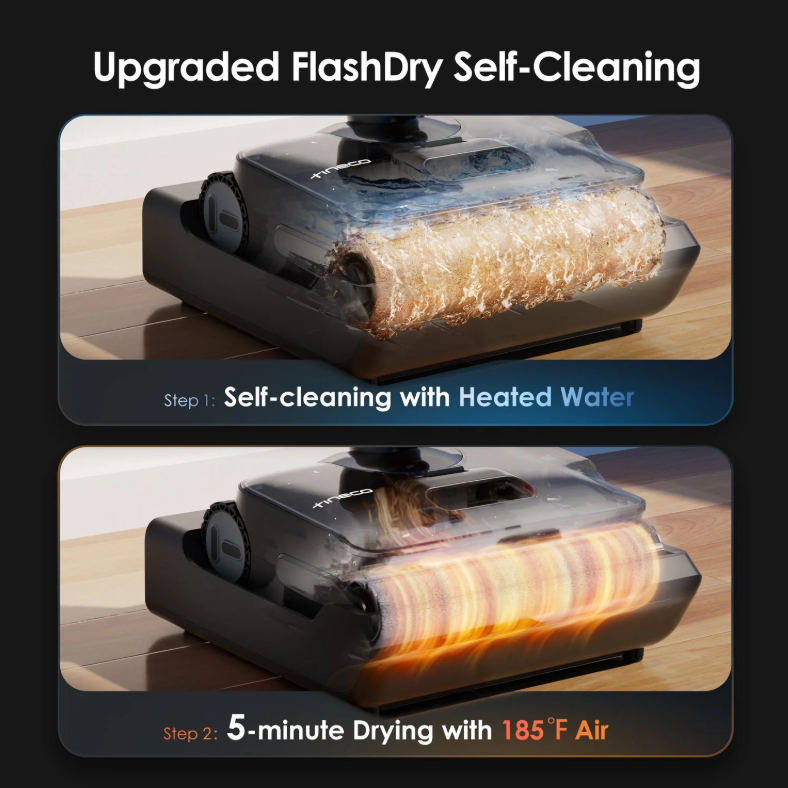
- Self-cleaning + hot-air drying (FlashDry): helps keep the brush and internal path from staying damp, which often leads to smells over time.
- Anti-tangle design (DualBlock): aimed at reducing hair wrap and clogs, especially in pet homes.
Where it usually shines:
- Kitchens, dining areas, entryways, and other hard-floor zones
- Daily “quick reset” cleaning after meals
Where it won’t replace other tools:
- Deep carpet cleaning
- Thick rugs that need a brush designed for fibers
FLOOR ONE S9 Artist Steam Pro: the same lane, plus steam for stuck-on mess
The steam version adds heat to loosen grime that plain washing can struggle with, like dried splashes and greasy patches.
What stands out:
- Steam heating (HyperSteam): heat can soften stubborn dirt faster, so less scrubbing happens in high-traffic kitchen spots.
- 22kPa suction + up to 75 minutes runtime: still built around washing and wet pickup, not just heat.
- Lay-flat reach: still aimed at under-furniture cleaning.
- Self-cleaning + hot-air drying: important on steam models too, since moisture control decides how fresh the machine stays.
- HEPA filtration mentioned: helpful for homes that care about fine dust.
Steam needs a little caution on delicate or poorly sealed finishes. Floor care always starts with the manufacturer’s guidance for that surface.
Dreame vs Dyson vs Shark vs Tineco: A Fair Comparison
This comparison works best when each brand gets judged by what its machines usually try to do. Some focus on dry pickup power, especially on rugs and carpets. Others focus on washing hard floors while picking up wet mess. That difference changes everything.
Dyson: strong dry pickup, especially on rugs and carpet
Dyson models often get attention for handling fine dust and hair on mixed surfaces. In many homes, that means:
- Strong performance on rugs and carpet, where brush design matters as much as suction
- Strong everyday cleanup for dry mess like crumbs and pet hair
- A “vacuum-first” routine for hard floors, then a separate step for sticky spots
Tradeoffs people tend to notice:
- Wet spills still need a separate tool or mop routine
- Two passes can still happen: vacuum now, mop later
Shark: practical features, often aimed at hair and convenience
Shark often competes on usability for households that deal with hair, crumbs, and frequent quick cleanups.
Common strengths:
- Solid dry-mess pickup on hard floors and rugs
- Hair-focused designs on many models
- Features that aim to keep upkeep simple
Typical tradeoffs:
- Performance varies a lot by model line, so comparisons depend on the exact unit
- Wet mess still sits outside the standard dry-vac lane
Dreame: feature-heavy options across categories
Dreame shows up in both the dry-vac conversation and the wet-cleaning conversation, depending on the model. That can help shoppers who want specific features, but it also makes comparisons tricky.
Where it often competes well:
- Modern features and design choices (model-dependent)
- Options that overlap the Dyson/Shark-style lane and the wet-cleaning lane
What to watch:
- Comparing a Dreame wet cleaner to a Dyson dry stick turns into apples vs oranges fast
- Floor type matters more than brand reputation
Where Tineco fits in this lineup
Tineco’s S9 Artist models live in the wash + pick up lane. That makes them a practical fit for homes with lots of hard flooring and regular spills.
In simple terms:
- Dry vacuums often win on carpet and rugs.
- Wet-dry cleaners often win on sticky hard floors and daily hard-floor reset cleaning.
Is a Wet-Dry Vacuum Worth It?
A wet-dry cleaner can feel like a lifesaver in the right home. In the wrong home, it can feel like another machine that needs rinsing, drying, and a parking spot.
When it makes life easier
A wet-dry cleaner often fits best in homes that deal with the same pattern every day: dry debris plus small wet mess.
It tends to work well for:
- Hard-floor homes (tile, sealed wood, vinyl, laminate)
- Busy kitchens where splashes and sticky patches show up after cooking
- Kids and pets, since hair and crumbs don’t take turns
- Anyone who wants to clean and move on, not vacuum, then mop, then re-mop the sticky spots
For people comparing options, browsing categories like vacuum for vacuum can help clarify what counts as wet-dry versus standard dry-only machines.
When it might annoy more than help
Wet-dry cleaners come with a routine. That routine matters.
They can feel like a bad match for:
- Homes with lots of carpet or thick rugs as the main surface
- Low tolerance for maintenance, even the quick kind
- Very tight storage spaces
- Homes where wet mess happens rarely
The part that decides long-term happiness: upkeep
This is the real deal-breaker. Not suction.
Keeping a wet-dry machine feeling fresh usually comes down to:
- Empty dirty water soon after cleaning
- Run the self-clean cycle when the machine offers it
- Let parts dry so moisture doesn’t turn into odor
- Keep an eye on hair wrap and clogs, even with anti-tangle designs
Quick Checklist Before Choosing
A vacuum can look perfect on paper, then feel wrong by day three. A quick check against the home’s real mess usually prevents that.
Start with the floors, not the brand
- Mostly hard floors: A wet-dry cleaner can pull more weight, since it tackles debris and the film that builds up in high-traffic areas.
- Mostly carpet and rugs: A strong dry vacuum usually makes more sense as the main tool.
- A mix: Many homes do best with two roles, one for hard-floor washing and one for rugs.
Then look at the mess pattern
- Crumbs, dust, hair: Prioritize a head that seals well and handles edges without scattering.
- Sticky patches and spills: Prioritize a machine built to wash while it picks up.
- Heavy hair: Anti-tangle design matters, or the brush turns into a problem fast.
Be honest about routines
- Low tolerance for upkeep: Simpler tools tend to win.
- Fine with quick maintenance: Wet-dry units can make daily floors easier, especially in kitchens.
FAQ
1) What does “strong suction” actually mean in real cleaning?
Strong suction helps pull debris into the machine, but cleaning depends on more than suction. The floor head seal, airflow, brush design, and filter clogging can change results a lot, especially with hair and fine dust.
2) Do suction numbers make it easy to compare brands?
Not always. Brands use different measurements and highlight different specs. Two machines can perform very differently because head design and airflow path matter as much as motor pull.
3) Does a wet-dry cleaner replace a regular vacuum?
On hard floors, it can replace a lot of vacuum-then-mop routines. It usually won’t replace a strong dry vacuum for thick rugs and carpet.
4) When does steam help on floors?
Steam can help loosen dried splashes and greasy marks, especially around kitchens. It works best on floors that can handle heat and moisture. Sealed surfaces usually do better than delicate or poorly sealed finishes.
5) What’s the biggest mistake people make with wet-dry cleaners?
Skipping upkeep. Dirty-water tanks and damp rollers can start to smell if they sit. Emptying, running self-clean, and letting parts dry keeps performance steady and helps prevent odors.
6) What’s the difference between a wet-dry vacuum and a steam mop, and which is better?
- Wet-dry vacuum: Combines vacuuming and washing in one pass, uses fresh water + cleaning solution, and suctions up dirty water (two separate tanks) .
Best for: Daily mixed mess (crumbs + spills + sticky spots) on hard floors, busy kitchens, or homes with kids/pets.
- Steam mop: Uses hot steam (no chemicals) to loosen grime and sanitize (kills 99.99% bacteria) but doesn’t suction debris .
Best for: Deep sanitizing sealed floors, homes avoiding cleaning chemicals, or occasional stuck-on grime.
- Choose wet-dry for “one-step cleaning”; steam mop for targeted sanitizing (needs pre-vacuuming for debris).
7) Is a wet-dry/steam vacuum safe for homes with kids or pets?
- Wet-dry (non-steam): Safe—uses pH-neutral solutions (avoid harsh chemicals) and leaves floors dry quickly (no slippery residue) .
- Steam models: Safe for sealed floors, but look for safety features (e.g., Tineco’s trigger-controlled steam, Karcher’s “release to stop” design) to prevent accidental burns .
- Key tip: Let floors fully dry (10–15 minutes) before kids/pets walk on them; avoid steam on delicate floors (unsealed wood, waxed surfaces).
8) How do Tineco, Dyson, Shark, and Dreame compare for wet/dry/steam cleaning?
| Brand | Strengths | Weaknesses |
| Tineco (S7/S9) | Wet-dry + steam combo, lay-flat reach, self-clean + drying | Poor on thick carpets, needs routine tank cleaning |
| Dyson | Top-tier dry suction (rugs/couches), versatile attachments | No wet/steam function—needs separate mop for sticky spots |
| Shark | Affordable dry pickup, hair-resistant brushes | Limited wet-clean options; steam models lack suction |
| Dreame | Feature-rich (e.g., smart sensors), competitive pricing | Wet-dry models have shorter runtime vs. Tineco |
9) How to fix common wet-dry vacuum problems (weak suction, odor, not turning on)?
- Weak suction: Empty dirty water tank, clean/clogged filter, check for hose blockages (e.g., hair, debris) .
- Odor: Rinse tanks + filter thoroughly, run self-clean cycle, air-dry parts in 通风处;avoid leaving damp components .
- Won’t turn on: Check power supply/cord damage, ensure tanks are properly seated, reset circuit breaker if tripped .
10) Which type of vacuum fits my home size?
- Small apartments (<90㎡): Handheld wet-dry vac or Tineco S7 (compact, short charging time works for quick cleanups) .
- Medium homes (90–150㎡): Tineco S9 or Shark wet-dry models (75-minute runtime covers full home without recharging) .
- Large homes (>150㎡): Full-size wet-dry vac (e.g., RIDGID) or Tineco S9 Steam Pro (large tanks + long runtime) .
11) Do I need a steam function, or is a basic wet-dry vacuum enough?
- Get steam if: You cook often (greasy stove areas), have kids/pets (sanitizing needs), or deal with dried spills (soda, sauce) .
- Stick to basic wet-dry if: Messes are mostly crumbs/spills, you have delicate floors, or you want simpler maintenance (steam models need descaling) .
12) How does Tineco S7/S9 handle pet hair compared to other brands?
- Tineco’s anti-tangle brushes (S7’s zero-tangle, S9’s DualBlock) prevent hair wrap better than Shark’s basic rollers .
- S9’s 85°C hot-air drying reduces pet odor faster than Dreame’s standard drying cycle .
- Dyson still wins for carpet pet hair, but Tineco is superior for hard-floor pet mess (suctions hair + cleans urine/spills in one pass).
13) Can I use tap water in steam vacuums, or do I need distilled water?
- Use distilled water for steam models (Tineco S7 Steam/S9 Steam Pro included) to avoid mineral buildup (limescale) in the heating element.
- Tap water works for non-steam wet-dry vacuums, but filtered water is better in hard-water areas (prevents tank stains).
14) What’s the lifespan of a wet-dry/steam vacuum, and how to extend it?
- Average lifespan: 3–5 years with proper maintenance.
- Extend life: Rinse tanks after each use, clean filter monthly, replace brush rollers every 6–12 months, store in a dry, ventilated area .
15) For renters or budget shoppers, is a wet-dry vacuum worth the investment?
- Yes—entry-level models (e.g., Tineco S7 Switch, Shark HV322) cost $200–$300, replace broom + mop + dry vacuum, and save time on daily cleanups.
- Opt for lightweight, easy-to-store models (Tineco S7 weighs 9.5 lbs) that don’t take up much space in small rentals .
16) How does Tineco’s self-clean + drying feature compare to other brands?
- Tineco S9’s 85°C FlashDry (10-minute cycle) dries brushes faster than S7’s 70°C cycle and Shark’s basic self-clean (no hot air).
- Unlike Dreame’s wet-dry models (manual brush cleaning required), Tineco’s automated cycle reduces hands-on maintenance—key for busy households.
Conclusion
The “strongest suction” label sounds like the answer, but daily cleaning rarely works like a contest. Floors get messy in different ways. Dust and hair act one way. Sticky kitchen film acts another. Spills change the job again.
Dyson, Shark, and many Dreame models tend to shine in dry pickup, especially when rugs and carpet play a big role. Wet-dry cleaners, including Tineco’s S9 Artist models, focus on hard floors where washing and pickup happen together. Steam can add extra help on stuck-on mess, but it also adds limits, especially on sensitive finishes.
A good choice comes from matching the machine to the home’s main mess. When the tool fits the problem, cleaning turns into a quick reset that actually works.

