


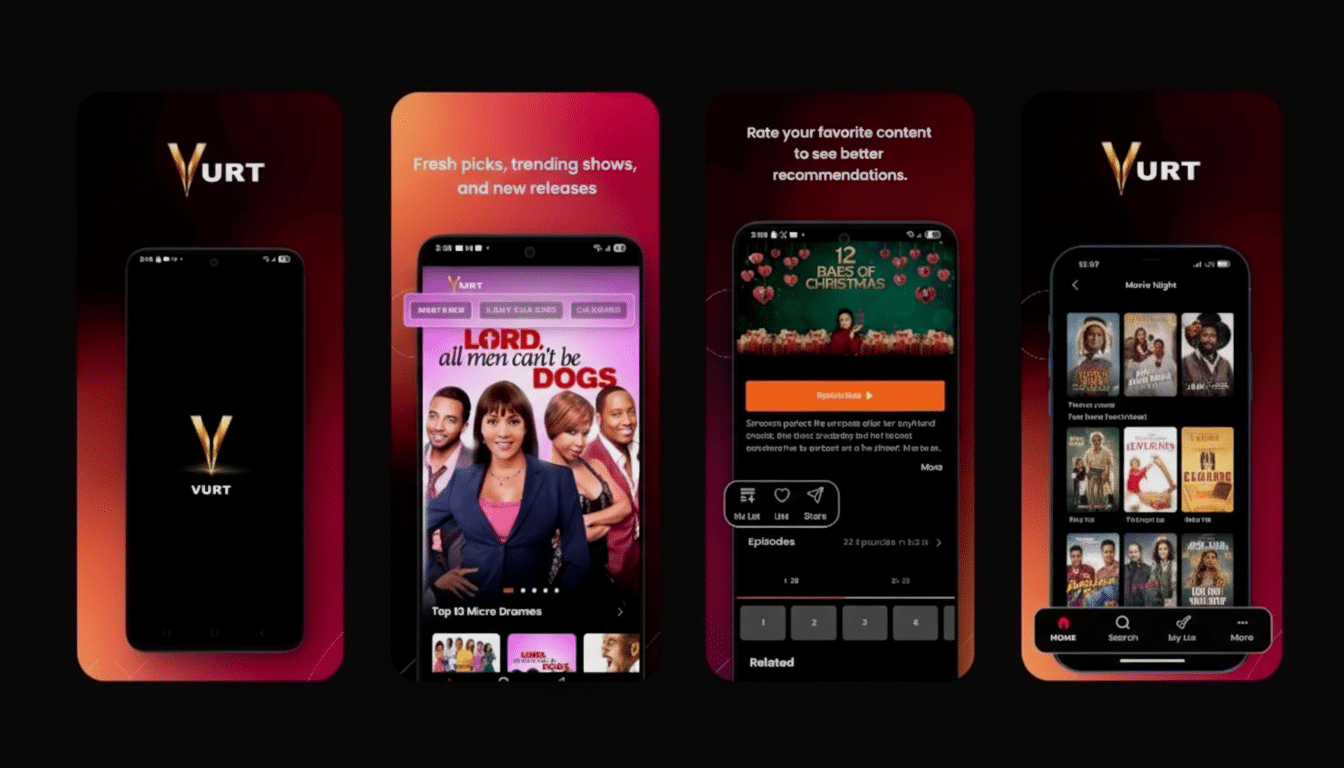
Vurt is stepping into the spotlight with a mobile-first streaming platform built entirely around vertical video, giving independent filmmakers a direct on-ramp to audiences who increasingly watch stories on their phones. At launch, the app features a growing slate of original micro-series, full-length films, and TV titles, with new originals rolling out weekly.
The pitch is simple but timely: meet viewers where they are and design the product for the way they hold their screens. By leaning into 9:16 storytelling, Vurt aims to formalize something social platforms proved years ago—vertical isn’t a gimmick; it’s a grammar.
- Why Vertical Storytelling Is Surging in Mobile Video
- How Vurt Works for Creators and Independent Artists
- The Team Betting on 9:16 and Mobile-First Streaming
- Creative And Business Implications Of Vertical
- What Viewers Can Expect from Vurt’s Vertical Platform
- The Bottom Line on Vurt’s Bet on Vertical Streaming
Why Vertical Storytelling Is Surging in Mobile Video
Short-form “micro-drama” has exploded from niche experiment to mainstream habit. Appfigures estimates that category leaders now generate blockbuster-level spending, with ReelShort projected around $1.2 billion in annual gross consumer outlay and DramaBox approaching $276 million. Even platforms famous for bite-sized clips are testing dedicated drama apps, signaling that appointment viewing can be snackable and still scale.
Vurt enters that momentum but carves out a distinct lane: a vertically native home for independent cinema and series, not just ultra-short episodes. That focus puts it in conversation with emerging competitors like Watch Club, which commissions microdramas from SAG-AFTRA and WGA talent, while keeping its doors open to newcomers who’ve never had a traditional distributor’s backing.
How Vurt Works for Creators and Independent Artists
Distribution has long been the indie filmmaker’s bottleneck, often requiring aggregators, opaque timelines, and upfront fees. Vurt replaces that maze with direct submissions, a lightweight review, and uploads that can go live in roughly 48 to 72 hours once approved. The goal is speed without sacrificing curation.
Monetization is AVOD—advertising-based video on demand—so viewers watch free while creators earn from ad placements. Vurt uses a non-exclusive license with a 50/50 revenue split, letting filmmakers keep their rights and stack opportunities across festivals, social platforms, and other services. For scrappy teams financing projects in stages, that flexibility matters as much as the check.
The content mix already spans genres, from micro-series to full-length features, and includes titles featuring recognizable names like Kevin Hart and Vivica A. Fox. That blend of star power and up-and-coming voices is designed to pull in casual viewers while giving new creators adjacent discovery.
The Team Betting on 9:16 and Mobile-First Streaming
Vurt is led by Ted Lucas, an entrepreneur best known for founding Slip-N-Slide Records, the label behind chart-topping hip-hop acts. His push into streaming came after navigating the distribution challenges of his documentary “Miami Kingpins,” a process that highlighted how rigid the pipeline can be for independents.
Lucas is joined by producer Eric Tomosunas of Swirl Films, director-producer Mark A. Samuels, and angel investor Hilmon Sorey. Advising is Tarik Brooks, an executive with stints at BET and REVOLT. It’s a team with deep production and distribution experience, now applying that muscle to a mobile-native format.
Creative And Business Implications Of Vertical
Composing for 9:16 isn’t just cropping—it changes how scenes breathe. Close-ups land with more intimacy, two-shots become choreography, and visual hierarchy moves from width to depth. Directors are rethinking blocking, text overlays, and practical lighting to make the frame feel cinematic on a six-inch canvas.
On the business side, vertical is aligned with the attention graph. Industry groups like the IAB have reported sustained double-digit increases in digital video ad spend, and advertisers value brand-safe, episodic environments. Vurt’s AVOD model taps that demand while giving indies a path that Quibi, with its high-cost originals and subscription wall, never offered: low-friction uploads, rights retention, and discoverability shaped by algorithmic and editorial signals.
What Viewers Can Expect from Vurt’s Vertical Platform
At launch, Vurt offers a catalog of 100-plus episodes across drama, comedy, thriller, and reality-inspired formats, with fresh drops each week to train habit. Episodes are designed for mobile-native pacing—tight cuts, clean framing, and hooks that reward short sessions without sacrificing continuity.
The app is free on the major mobile stores, and a web version mirrors the experience while staying faithful to vertical playback. That unified design choice underscores Vurt’s thesis: rather than treating vertical as a social afterthought, build a full streaming destination around it.
The Bottom Line on Vurt’s Bet on Vertical Streaming
Vurt is betting that vertical can sustain more than clips—it can carry complete stories and careers. With direct distribution, an even revenue split, and a format tuned for the way people actually watch, the platform gives indie filmmakers a pragmatic path from camera roll to audience. If the micro-drama boom is any guide, the market is ready; now the question is whose stories will define the new frame.

