


Ultrahuman has unveiled the Ring PRO, a third-generation smart ring headlined by up to 15 days of battery life on a single charge and a companion charging case that can stretch total runtime to as much as 45 days. It is a direct challenge to category leader Oura, pushing the conversation around endurance, accuracy, and ecosystem smarts in a segment that’s heating up fast.
Two-Week Battery Life and a Travel-Ready Smart Charging Case
Battery life has been the Achilles’ heel for most smart rings, which pack advanced sensors into a form factor smaller than a coin cell. Ultrahuman’s headline number—up to two weeks per charge—stands out in a market where many rings land closer to a working week in real-world use. The new PRO Charging Case is the kicker: it supports Qi wireless charging, uses a magnetic dock engineered to reduce heat buildup, and can top up the ring repeatedly to deliver a claimed 45 days of total use away from a wall outlet.
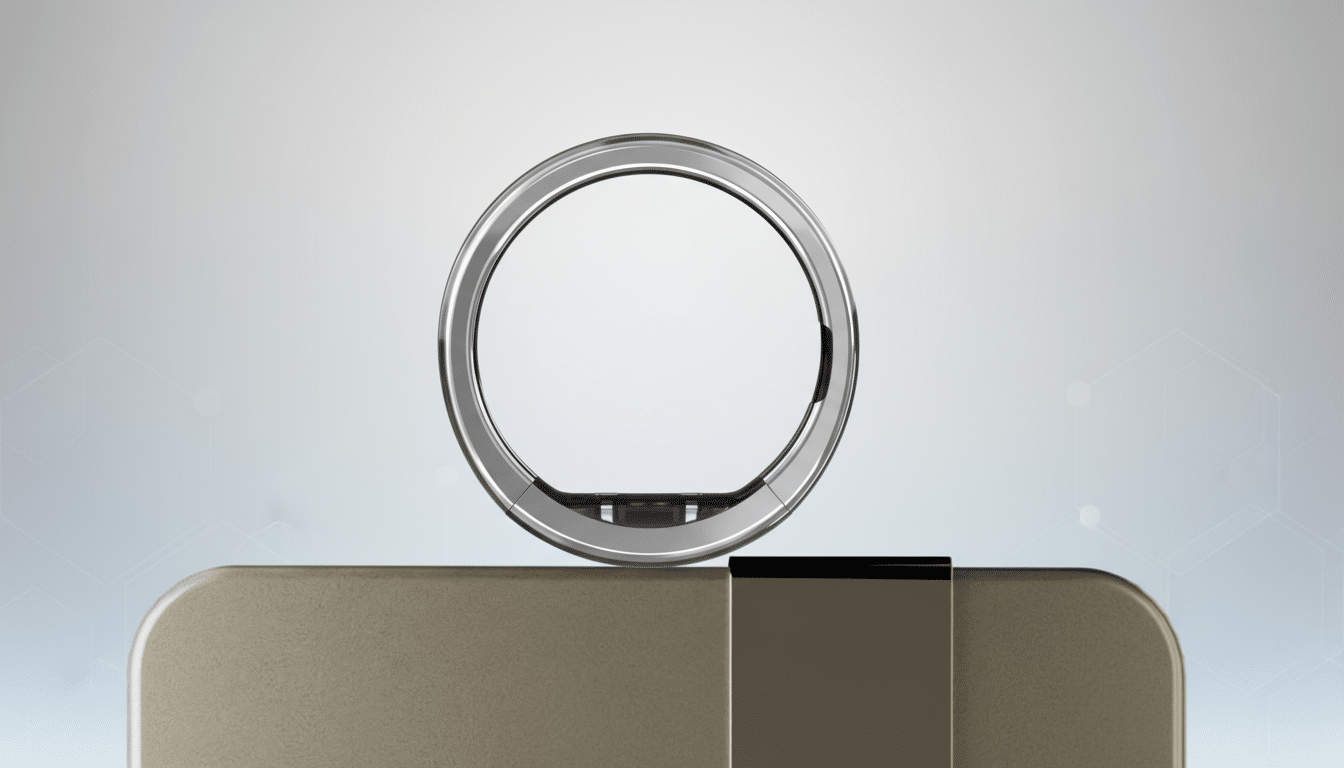
Beyond juice, the case plays a more technical role. Ultrahuman says it can store substantial ring data, speed up firmware updates via direct connectivity, and even includes a tiny speaker with proximity guidance to help you locate it when it’s misplaced. Taken together, this turns the case into more than a power bank—it’s an extension of the platform designed for heavy travelers and athletes who can’t afford tracking gaps.
For context, Oura’s latest ring typically lasts several days between charges depending on features like continuous heart rate and tracking frequency. A long-haul buffer of weeks rather than days reduces the friction of ownership: fewer charge cycles, fewer missed nights of sleep data, and less chance you’ll forget the ring on a bedside charger.
Hardware Upgrades Focused on Accuracy and Durability
The Ring PRO moves to a titanium build and launches in Bionic Gold, Space Silver, Aster Black, and Raw Titanium. Under the hood, Ultrahuman has reworked its heart-rate sensor array for better fidelity—particularly during sleep, where optical signals can be tricky on small surfaces. A new dual-core processor promises snappier on-device processing so features rely less on your phone’s Bluetooth connection.
Local storage is another notable spec: the ring can hold up to 250 days of health data before it needs to sync. That kind of buffer protects against connectivity hiccups and underscores a privacy-forward approach, since more analysis can happen on the device and within the ecosystem rather than the cloud.
AI Platform Ties the Health Data Ecosystem Together
Alongside the hardware, Ultrahuman introduced Jade, an AI layer that fuses metrics from across the company’s portfolio. In practice, that means the ring’s sleep and recovery data can be cross-referenced with results from blood testing, continuous glucose signals, and environmental inputs to generate actionable nudges—think timing a breathwork session after a stressful spike or flagging heart rhythm patterns worth discussing with a clinician.

This kind of multimodal context is where wearables are headed. Industry researchers have long argued that single-sensor data is less meaningful in isolation; combining streams improves signal quality and compliance. Jade leans into that thesis while keeping the core ring experience subscription-free, which will resonate with users wary of stacking monthly fees for basic insights.
Pricing Availability And The Oura Rivalry
The Ring PRO starts at $479 and includes the charging case in the box. Global preorders are open, with shipments slated to begin soon. Due to an ongoing U.S. patent dispute involving Oura Health, the device will not be sold domestically for now, pushing Ultrahuman to prioritize international markets.
Oura remains the benchmark for many buyers, but the competitive lines are sharper today. Ultrahuman’s pitch emphasizes longer battery life, a travel-first charging case, and no membership for core features. Oura counters with a mature platform, a large research footprint in sleep science, and a polished app—plus a growing ecosystem of integrations. With heavyweight brands like Samsung previewing their own smart rings, the category is poised for broader adoption and faster iteration.
Why Endurance Changes The User Experience
Sleep and recovery tracking only work if the hardware is on your finger at night. Independent testers have noted that many rings drift to 4–7 days of endurance in typical use; that cadence often leads users to charge during the day and occasionally forget to wear the device to bed. By pushing toward 15 days and adding weeks of portable top-ups, Ultrahuman is attacking a real-world failure point that undermines adherence and long-term data quality.
If Ultrahuman’s claims hold up outside the lab, the Ring PRO could reset expectations for what a smart ring can do on a single charge. That, more than any one sensor spec, is the clearest sign this market is moving from early adopters to the mainstream—where convenience and reliability matter as much as cutting-edge tech.
