


Ultrahuman has unveiled the Ring Pro, a flagship smart ring that pushes battery life to a claimed 15 days and squarely targets the category leader, Oura. The catch is big for American shoppers: ongoing patent litigation means the Ring Pro won’t be sold in the US at launch. Everywhere else, Ultrahuman is pitching a longevity-first wearable with upgraded sensors, smarter charging, and an AI health coach designed to turn raw metrics into meaningful guidance.
Longer Battery Life and Smarter Charging Features
Battery life remains the stress test for any ring, and Ultrahuman is swinging hard. The company says the new model reaches up to 12 days in its default Turbo Mode and stretches near 15 days in a low-intensity Chill Mode. For context, most mainstream rings including Oura typically deliver about 4 to 7 days between charges, while newer entrants such as RingConn and Evie hover in a similar range. If real-world results land close to Ultrahuman’s claims, that’s a meaningful step change in usability.
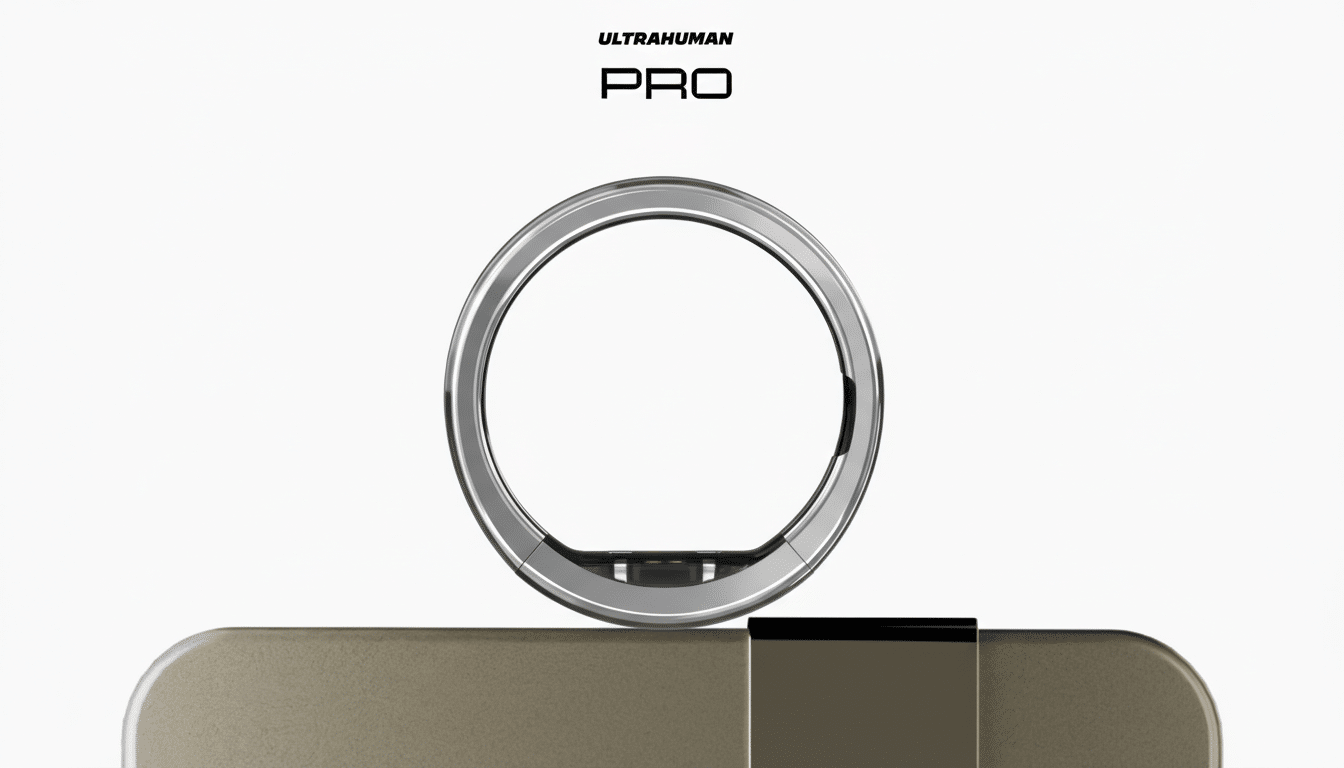
Complementing the on-finger endurance is a Qi-enabled Pro Charging Case. Ultrahuman says the case provides up to 45 days of top-ups and can store a full year of ring data, offering a travel-friendly buffer for both power and memory. The case adds find-my-style locating features, LED indicators, and basic haptic feedback to remove the guesswork from charging and retrieval.
Sensor Upgrades for Sleep Tracking and Recovery
Beyond battery, the Ring Pro focuses on consistency. Ultrahuman redesigned its optical heart-rate array for cleaner signals overnight and during recovery, where motion artifacts and weak perfusion often degrade accuracy. There’s beefed-up onboard memory and processing, plus the ability to locally store up to 250 days of data. That’s useful on trips or in patchy connectivity, and it reduces dependence on a phone to capture every data point.
Better fidelity matters because the most valuable ring metrics, like heart rate variability, resting heart rate, temperature trends, and movement, hinge on continuous, clean capture. Organizations such as the American College of Cardiology and the Sleep Foundation have highlighted how HRV and consistent sleep schedules correlate with recovery quality. If Ultrahuman’s redesigned sensors reduce dropouts and missed windows, users should see steadier readiness and sleep-stage estimates.
A Safer Take on Emergency Removal and Safety
Smart rings can be hard to cut off in emergencies because lithium cells don’t like metal tools and heat. Ultrahuman’s new ProRelease Technology aims to address that risk by making the ring easier for responders to sever if swelling traps it on a finger. It’s a niche scenario, but emergency physicians and fire crews regularly warn about the complications of battery-powered rings. Building for worst-case outcomes signals welcome attention to safety engineering.

AI Coach Joins the Ring with Personalized Guidance
Alongside the hardware, Ultrahuman introduced Jade, an in-app assistant that interprets trends and suggests corrective actions. Think nudges tied to circadian cues, recovery state, or exercise timing rather than generic tips. The move follows a broader shift across wearables: Oura has leaned into stress and readiness insights, Whoop added a coach, and Fitbit has been rolling out more guided analytics. The battleground is no longer just data—it’s what the device helps you do with it.
Pricing, Colors, Trade-In Offers, and Availability
The Ring Pro is slated to ship in Bionic Gold, Space Silver, Aster Black, and Raw Titanium across sizes five through 14. Pricing lands at $479, and the package includes the Pro Charging Case. Ultrahuman is offering a trade-in program worth up to $115 for select older Ultrahuman rings or eligible models from other brands. Notably, Ultrahuman continues to market its ecosystem without a monthly subscription, a contrast to Oura’s membership model.
The major asterisk is geography. Due to an adverse patent ruling in its dispute with Oura, Ultrahuman says the Ring Pro isn’t available for sale in the US for now. The company indicates it intends to pursue legal remedies, but until restrictions lift, interested American buyers will have to wait. Elsewhere, availability will roll out through Ultrahuman’s direct channels.
Why It Matters for the Smart Ring Competition
Smart rings are one of wearables’ fastest-growing niches, according to analysts at Counterpoint Research, yet still ship in far lower volumes than watches. Leaders are being defined right now by a few things that change daily behavior: battery life, comfort, reliable sleep capture, and clear insights. On paper, the Ring Pro checks several of those boxes, especially endurance and data resilience. The remaining question is whether Ultrahuman can get its most competitive product into the world’s largest wearables market—and how quickly rivals answer the 15-day challenge.
