


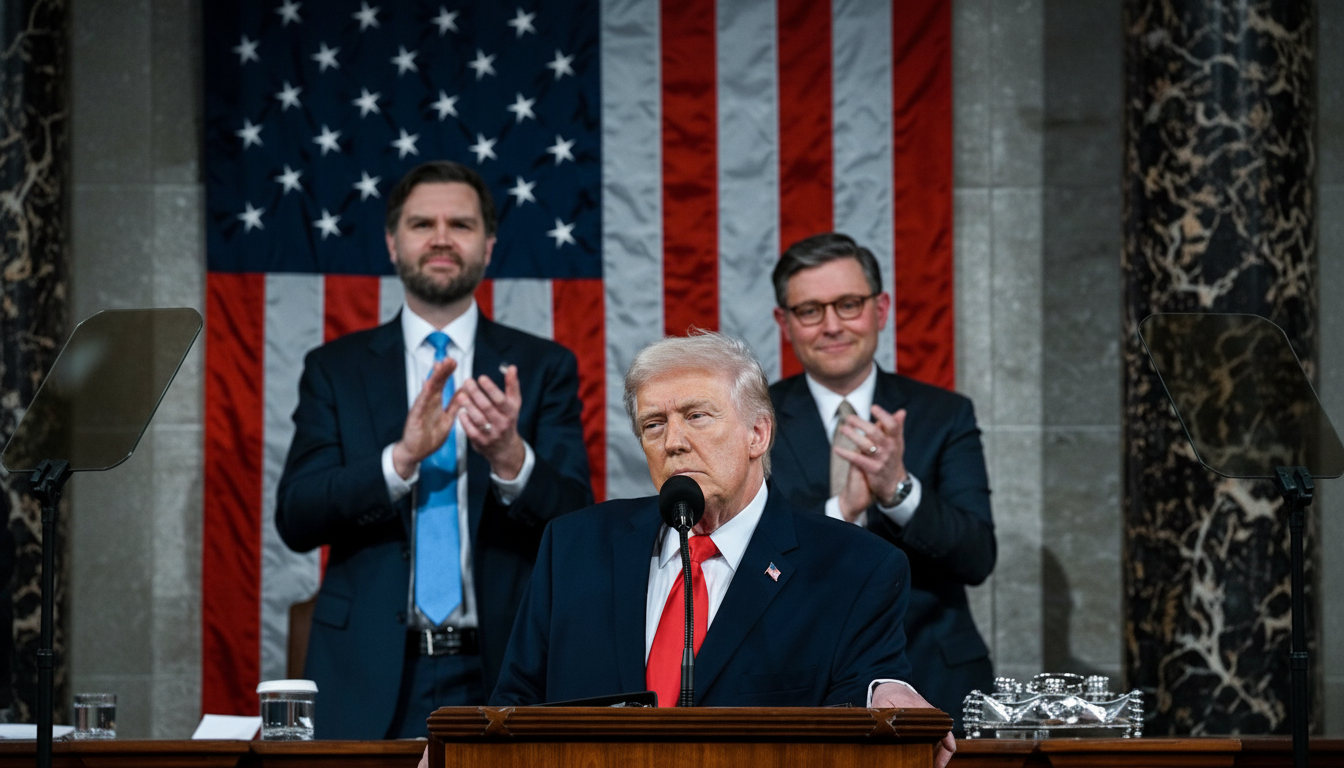
President Trump used his State of the Union address to unveil a “ratepayer protection” push aimed squarely at the largest AI companies, urging them to shoulder the full cost of the power their data centers consume. The message was blunt: build and finance your own electricity supplies so household bills don’t climb alongside AI demand.
White House officials have signaled a follow-on event where companies will be named, but the policy thrust is already clear. It targets the collision between a fast-rising AI compute curve and a U.S. grid that is struggling to add generation and transmission fast enough to keep pace.
What the Pledge Seeks to Solve in AI Power Demands
Data-center electricity demand is accelerating as AI training and inference scale. The International Energy Agency projects global data-center consumption could roughly double by the middle of the decade, approaching about 1,000 TWh annually, with AI a primary driver. U.S. utilities are reporting multi‑gigawatt interconnection requests clustered near major metros and cheap-power hubs.
The logic behind the pledge is straightforward: if hyperscalers pay for the generation, wires, and substations they require, retail customers won’t be stuck with those capital costs. Analyses from the U.S. Energy Information Administration and Electric Power Research Institute suggest data centers could account for a high single‑digit share of U.S. load within a few years, depending on buildout speed and efficiency gains.
Big AI Is Already Writing Its Own Energy Checks
Even before the announcement, several firms had moved to preempt ratepayer backlash. Microsoft said it would finance new generation and grid upgrades tied to its campuses, including a deal to pursue restarting a nuclear unit at Three Mile Island to support future demand. OpenAI’s proposed Stargate project was framed around paying its own way on energy for an unprecedented-scale facility.
Anthropic publicly committed to cover 100% of the grid upgrades required to interconnect its sites and to bring new generation online to match its load. Google created a “clean transition rate” structure with NV Energy and later expanded similar arrangements with Xcel Energy, paying to add wind, solar, and storage while insulating local customers. Meta says it already bears the full energy costs for its data centers. xAI has emphasized that its supercomputer projects include power procurement and, where needed, on‑site generation.
Promises Meet Practical Trade-offs for Communities
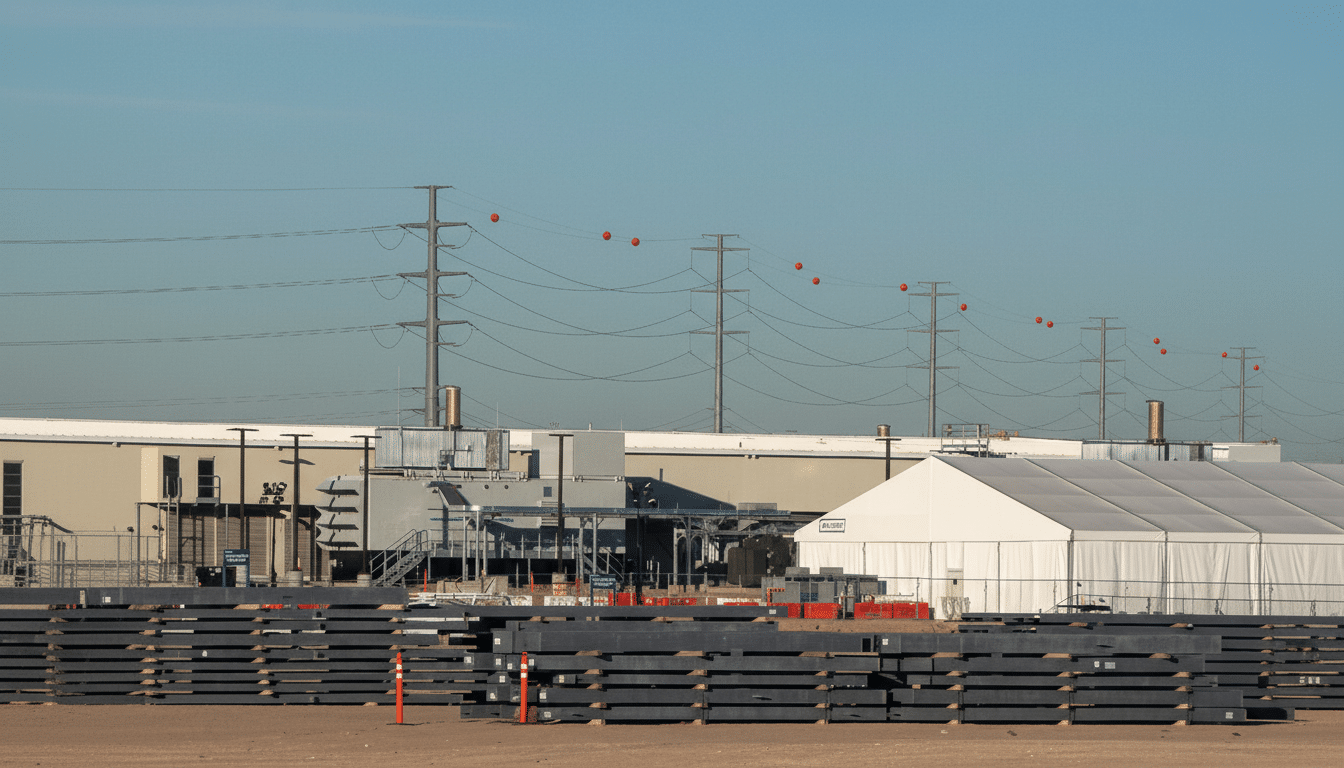
Building your own power does not automatically earn community buy‑in. A Washington Post investigation highlighted local pushback in places like Texas and West Virginia over gas‑fired turbines positioned near data centers—criticisms centered on pollution, noise, and siting transparency. Off‑grid generation may reduce pressure on utility rates, but it can still increase local emissions if it relies on fossil fuels.
Nuclear and geothermal are often cited as zero‑emission baseload options, yet timelines are long and permitting rigorous. Small modular reactors remain years from commercial deployment, and geothermal potential is geographically constrained. Meanwhile, 24/7 carbon‑free energy procurement—matching consumption hourly with carbon‑free supply—is gaining traction among tech buyers, but it requires granular contracts and robust market data to prove “additionality” rather than reshuffling existing clean power.
The Grid, the Queue, and Who Ultimately Pays the Bill
Even self-financed projects must navigate a clogged interconnection system. Lawrence Berkeley National Laboratory tracks more than 2,500 GW of generation and storage sitting in U.S. interconnection queues, a bottleneck that can stall projects for years. Under federal interconnection reforms, data centers are increasingly expected to fund the specific upgrades their projects trigger, but cost allocation still varies by region and utility tariff.
Utilities are piloting bespoke structures—special tariffs, behind‑the‑meter microgrids, and utility‑owned assets funded by customer contributions—to speed reliable supply without broad rate impacts. The “clean transition rate” approach pioneered with NV Energy and mirrored in other territories effectively ring‑fences costs while adding new renewables and batteries. For regulators, the test is whether these deals deliver reliability, verifiable new capacity, and fair treatment for non‑participating customers.
What to Watch Next as AI Power Demand Accelerates
Three details will determine whether the pledge is more than a talking point.
- First, scope: who signs, and does it include AI tenants leasing from third‑party colocation providers?
- Second, accounting: will companies commit to 24/7 carbon‑free power and local “additionality,” or rely on annual credits that don’t curb peak‑hour emissions?
- Third, siting and justice: how will projects weigh local air quality, water use, and land impacts against speed to power?
The economics are shifting, too. AI clusters can draw from 100 MW to upward of 1 GW per campus, and cooling plus networking loads add to the bill. Efficiency advances—from higher‑utilization chips to liquid cooling and smarter scheduling—can temper growth, but they’re unlikely to outpace the surge in compute needs in the near term.
Bottom line: pushing AI giants to “produce their own electricity” formalizes a trend already underway. If executed with rigorous cost and carbon accounting—and community engagement—it could relieve pressure on rates and speed new capacity. If it defaults to expedient fossil plants tucked behind the meter, it risks solving one problem while creating another. The next set of company‑specific commitments will show which path prevails.

