


What should have been a unified celebration for American hockey split along a familiar fault line. Moments after Team USA’s men clinched a dramatic overtime gold against Canada, a speakerphone call with Donald Trump from inside the locker room went viral — not for the congratulations, but for a quip that turned the gold medal–winning women’s team into a punchline. The laugh line ricocheted across social platforms and sports talk shows, sparking anger from fans and athletes who saw it as yet another reminder of how women’s achievements can be minimized in the very moments they dominate.
A Viral Moment That Landed Like a Public Snub
In the clip, Trump invites the men to the White House, then jokes he’d “probably be impeached” if he didn’t also invite the women — framing their own gold as an obligation rather than a triumph. Laughter fills the room. Outside it, the mood curdles. Within hours, the video was everywhere, intersecting with the same feeds that helped mint hockey’s recent mainstream surge. Members of the women’s team, according to people close to the program, signaled they would not attend any celebratory visit.
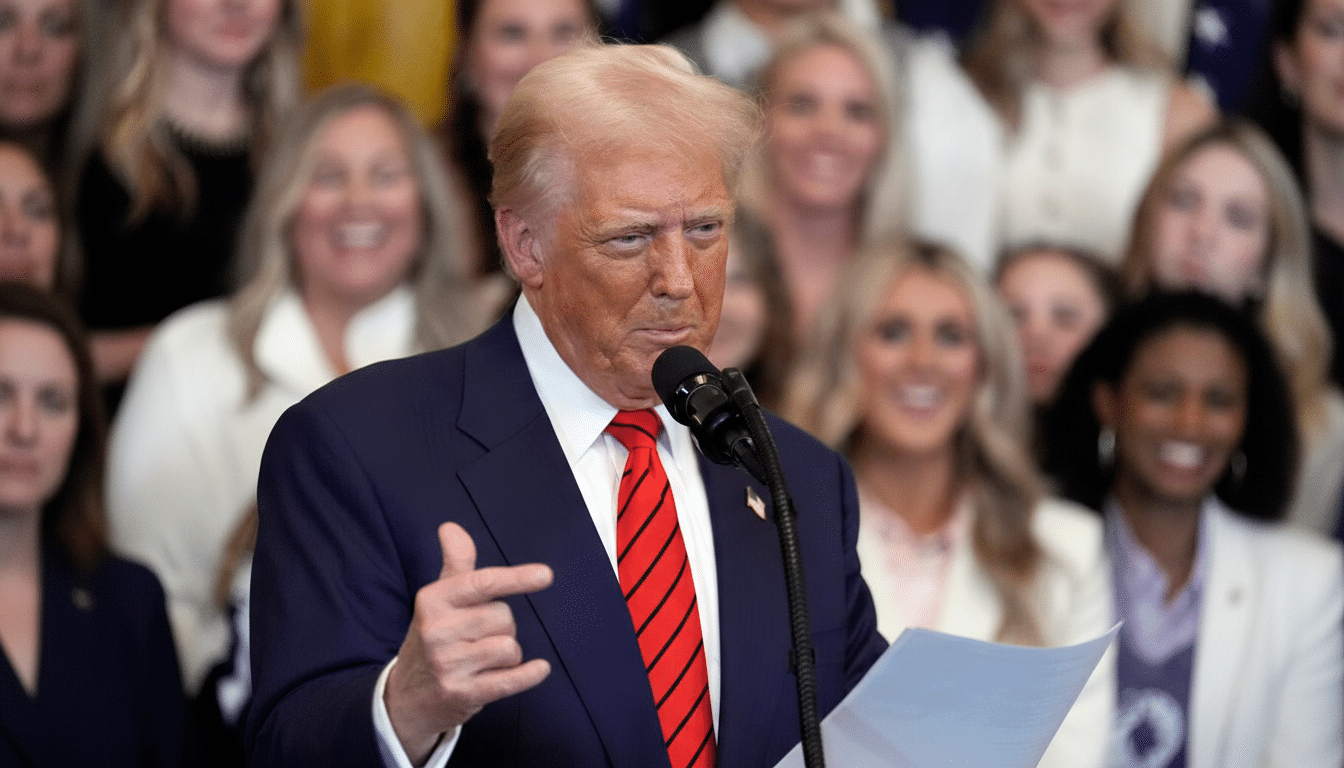
The reaction owes as much to context as to the comment. Trump’s history with athletes — particularly women — has been combative, from castigating U.S. women’s soccer after its World Cup activism to deriding Olympians and WNBA players who criticized him. That backdrop made the locker-room levity sound less like banter and more like a reflexive diminishment of women’s sports.
The Record Says Women Carry U.S. Hockey Success
If the joke implied the women’s win was incidental, the record says otherwise. Since women’s hockey debuted at the Olympics in 1998, Team USA has medaled at every Games and set the global standard alongside Canada. Their latest gold — also seized in overtime versus Canada — extended a run of excellence that spans generations. Women were central to Team USA’s overall success too, accounting for 8 of the delegation’s 12 golds, per figures circulated by the U.S. Olympic and Paralympic Committee.
The grass-roots pipeline is stronger than ever. USA Hockey reports that female participation has expanded steadily for two decades, with total registrations roughly doubling since the mid-2000s as girls’ programs spread beyond traditional cold-weather markets. At the college level, the NCAA has added teams and scholarships, drawing talent that feeds both the national program and the professional ranks.
The pro ecosystem is maturing, too. The PWHL’s inaugural season reset expectations for demand, breaking women’s hockey attendance records multiple times and packing 19,285 fans into Montreal’s Bell Centre for a regular-season game. Deloitte projected elite women’s sports would surpass $1 billion in global revenue in a single year for the first time, and Nielsen’s research shows year-over-year audience growth across women’s competitions. The appetite is there; the product is world class.
Why Words in Locker Rooms Shape the Sport
Dismissive rhetoric is not a harmless aside in a sector that still fights for equitable visibility. Studies summarized by the Women’s Sports Foundation find women’s sports receive well under 15% of traditional media coverage, even as viewership and sponsorships accelerate. When high-profile figures frame women’s wins as afterthoughts, it reinforces legacy biases that influence everything from broadcast windows to bonus pools.
Sponsors, broadcasters, and youth participants take cues from cultural signals. After the U.S. women’s soccer team’s 2019 World Cup run, brand investment and youth registrations surged; similar effects have followed the PWHL’s momentum and the U.S. women’s hockey program’s milestones. Messaging from political leaders can either amplify that growth or dull it. It’s not about etiquette — it’s about market reality and the narratives that sustain it.
Fans and Players Recentering the Narrative
What cut through fastest in the backlash wasn’t partisan outrage but fan protectiveness. The same online communities that helped introduce new audiences to hockey — from meticulous tactics threads to the tongue-in-cheek “boy aquarium” memes that reimagined the rink through a female gaze — quickly reframed the story back to the women’s skill, speed, and resilience. That groundswell matters: social buzz increasingly dictates highlight placement and sponsor priorities.
Players have led, too. From the U.S. women’s hockey team’s pay-equity fight that reshaped a World Championship to the coalition-building that birthed the PWHL, athletes have shown that collective action moves institutions. In that light, declining a ceremonial photo op reads less as a snub and more as message discipline: keep the focus on the hockey, not the hierarchy.
None of this erases the men’s achievement, which was electric and well earned. But celebrating one team should never require sidelining another — especially when the women’s program has been the backbone of American hockey for decades. If this viral moment exposed an old reflex, the response revealed a newer reality: fans, athletes, and data all point in the same direction. The women aren’t an asterisk. They are the headline.

