


The manner in which we establish our identity has seen a significant change in the fast-digitized society of 2026. With online services acquiring a larger part of our everyday routines; decentralized finance, to worldwide e-commerce, the standard of a username and password model has been long since superseded by more advanced, unseen levels of security. This evolution is not just about security; it is about creating a seamless bridge between the physical and digital worlds, according to this guide on Techiexpert, where the onboarding experience now dictates the success of a platform.
The Multi-Mode AI Check Changeover
The identity verification process has gone way beyond document scans by 2026. We have now arrived in a period of so-called multi-modal AI verification, which means a system where dozens of independent signals are simultaneously analyzed to verify an identity. These systems integrate document verification, face recognition, body language and device smarts into real-time risk evaluation as opposed to using a single photo.
Passive Liveness Detection
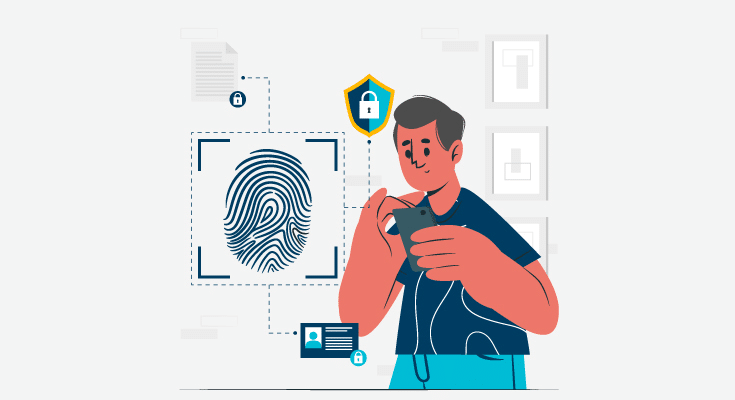
The emergence of passive liveness detection is considered one of the most important innovations. In the past, the user would be required to blink or turn his/her head so as to be considered as a live human. Modern smarter systems read hidden signals in the form of skin texture, micro-expressions and lighting reflections in the backdrop even as a user just takes a selfie. This does away with the friction which previously made 72% of users leave the apps in the sign-up process.
The Emergence of Continuous Identity Assurance
Previously, identity verification used to be a one-time process when onboarding was taking place. In 2026, it has become a case of continuous identity assurance in the industry. It implies that behavioral biometrics is constantly, but silently, monitored by online services to make sure that the person utilizing the account has not changed.
- Typing Cadence: The rhythm and the pressure with which you type can serve as a signature.
- Navigation: Your movement on the mouse or swiping through an application will make you appear as not the work of an automated robot or an intruder.
- Device Health: Checks of device posture should always be performed to make sure that the device is authentic and is not compromised hardware.
This continuous vetting enables high-trust platforms, such as banks and crypto exchanges, to cut fraud by 35 percent as well as providing 40 percent faster onboarding of legitimate users.
Selective Disclosure and Decentralized Identity
The usage of Decentralized Identity (DID) and Zero-Knowledge Proofs may be the most human-focused innovation of 2026. Users can now own their data on an individual basis, unlike in previous times when they kept their data in central databases owned by the company.
Making the Truth Without Data Public
With Zero-Knowledge Proofs you are now able to prove something without giving it away. An example is that you can mathematically prove to a service that you are more than 18 without ever providing your real date of birth. This selective disclosure creates so much trust because organizations are not required to save anymore and possibly lose huge volumes of sensitive personal information.
- Less Risk of Breach: Businesses that do not hold your PII (Personally Identifiable Information) cannot lose it in a breach of data.
- Reusable Credentials: Once you have verified your identity, that verified status will be immediately used across hundreds of different platforms.
Overcoming the Deepfake Threat
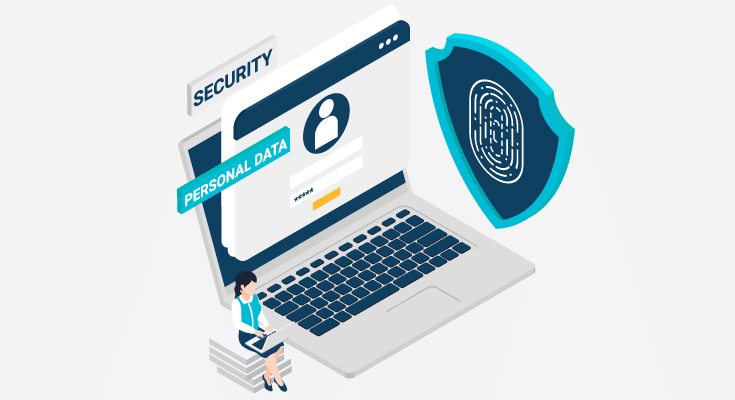
The pessimistic view of the future is the detonation of artificial intelligence-generated deepfakes. Nowadays, fraudsters generate synthetic identities with the help of generative AI, which can withstand a number of usual checks. Smart identity verifying tools have in turn moved away, however, to analyze the origin of the signal in response. They are now able to build up if a video stream is being injected out of a computer file in lieu of coming out of a live camera lens.
AI vs. AI Ecosystems
It is now an AI arms race wherein identity experts are deploying deep learning models that are explicitly trained to seek the most apparent abnormalities of AI-generated media. Such systems study micro-environmental clues such as the stability of the source of light and the biological noise of real human video.
Conclusion: Competitive Edge of Trust
By the year 2026, identity verification is no longer a compulsory compliance burden but a strategic element of digital resilience. Those that strike this balance on the one hand, ensuring uncompromising security with the help of biometrics and on the other hand, preserving the privacy of decentralized credentials will be the ones, which will get user loyalty in the long term.
Although the technology has also become more complicated, the aim of it is simple to make the internet a place where the password to being yourself is the one you will only use in your life.
Would you like me to assist you in comparing security audit logs or biometric standards of a particular online service that you are using?

