


The digital publishing industry is undergoing a seismic architectural shift. For the past two decades, the primary focus of digital media companies has been on distribution—building better platforms, faster content delivery networks, and more engaging subscription models. However, as internet penetration reaches saturation in traditional English-speaking markets, publishers, independent creators, and media conglomerates are realizing that the next frontier of exponential growth doesn’t rely on better distribution tech; it relies on overcoming the final, most stubborn barrier to global scale: language.
Today, a compelling story—whether it’s an interactive long-form journalistic piece, an instructional corporate manual, or a visually stunning digital graphic novel—can technically reach a reader in Tokyo, Paris, or São Paulo instantly. Yet, if that content remains strictly localized in its original language, its actual addressable market is severely fractured. The globalization of digital publishing has necessitated a radical rethinking of how we approach translation and cross-cultural content adaptation, moving from slow, human-bottlenecked processes to agile, AI-driven localization workflows.
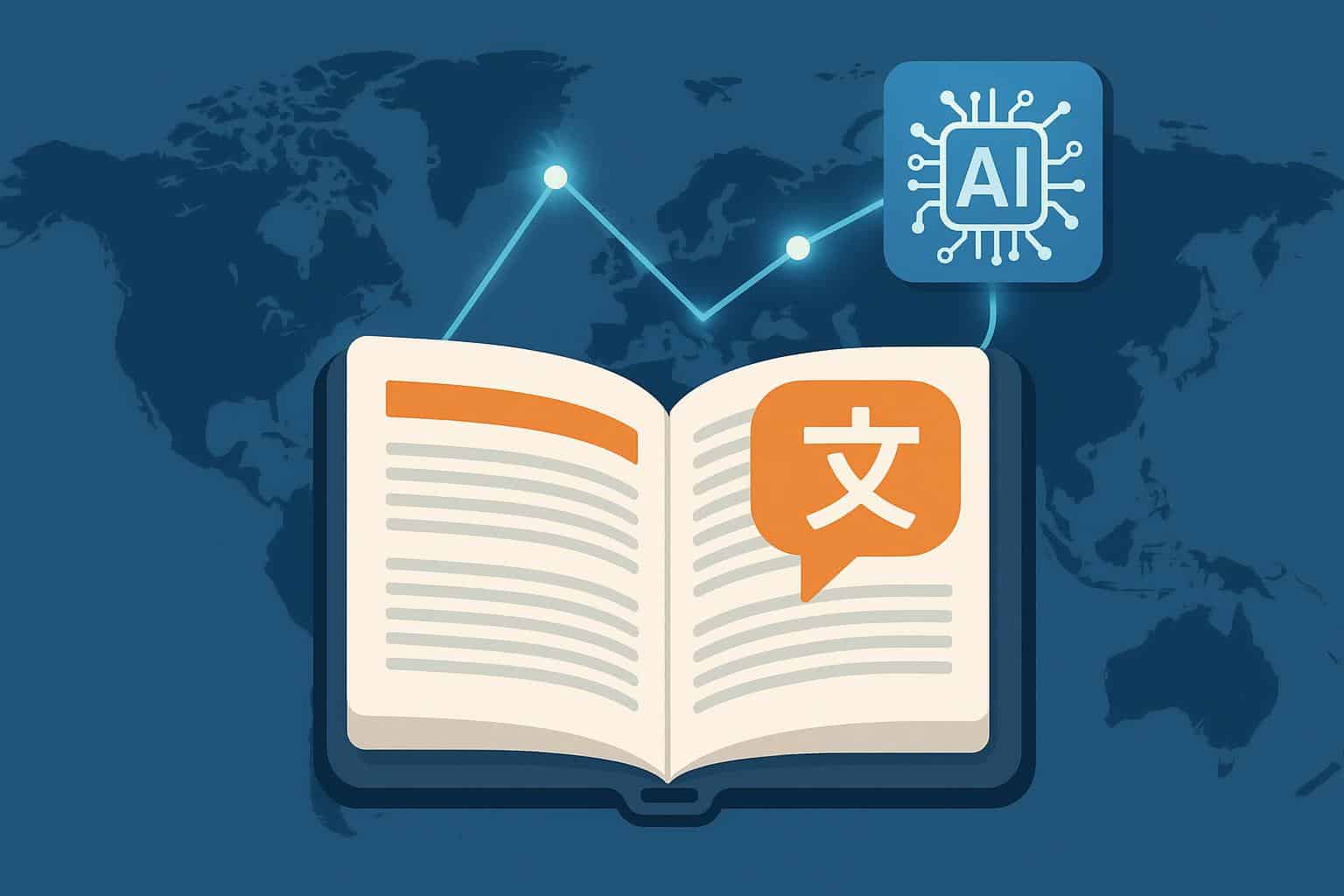
The Evolution from Translation to Deep Localization
To understand the current industry trends, it is crucial to differentiate basic translation from true localization. In the early days of the internet, rudimentary machine translation offered literal, word-for-word substitutions. This was often sufficient for basic skimming but completely inadequate for conveying nuanced narratives, brand voice, or cultural idioms.
Today, informed readers—and more importantly, search engine algorithms evaluating content quality under the E-E-A-T (Experience, Expertise, Authoritativeness, Trustworthiness) framework—demand a native-feeling experience. Modern localization requires adapting the tone, formatting, cultural references, and visual elements of the content so that it resonates harmoniously with the target demographic.
For text-heavy mediums like news articles or financial reports, advanced Neural Machine Translation (NMT) engines have largely bridged this gap, allowing global publishers to syndicate news across different languages within minutes of publication. However, the rapidly expanding sector of visual publishing presents a far more complex challenge.
The Bottleneck in Visual and Sequential Media
Visual storytelling mediums, such as digital comics, illustrated children’s books, infographics, and interactive multi-media presentations, are experiencing unprecedented global demand. Unlike plain text, the narrative in these formats is inextricably linked to the visual art.
Historically, localizing a visual document was an incredibly slow, multi-stage ordeal. Consider the burgeoning global market for digital comics and webtoons. To bring a hit series from one language to another, a publisher had to employ graphic designers to manually erase the original text—often permanently destroying the underlying artwork in the process if raw files were unavailable. Subsequently, translators would provide the new text, and typesetters would attempt to squeeze the translated dialogue into speech bubbles that were never designed for the spatial requirements of the new language.
This manual process creates a crippling bottleneck. It makes global syndication prohibitively expensive for independent studios and delays the international launch of highly anticipated visual content by months, frustrating potential audiences and encouraging piracy.
The AI Revolution in Visual Localization
The breakthrough changing the landscape of digital publishing is the integration of advanced computer vision with natural language processing. Technology companies are now deploying specialized AI protocols designed specifically to interpret and manipulate text within complex visual environments.
For instance, the workflow for exporting graphic narratives has been completely revolutionized by intelligent software tailored for this specific niche. A modern, AI-powered manga translator represents the pinnacle of this technological convergence. These advanced systems can autonomously scan a digitized page, identify irregularly shaped speech bubbles, extract the source text using high-fidelity Optical Character Recognition (OCR), and grasp the contextual meaning of the dialogue.
More impressively, the AI can perform digital “inpainting”—predicting and redrawing the missing background art where the original text used to be—before seamlessly rendering the translated text using locally appropriate typography. What historically required days of coordinated human effort across three different departments can now be executed by a single editor overseeing the AI’s output in a matter of seconds.
Strategic Implications for Global Brands and Publishers
The democratization of high-quality, high-speed localization holds immense strategic value across various sectors:
- Agile Market Entry: Media startups and independent creators can now launch their intellectual property simultaneously in multiple languages, mimicking the global release strategies of massive entertainment conglomerates without the associated overhead.
- Enhanced Corporate Training: Multinational corporations can rapidly update and deploy visually rich training materials, safety protocols, and technical schematics across their global workforce, ensuring uniform compliance and understanding.
- SEO and Global Discoverability: By hosting deeply localized content, web platforms naturally generate organic semantic search traffic in foreign markets. This significantly reduces the Customer Acquisition Cost (CAC) compared to purchasing localized ad space.
Conclusion
As digital infrastructure continues to mature, language adaptation remains the ultimate competitive differentiator. The transition from manual translation to AI-augmented localization is not merely an operational upgrade; it is a fundamental shift in how global media is consumed and monetized. By embracing these sophisticated technologies, publishers and creators are effectively dismantling the linguistic divide, ensuring that exceptional content—no matter its format or origin—can instantly find a home on any screen, anywhere in the world.

