


The trade show floor has long been described as a “battleground for eyeballs.” In the past, winning that battle was simple: you either had the tallest hanging sign, the loudest speakers, or the most colorful carpet. But as we move through 2026, the psychology of the attendee has shifted. People are no longer just looking for products; they are looking for “places.” The modern trade show booth has transitioned from a simple sales kiosk into a sophisticated piece of temporary architecture designed to facilitate human connection in an increasingly digital world.
The industry is currently witnessing a fascinating intersection of high-tech digital integration and high-touch organic design. Brands are realizing that to stand out, they must offer an environment that feels both futuristic and grounded. This evolution is reshaping how companies budget for events, how designers approach spatial planning, and how fabrication shops choose their materials.
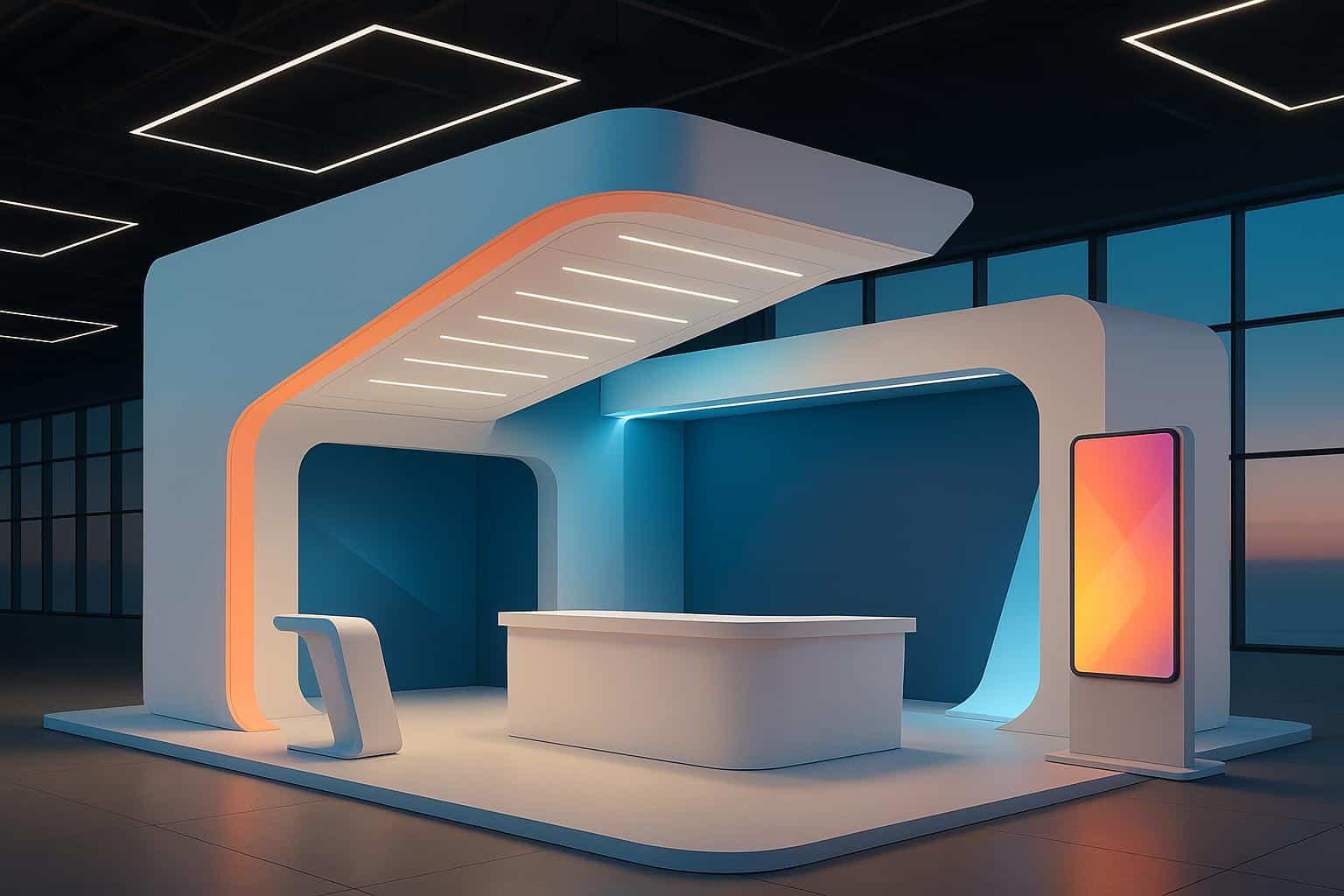
The Shift from Static Displays to Living Environments
One of the most significant trends in 2026 is the death of the “static” booth. In years prior, a booth was essentially a set of walls with graphics glued to them. Today, the environment is expected to breathe and react.
Kinetic Architecture and Moving Parts
We are seeing an increase in kinetic elements within booth structures. This might include rotating overhead headers, walls that shift to create private meeting spaces on demand, or integrated robotic arms that perform product demonstrations. The goal is to break the visual monotony of the trade show floor. Movement naturally draws the human eye, and by incorporating physical motion into the design, brands can capture attention from three aisles away without saying a word.
Biophilic Design and Sensory Wellness
Ironically, as technology becomes more prevalent, so does nature. “Biophilic design” – the practice of incorporating living plants, natural light, and organic textures – has become a staple of high-end exhibits. Convention centers are notoriously sterile, windowless environments. A booth that offers real greenery, the scent of cedarwood, and soft, naturalistic lighting acts as a physical relief for exhausted attendees. By providing a “wellness oasis,” brands keep visitors in their space for longer periods, leading to higher quality leads and deeper brand affinity.
Technology as an Invisible Assistant
In 2026, technology in trade show booths is no longer about “flashy for the sake of flashy.” The “iPad on a stand” is a relic of the past. Instead, tech is being woven into the very fabric of the booth to serve as an invisible assistant to the sales team.
Transparent OLED and “Phygital” Displays
The “phygital” (physical + digital) trend is reaching its peak. Designers are now using transparent OLED screens as windows or showcase glass. This allows a visitor to see a physical product – perhaps a new engine component or a medical device – while digital data, specifications, and “x-ray” views are overlaid on the glass in front of it. It creates a magical, interactive experience that educates the visitor without requiring a salesperson to repeat the same basic specs a hundred times a day.
AI-Powered Heat Mapping and Engagement Analytics
Behind the scenes, the best modern booths are “smart.” Sensors hidden in the lighting rigs track how people move through the space. They identify which demo stations are popular and which “dead zones” are being ignored. This data is invaluable for marketing teams, allowing them to adjust their strategy in real-time or optimize the layout for the next show in the circuit.
Precision Fabrication and the New Guard of Builders
The complexity of these modern designs requires a high level of craftsmanship and technical expertise during the fabrication phase. Not all shops are equipped to handle the integration of complex electronics with lightweight structural systems.
The Role of Specialized Manufacturers
As the industry matures, we see a divide between general contractors and specialized design-build firms. Many brands are now seeking out companies that offer a more tailored, agile approach to construction. For instance, Level trade show booths represents this new wave of providers, functioning as a manufacturer that focuses on high-quality custom displays and modular systems. They are known for balancing aesthetic impact with structural reliability, ensuring that the “wow factor” of a design actually functions safely and efficiently on the busy show floor.
Sustainable Materials and Circular Construction
Sustainability is no longer a “marketing bullet point”; it is a logistical requirement. In 2026, venues are becoming stricter about “build and burn” waste. Consequently, designers are turning to recycled aluminum frames, bio-resins, and repurposed textiles. The challenge is making these sustainable materials look as premium as their traditional counterparts. The industry has responded with incredible innovations in “textile architecture,” where high-definition graphics are printed on fabrics made from ocean plastic, stretched over modular frames to create massive, seamless surfaces that are lightweight and easy to ship.
The Psychology of the “Micro-Experience”
Instead of trying to appeal to everyone at once, the most successful 2026 booths are designed as a collection of “micro-experiences.” This spatial strategy acknowledges that different visitors have different needs.
The Social Gateway
The outermost edge of the booth is now designed as the “social gateway.” This area is high-energy and visually loud, specifically designed for quick interactions and “Instagrammable” moments. It serves to filter the crowd, capturing the casual passersby and providing them with a quick brand “vibe” before they move on.
The Deep-Dive Zone
Further inside the booth, the atmosphere changes. The “deep-dive zone” is characterized by comfortable seating, lower acoustic levels, and more intense lighting on specific products. This is where the actual business happens. By physically separating the “spectacle” from the “specification,” booth designers allow their sales teams to have focused, uninterrupted conversations even in the middle of a chaotic trade show.
The VIP “Secret” Space
A growing trend for 2026 is the “hidden” room. These are semi-private or fully enclosed lounges accessible only by invitation or “secret” digital keys sent to top-tier leads before the show. These spaces often feature premium amenities like high-end coffee service or exclusive product previews, creating a sense of “FOMO” (fear of missing out) among other attendees while rewarding the brand’s most important partners.
Lighting: The Underrated Hero of Exhibit Design
If architecture is the body of the booth, lighting is its soul. In 2026, we have moved far beyond basic spotlights.
Dynamic RGBW Integration
Lighting is now programmed to change throughout the day. In the morning, the booth might be bathed in a bright, “cool” blue light to energize the staff and early visitors. As the afternoon “slump” hits, the lighting might shift to a warmer, more inviting golden hue to encourage people to linger.
Pixel-Mapped Graphics
Backlighting is also evolving. Instead of a static light box, we now see pixel-mapped LEDs behind fabric graphics. This allows for subtle movements – such as a “shimmer” effect on a graphic of water or “racing pulses” on a graphic representing a high-speed network. This subtle animation adds a layer of sophistication that traditional static printing simply cannot match.

