


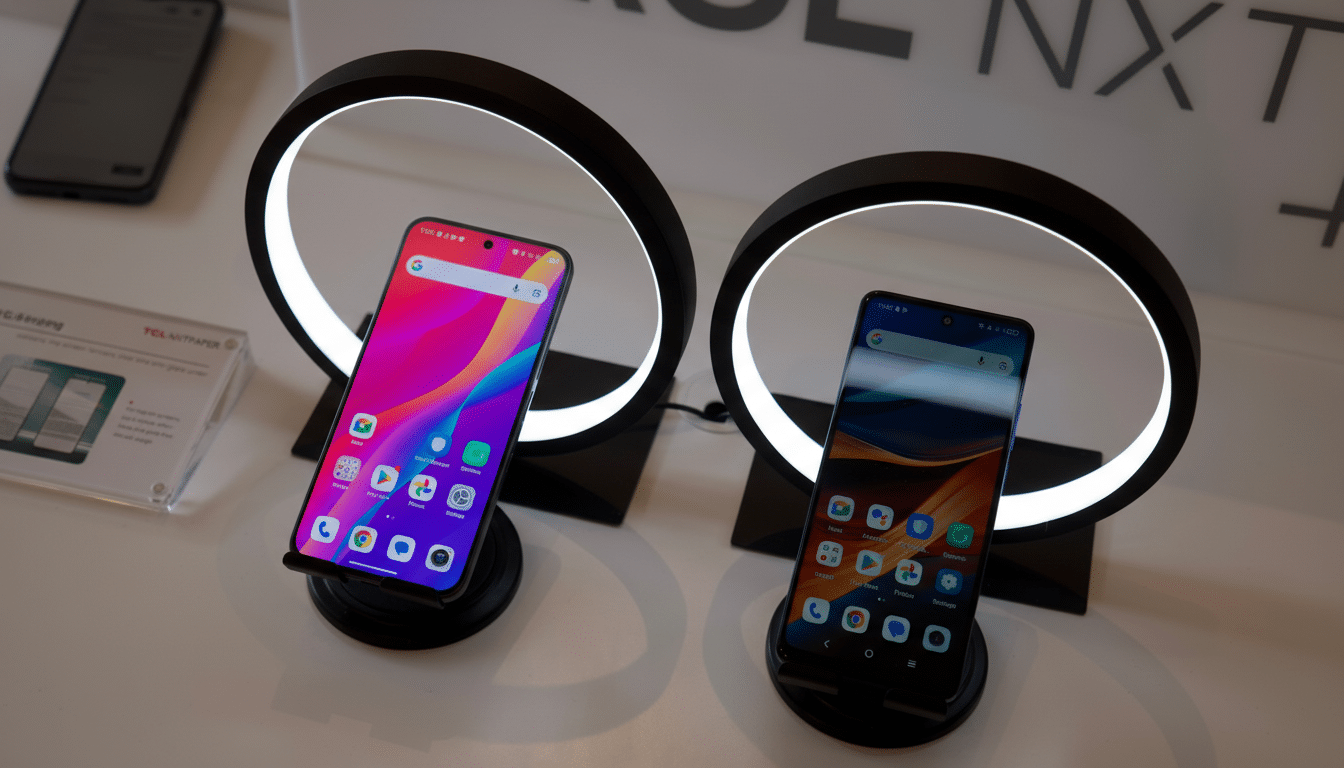
TCL is bringing its paper-like viewing formula to OLED for the first time, unveiling a concept Nxtpaper AMOLED display that looks strikingly crisp and, more importantly, consistently comfortable to read. Shown on the Mobile World Congress floor, the panel blends TCL’s anti-glare, eye-friendly Nxtpaper approach with the deep blacks and punchy contrast of AMOLED—something screen engineers have chased for years but rarely nailed without dulling colors or introducing haze.
What Nxtpaper on AMOLED Changes for Eye Comfort and Contrast
Until now, Nxtpaper lived on LCDs, where layered filters tame glare and blue light while preserving usability in full color. Moving that system to self-emissive OLED is far tougher: AMOLED thrives on inky blacks and high contrast, yet it’s notoriously reflective and can be fatiguing in mixed lighting. TCL’s new “Natural Light” iteration adapts Nxtpaper’s stack for OLED, aiming to keep colors vibrant and blacks intact while flattening reflections and reducing visual harshness.
- What Nxtpaper on AMOLED Changes for Eye Comfort and Contrast
- The Numbers Behind the Look: Brightness, Color, and Blue Light
- Modes Tailored for Real Use on OLED: Color, Grayscale, and E-Reader
- Eye Comfort With Fewer Trade-offs: Glare Control and Blue Light
- How It Stacks Up to Today’s Screens: OLED, LCD, and E-ink
- First Devices and What to Watch: Roadmap, Timing, and Availability
- Bottom Line on Nxtpaper AMOLED: Specs, Comfort, and Next Steps
The Numbers Behind the Look: Brightness, Color, and Blue Light
Three metrics stand out. First, TCL touts a 90% circular polarization rate to slash mirror-like reflections—key for outdoor readability and bright offices. Second, blue light output can drop to 2.9%, with purification cutting emissions by up to 15%, targeting comfort without the amber cast that can ruin photos or video. Third, an adaptive system adjusts brightness and color temperature to track ambient light through the day, supporting circadian-friendly viewing.
The panel is also specced for serious punch: up to 3,200 nits peak brightness and full 100% P3 color coverage. An anti-glare coating and a light-homogenizing film work in tandem so text edges remain crisp in reading modes rather than turning fuzzy, a common pitfall of aggressive matte treatments.
Modes Tailored for Real Use on OLED: Color, Grayscale, and E-Reader
Nxtpaper’s familiar quartet of modes—full color, muted color, black and white, and an e-reader-focused setting—carry over. The first three preserve normal app use, while the e-reader mode encourages long-form reading with simplified access and a calmer visual profile. On AMOLED, the grayscale options gain extra pop thanks to OLED’s native contrast, and the homogenizing film helps avoid the grainy diffusion that can distract on other “paper-like” screens.
Eye Comfort With Fewer Trade-offs: Glare Control and Blue Light
Eye comfort is about more than blue light. The American Academy of Ophthalmology notes that glare and sustained brightness often drive digital eye strain, while sleep researchers at institutions like Harvard have linked late-night blue light exposure to circadian disruption. TCL’s approach tackles both angles: polarization and anti-glare layers work on glare and reflections, while adaptive warmth and reduced blue output address evening use without turning the panel unnaturally yellow.

How It Stacks Up to Today’s Screens: OLED, LCD, and E-ink
Conventional AMOLED panels lean on glossy finishes to maximize apparent contrast, but that gloss can be brutal in sunlight. Matte LCDs cut reflections yet sacrifice depth and color. E-ink wins on pure reading comfort but loses on speed, color, and video. TCL’s Nxtpaper AMOLED is an attempt to have it both ways: OLED vibrancy and motion clarity with paper-like readability. If mass-produced at this fidelity, it could set a new baseline for outdoor legibility without ditching premium visuals.
First Devices and What to Watch: Roadmap, Timing, and Availability
TCL hasn’t named the first phone or tablet that will ship with the Nxtpaper AMOLED concept, but the company used the show to highlight its broader Nxtpaper roadmap. It also displayed the Tab A1 Plus alongside a Tab A1 Plus Nxtpaper variant, underscoring how it deploys the tech across price points. The LCD-based A1 Plus hits a 12.2-inch, 2,400-by-1,600 display at 120Hz, while the Nxtpaper version applies TCL’s anti-glare and blue light reduction approach for extended reading sessions.
Separately, TCL confirmed the Nxtpaper 70 Pro—first seen earlier this year—will reach the US, signaling ongoing investment in eye-friendly display options. But the real swing here is AMOLED: delivering Nxtpaper’s comfort on OLED would mark a meaningful advance in a market where most “paper-like” attempts still feel like compromises.
Bottom Line on Nxtpaper AMOLED: Specs, Comfort, and Next Steps
From the show floor, TCL’s Nxtpaper AMOLED looks like the rare screen that reads well under glass and glows beautifully in the dark. With 90% polarization, blue light down to 2.9%, and 3,200 nits on tap, it has the specs—and the polish—to matter. Now it’s a question of when this panel lands in a phone or tablet you can actually buy, and whether TCL can scale the finish without losing the magic that made the demo look so good.
