


SpaceX is weighing a smartphone built for direct Starlink connectivity, according to people familiar with the company’s plans, with Elon Musk stoking speculation by saying such a device is “not out of the question” and would be “a very different device than current phones.” The move would extend Starlink’s push from satellite terminals and Direct to Cell trials into a pocketable product that could put orbital coverage front and center.
Native Starlink capability implies more than emergency texting. It suggests a handset engineered to talk to low Earth orbit satellites as a first-class network, likely alongside standard terrestrial 4G and 5G. Whether that means a specialized satellite modem, a novel antenna system, or a hybrid approach that leans on existing cellular bands used in Starlink’s Direct to Cell program, the design trade-offs will define what “very different” really means.
Why SpaceX Might Build Hardware Now for Starlink
Starlink has become SpaceX’s profit engine, contributing an estimated 50–80% of company profits, according to Reuters. With millions of subscribers across nearly 100 countries and thousands of satellites in orbit, a phone could lock users more tightly into the Starlink ecosystem, expand addressable revenue beyond dishes and plans, and smooth the path to future services.
There’s also a platform play. A SpaceX-branded device could knit together Starlink connectivity with Musk’s broader software ambitions, including AI-driven services. Owning the handset experience would let SpaceX tune radios, power management, and apps for satellite-first performance that off-the-shelf phones can’t match.
What A Starlink-First Phone Might Look Like
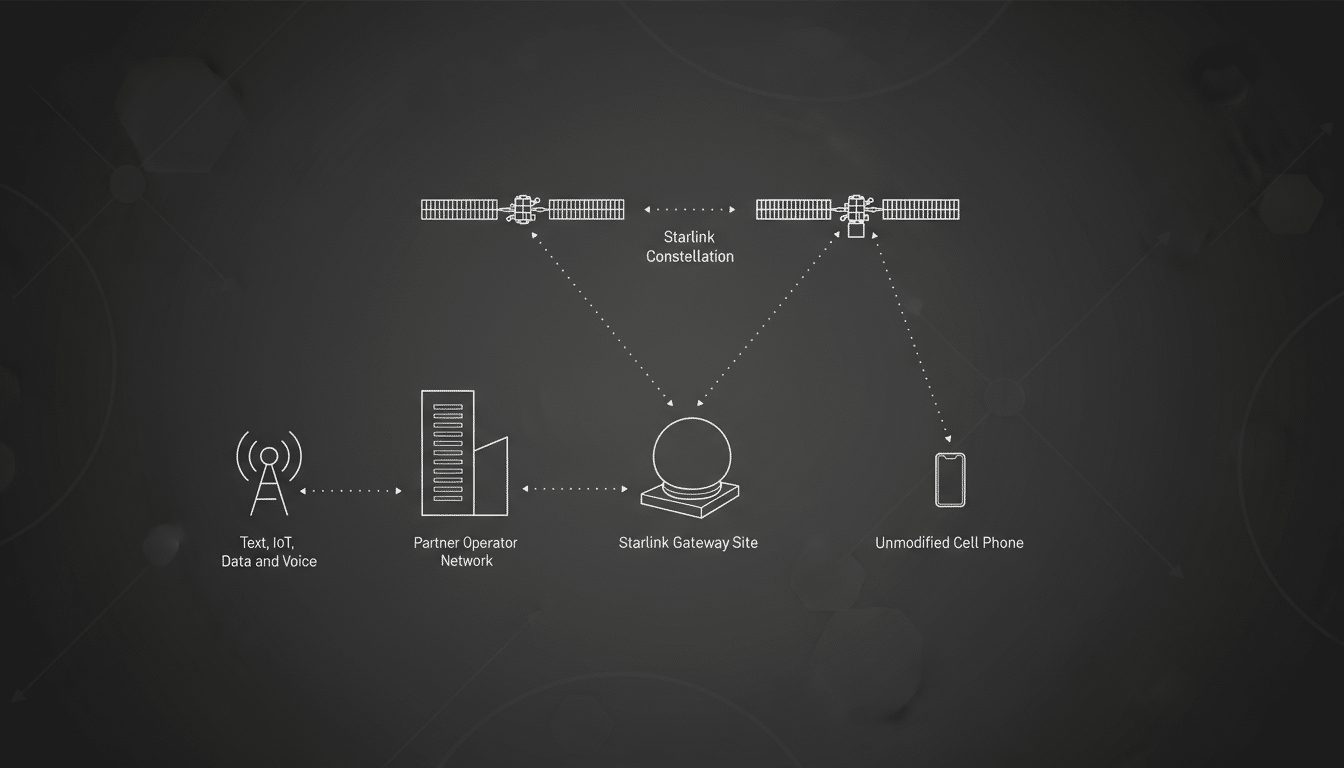
Expect a dual-path design: conventional 5G for dense areas and a Starlink link for sparse or off-grid regions. SpaceX has already demonstrated texting from unmodified phones using Starlink’s Direct to Cell satellites in partnership with a major U.S. carrier, with voice and data planned after messaging. A SpaceX phone could accelerate that roadmap by optimizing the RF chain, filters, and antenna layout specifically for satellite reach.
The big hurdle is physics. High-frequency Starlink links typically rely on phased-array antennas that are too large and power-hungry for a slim smartphone. That tilts the design toward leveraging cellular spectrum supported by Starlink’s Direct to Cell satellites for baseline coverage, while integrating advanced location, offline mapping, and messaging features that make satellite fallback feel seamless rather than emergency-only.
Think ruggedized build, larger battery, and aggressive power management when the device is hunting for satellites. eSIM with multi-IMSI profiles could let SpaceX blend partner carrier service on the ground with orbital coverage when towers disappear—useful for logistics, maritime, agriculture, and travelers who now juggle separate satellite messengers.
Carriers and the Competitive Landscape for Starlink
SpaceX already partners with carriers for Direct to Cell, aiming for coverage “everywhere on Earth.” A SpaceX phone could deepen those deals or arrive as an MVNO that rides terrestrial networks domestically and flips to satellite where needed. Globally, coordination with regional operators would be key to roaming and spectrum alignment.
Competition is heating up. Apple’s Emergency SOS relies on Globalstar for targeted satellite messaging. AST SpaceMobile has placed live cellular calls over satellites with partners like AT&T and Vodafone and is pursuing full broadband links. Lynk Global offers satellite texting in select markets. Bullitt and Garmin serve the adventure niche. A Starlink-native phone would stand out if it delivers everyday communications—texts, calls, and basic data—without accessories and without changing devices.
Regulatory and Engineering Hurdles for a Satellite Phone
Any satellite-first phone must navigate tight constraints: antenna size, thermal limits, and battery life while preserving SAR and safety thresholds. On the policy side, device certification with the FCC and equivalents abroad, spectrum coordination, and adherence to 3GPP Release 17 Non-Terrestrial Networks standards are non-negotiable. SpaceX has momentum in spectrum filings and satellite deployments, but a consumer handset multiplies compliance complexity.
There’s also the smartphone gauntlet. The market is mature and concentrated, with established players controlling supply chains, retail channels, and component allocations, as tracked by firms like IDC. SpaceX would need a robust OS strategy—likely Android with custom services—top-tier silicon, and long-term update support. The upside: vertical integration could let SpaceX tune modems and RF front-ends for satellite efficiency that others can’t easily copy.
What to Watch Next in SpaceX’s Starlink Phone Plans
Signals to monitor include satellite handset job postings, test reports referencing Non-Terrestrial Networks, and carrier co-announcements that expand Direct to Cell beyond texting. FCC device filings are often the first concrete breadcrumb. Pricing will also matter: if a Starlink phone pairs with satellite plans in the $90–$120 range common to current service tiers, the value proposition will hinge on how seamless and frequent satellite use becomes in everyday life.
Musk’s comments suggest SpaceX is exploring—not promising—hardware. Still, with Starlink already shouldering much of SpaceX’s profit and coverage that spans oceans, deserts, and disaster zones, a Starlink-native phone is a logical next step. If SpaceX can solve the antenna and power puzzle while keeping costs in check, the definition of “no signal” on a smartphone could change for good.
