


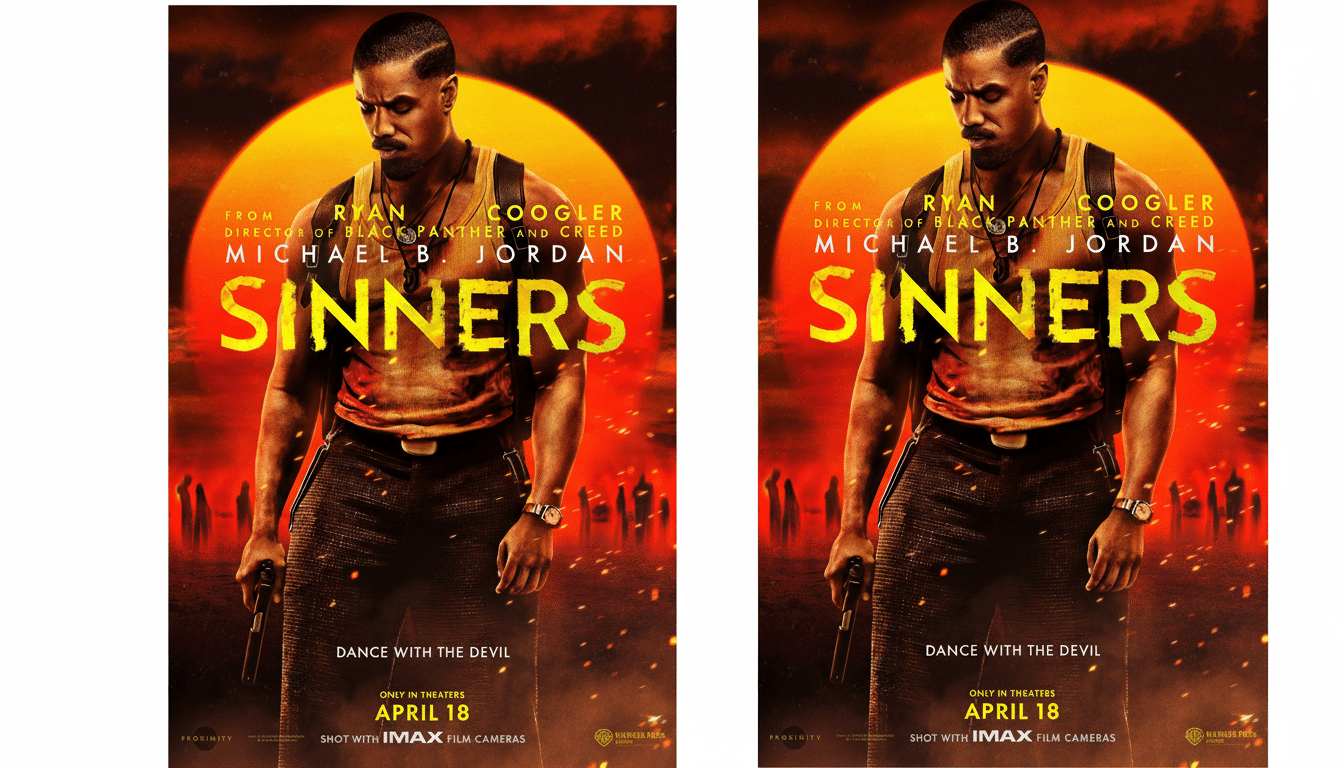
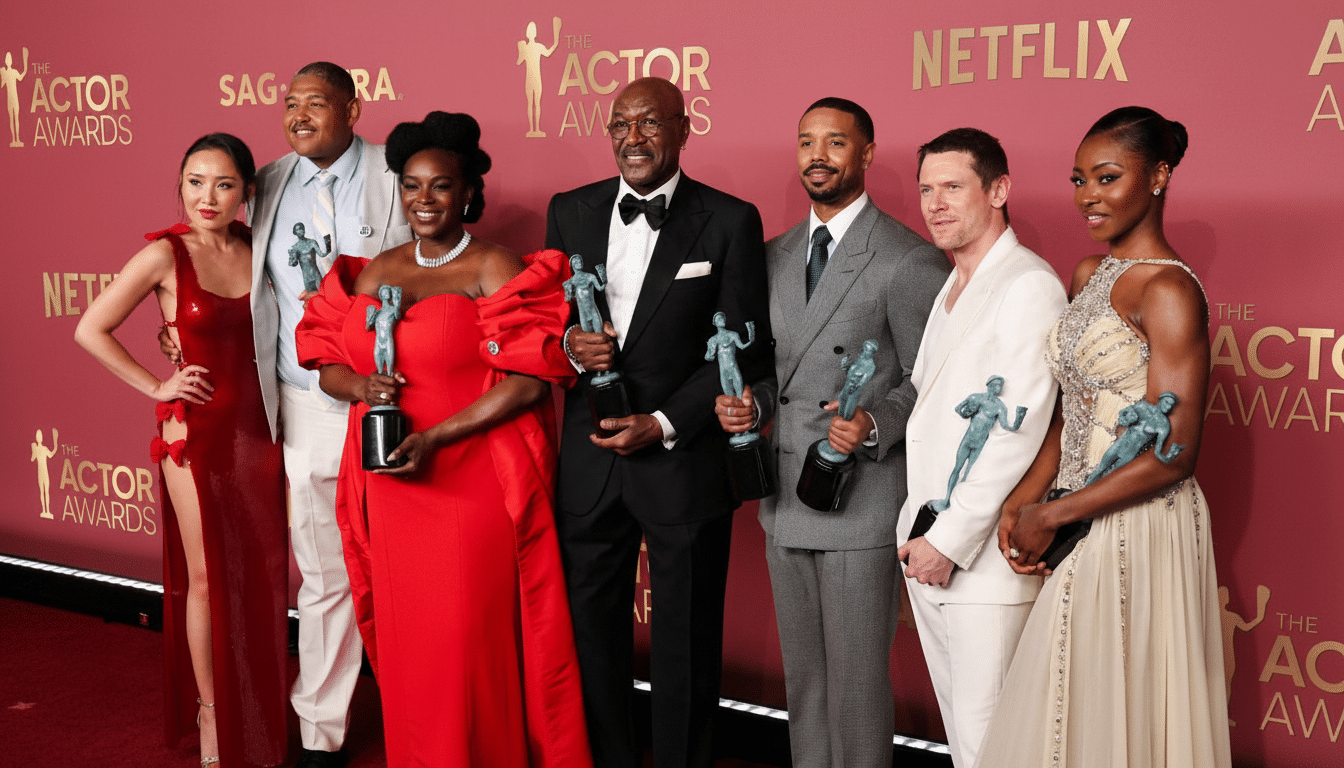
Ryan Coogler’s Sinners just rewired the awards narrative, taking the SAG-AFTRA Actor Awards’ top ensemble honor while Michael B. Jordan claimed lead actor. That one-two punch arrives late in a season-long tilted toward Paul Thomas Anderson’s One Battle After Another, and it gives Sinners a viable—though not guaranteed—path to Best Picture at the Academy Awards.
How SAG-AFTRA Correlates With Best Picture
The ensemble prize, introduced in 1996, has aligned with the Oscars’ Best Picture 15 times in 30 tries—essentially a 50% hit rate. Recent overlaps include Oppenheimer and Everything Everywhere All at Once, underscoring that when actors rally behind a film’s performances, it often bodes well for the Academy’s top award.
Still, the voting pools differ sharply. SAG-AFTRA counts roughly 160,000 members, predominantly performers. The Academy of Motion Picture Arts and Sciences has 10,136 voters across multiple branches—directors, producers, editors, crafts—and Best Picture is decided on a preferential ballot that rewards broad consensus over pockets of intense passion. That structural gap explains why the ensemble trophy is influential but not definitive.
For Sinners, the ensemble win signals deep actor enthusiasm, a crucial base in the Academy’s largest branch. In a two-film showdown, that can translate into strong first-place votes and a high presence in #2 and #3 slots—exactly the kind of spread preferential tabulation can convert into an upset.
The PGA Factor and a Tight Two-Horse Best Picture Race
One Battle After Another still wears the season’s biggest belt: it has claimed marquee precursors from the Critics Choice Association, the Golden Globes, the Directors Guild of America, the Producers Guild of America, and BAFTA. Of those, the PGA is the sharpest Best Picture analogue; 26 of the past 36 PGA winners repeated at the Oscars, a 72% rate that reflects the guild’s similar preferential system.
Yet in 10 seasons when PGA and the Oscars diverged, the SAG ensemble winner overlapped with the Best Picture victor four times—Shakespeare in Love, Crash, Spotlight, and Parasite. That historical lane outlines Sinners’ plausible route: exceptional cast approval that becomes cross-branch consensus late.
If Anderson’s film is more polarizing across some crafts while Sinners is broadly liked, the ranked-choice math could tighten further. In close races, second and third-place support often proves decisive.
What Michael B. Jordan’s Win Signals for the Race
SAG is far stickier than most precursors in the acting fields. Over the last 31 years, 24 SAG lead-actor winners went on to win the Oscar—about 77%. Jordan’s victory, playing twins Smoke and Stack, vaults him into frontrunner territory, particularly after Robert Aramayo’s sweep at the Globes, Critics Choice, and BAFTA came for a film not Oscar-eligible this season.
Momentum in Best Actor can reverberate through Best Picture. When the largest Academy branch consolidates around a performance, it often brings along votes in screenplay, editing, and other categories, nudging the film up ballots in a race decided by inches.
The Weight of 16 Nominations and Cross-Branch Strength
Sinners entered the Oscars with 16 nominations—the most ever. That breadth signals cross-branch respect, the single most important ingredient on a preferential ballot. Historically, films with double-digit nods tend to convert widely on the night; while nomination counts don’t guarantee Best Picture, they’re a prerequisite for the kind of all-guild coalition winners usually need.
Keep an eye on bellwether categories. Editing and screenplay are traditional Best Picture companions; sound and production design wins can also telegraph wide craft support. Strong showings there would validate that Sinners’ actor-fueled surge is matched by below-the-line enthusiasm.
Bottom Line: Why the Best Picture Race Just Tightened
SAG-AFTRA didn’t end the race—it made it competitive. PGA math and a season-long haul keep One Battle After Another slightly ahead. But an ensemble triumph and Jordan’s SAG win give Sinners fresh velocity, a visible consensus path, and the kind of industry narrative that can sway late-deciding voters. This Best Picture contest is now within striking distance for both films.

