


Ghostface is scary again and, crucially, fun again. With Kevin Williamson steering the creative voice that launched this franchise, Scream 7 claws back the wit, velocity, and nervy pleasure that made the original a touchstone. The result is a sharp, crowd-pleasing slasher that remembers the rules only to break them with confidence.
A Franchise Course Correction That Restores Sharp Focus
After two profitable but heavier installments, the series risked calcifying into lore for lore’s sake. Williamson, who penned the 1996 classic and early sequels, recenters the saga on character and craft. Neve Campbell’s Sidney returns to the heart of the story, now a mother in a small-town routine, and her presence reintroduces a clean dramatic spine: protect your family, confront the past, keep moving.
- A Franchise Course Correction That Restores Sharp Focus
- An Opening That Bleeds and Breathes With Bravado
- Sidney Prescott Without the Stoicism Shell
- The Stu Question and the Modern Meta Without Bloat
- Cast Chemistry and Comic Relief That Actually Lands
- Style That Cuts Like a Knife and Thrills on Impact
- Context and Stakes for a Franchise at a Crossroads
- Verdict: A Sharp, Crowd-Pleasing Slasher That Lands
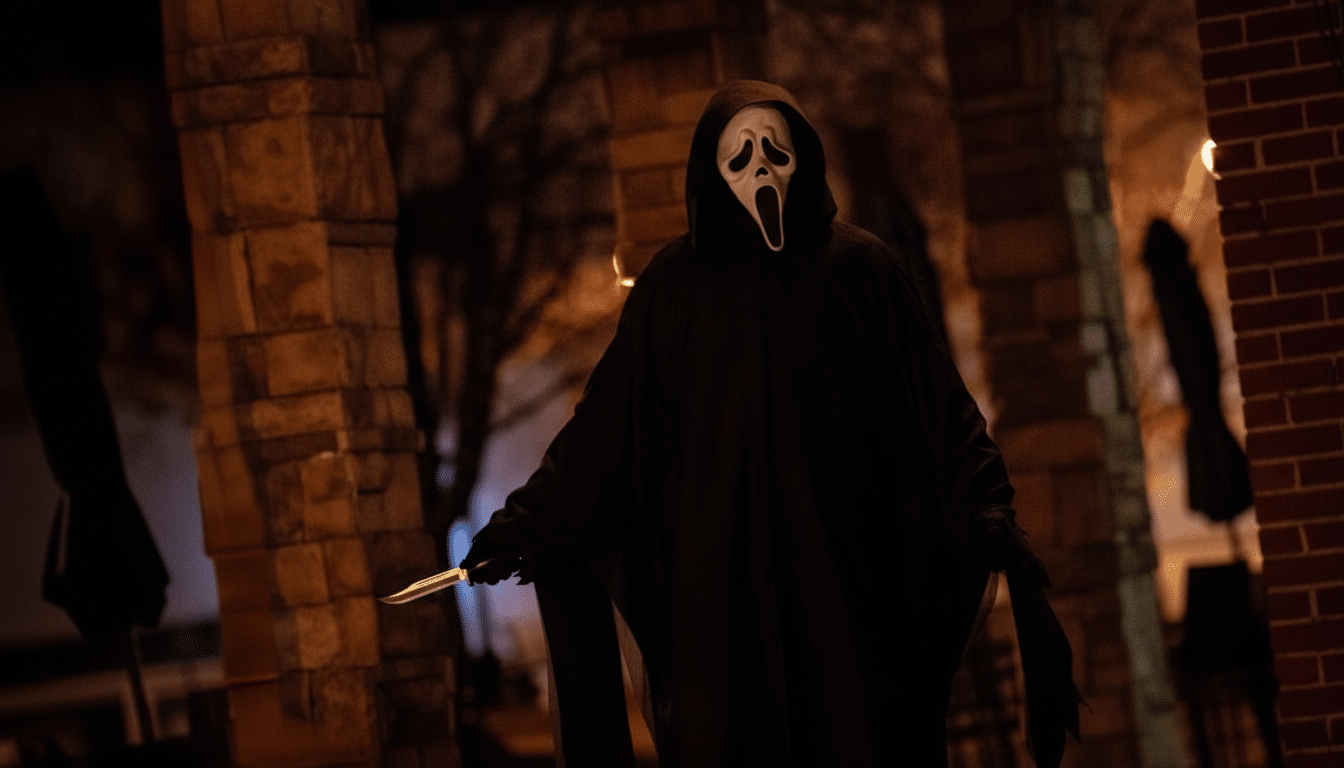
It’s a tonal pivot that pays off. Where the recent films leaned into grim mythology, Scream 7 rebalances grief with gallows humor, a mix that recalls Wes Craven’s original alchemy without lapsing into imitation.
An Opening That Bleeds and Breathes With Bravado
The prologue is a banger—nasty, propulsive, and ruthlessly funny. A true-crime tourism setup at the infamous Stu Macher house becomes a trap sprung with precision. The sequence is a statement of intent: yes, the Easter eggs are here, but nostalgia is a knife with two edges. The violence hits harder than in most entries since the late-2000s “torture-porn” era, yet the filmmaking stays playful and precise rather than punishing.
Williamson and collaborators lace the set pieces with sly callbacks—camera moves that echo Craven, needle drops like Red Right Hand, even a sultry spin on Don’t Fear the Reaper—then swerve before comfort sets in. You feel the showman’s hand on the rails.
Sidney Prescott Without the Stoicism Shell
Campbell plays Sidney with the ease of someone who has nothing left to prove and everything left to lose. The mother-daughter push-pull adds a welcome emotional charge, allowing the film to acknowledge accumulated trauma without drowning in it. Rather than gesturing at pain through props or platitudes, the script lets Sidney say the quiet parts aloud—how you parent with scars, how you live alongside a legend that refuses to die.
Crucially, victims are not treated as disposable obstacles. The movie likes its kids—their quirks, their jokes, their messy choices—which makes the kills sting. That ethos hews closer to the 1996 film than to the meaner mid-franchise dips.
The Stu Question and the Modern Meta Without Bloat
Without spoiling mechanics, Scream 7 toys hard with the franchise’s most persistent fan theory: what if Stu Macher isn’t as gone as we think? Matthew Lillard’s presence, teased long enough to become a cottage industry of speculation, is weaponized as both mystery and mischief. The film even threads in contemporary anxieties—deepfakes, AI misdirection—folding current cultural noise into a classic Scream guessing game. It’s meta that serves momentum, not a lecture.
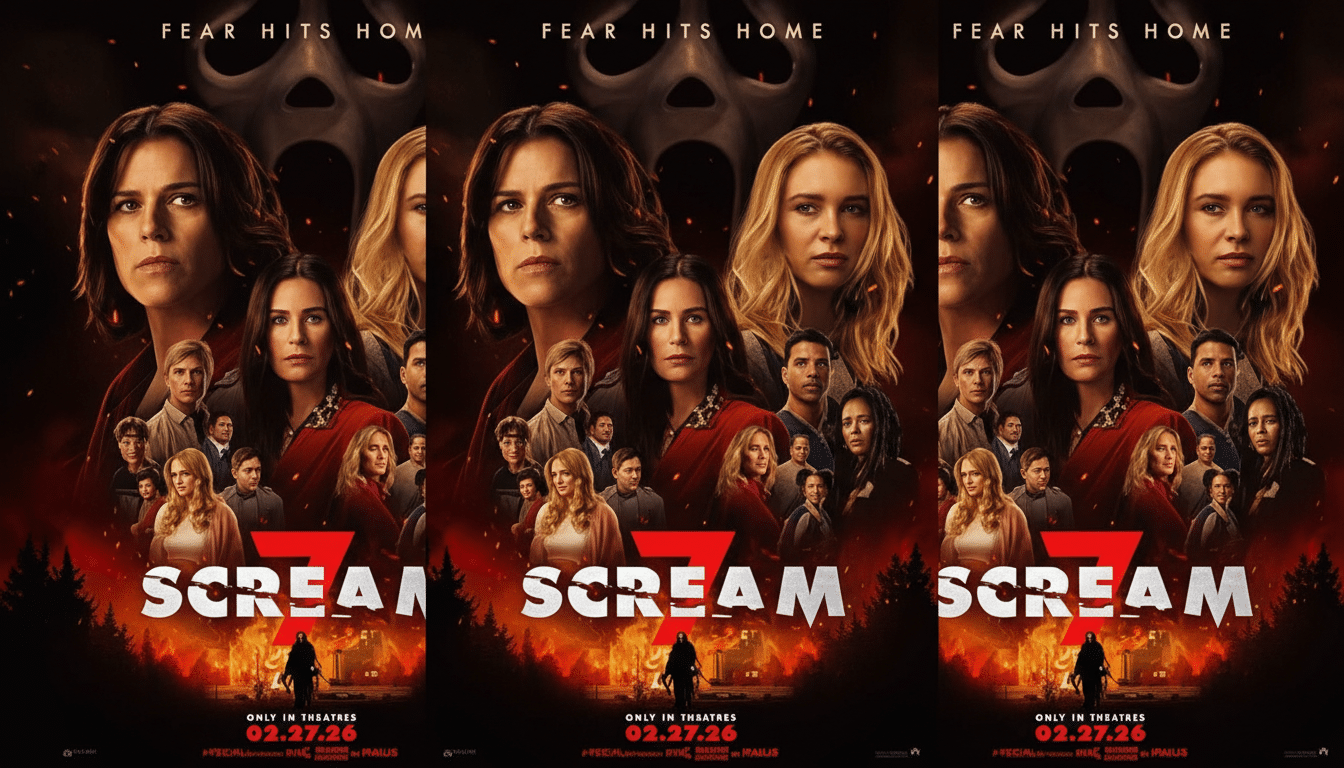
That interplay between commentary and kinetic horror is where Williamson shines. The nods aren’t homework; they’re fuel, pushing the whodunit while winking at the audience savvy enough to clock the clues.
Cast Chemistry and Comic Relief That Actually Lands
Jasmin Savoy Brown and Mason Gooding continue to be lethal weapons as the Meeks-Martin twins, dancing on the line between self-aware banter and genuine peril. Courteney Cox’s Gale remains a deliciously skeptical conduit for the franchise’s media critique—if there’s a cynical angle, she’ll find it. A fresh teen ensemble, including McKenna Grace, Asa Germann, Celeste O’Connor, and Sam Rechner, slots in with energy rather than exposition dumps.
The performances are calibrated to the movie’s speed: big when needed, then brittle around the edges when the knives come out. Even brief appearances register because the script gives everyone a point of view before the red stuff flies.
Style That Cuts Like a Knife and Thrills on Impact
From a craft angle, the film is lean and mean. Chase geography is clear, blocking is clever, and the edits ride the line between anticipation and shock. The gore is gnarlier than in most entries, but it isn’t empty; the camera lingers just long enough to make you wince, then snaps back to the hunt. It’s a roller coaster that remembers the thrill depends on both the drop and the climb.
Context and Stakes for a Franchise at a Crossroads
The modern revival has been a commercial win—Scream (2022) cleared roughly $137 million worldwide and Scream VI pushed that to about $168 million, per Box Office Mojo. Those films proved the brand’s durability; Scream 7 proves its flexibility. By recentering Sidney and reviving Williamson’s voice, the franchise feels freshly dangerous rather than dutifully canonical.
Verdict: A Sharp, Crowd-Pleasing Slasher That Lands
Scream 7 isn’t just a return to form; it’s a reminder of why this series changed horror. It’s brisk, bloody, and cheeky, with set pieces that rattle and a mystery that keeps rearranging your suspects. Most of all, it’s a blast—an audience movie engineered for gasps, laughs, and that involuntary lean toward the screen when Ghostface whispers your name.

