


After months of teasing its long-awaited Galaxy Z TriFold, Samsung has finally taken the wraps off its new foldable — and it’s not just another foldable phone or tablet, but Samsung’s first triple-screen device that tries to place a single foot in both worlds and one more in the realm of ultraportable PCs.
Featuring a dual-hinge construction that opens into a wide-angle canvas, the TriFold looks to be the future of mobile productivity.
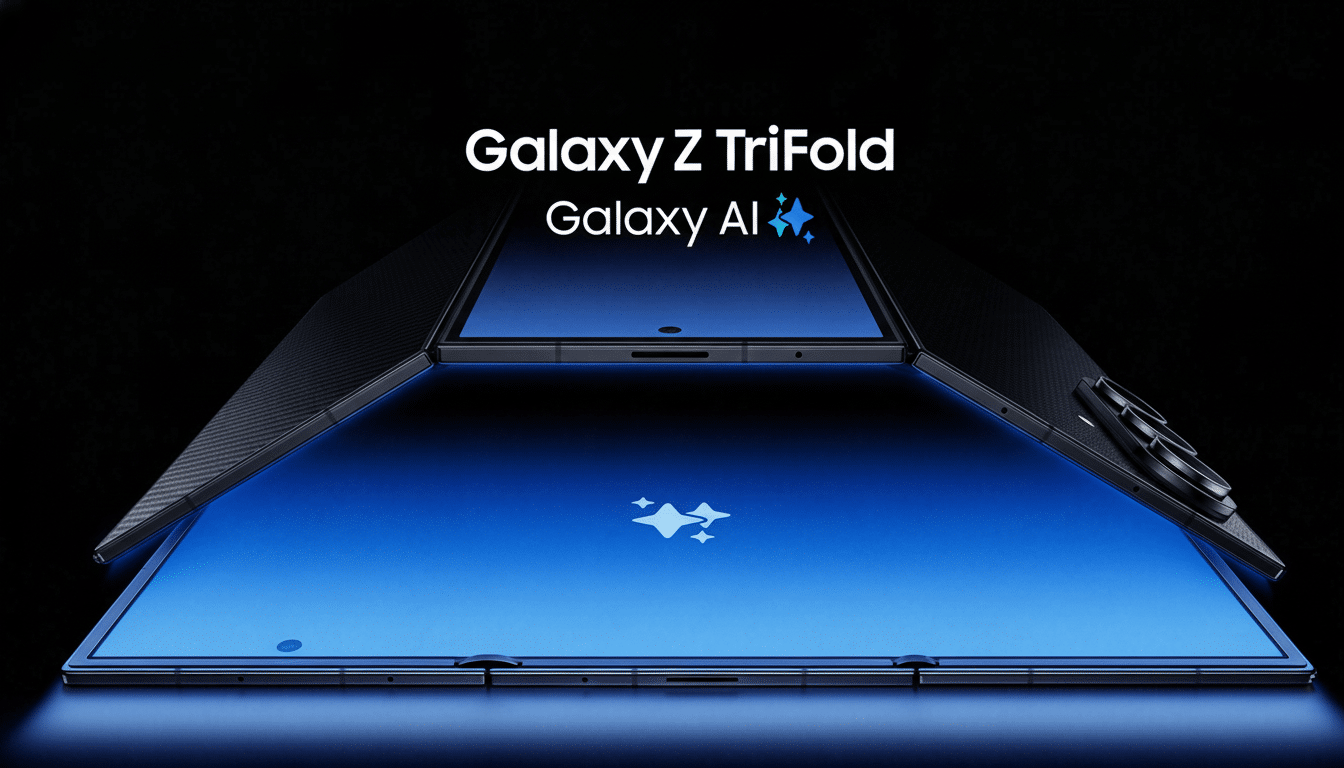
Samsung teased the concept at a global forum earlier this year; now here’s the real product — with hardware, software, and durability improvements designed for everyday use rather than solely tech demos. It’s a bold stab at users who careen between a phone and a tablet and wish one device could do both of their jobs robustly.
Built for Work and Play: A Three-Panel Design
The Galaxy Z TriFold uses a two-hinge structure to conceal three separate display panels. Fully extended, the main screen expands to about 10 inches — large enough to give it a compact tablet feel with minimal unwieldiness. The unfolded device is 3.9 mm at its thinnest, narrowly eclipsing the unfolded Galaxy Z Fold 7’s 4.2 mm figure.
Samsung’s software makes the expanded canvas work like three independent 6.5-inch smartphone panes. That’s three portrait apps that you can run side by side — imagine a doc editor, a video call, and a browser — without having to keep constantly closing one app before opening another. Close the TriFold anywhere you are and then take a call — if you return, the taskbar will remain open, where it is supposed to be.
There’s an onboard vehicle-to-car auto-alarm to subtly nudge you — both visually and with haptics — if there are signs that you’re beginning to fold against the intended orientation. It’s a small detail, one that reflects real-world behavior and tries to accommodate scenarios where damage is completely accidental.
Power and Cameras to Match the TriFold’s Ambition
Powering the device inside is Samsung’s own custom Snapdragon 8 Elite Mobile Platform for Galaxy. Three active panes, plus intense multitasking, take headroom and this silicon is not tuned for an explosion of performance but a long burn.
Imaging receives flagship treatment as well, with a 200MP primary camera. High-resolution sensors have reliably delivered lossless crops along with better night detail, and a tri-fold form factor provides new angles and hands-free capture modes that most traditional slabs can’t match.
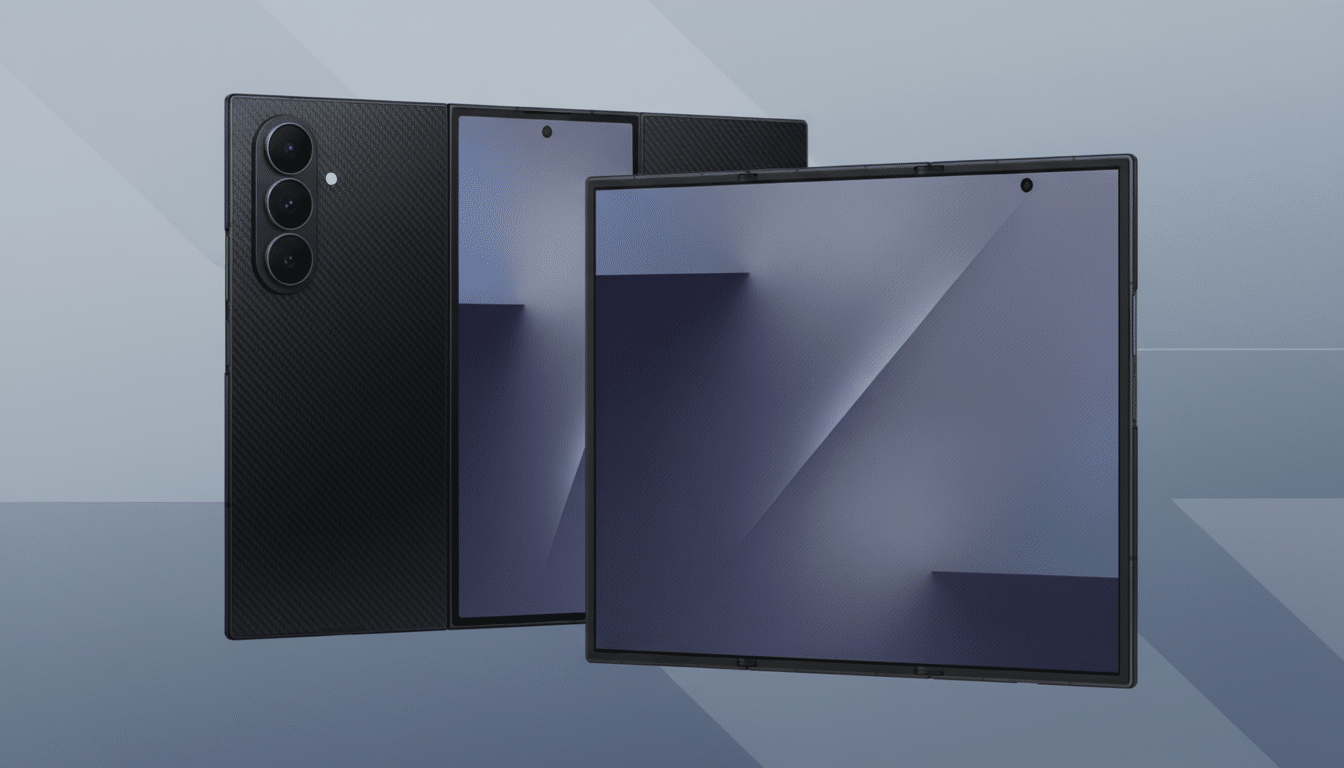
Backing it all is a 5,600 mAh battery — the biggest yet in a Samsung foldable — with 45 W wired and 15 W wireless charging. Triple screens are a power suck; the capacity indicates Samsung has designed for a working-at-your-desk-all-day-and-occasional-top-ups-between-meetings approach to battery usage.
Software That Thinks a Phone Is a PC Replacement
The TriFold takes Samsung’s multitasking playbook and doubles down. Samsung DeX also goes beyond tri-pane app layouts, as there’s real desktop-style — no monitor necessary — on-device with a standalone Samsung DeX experience. Samsung says you can spin out up to four separate workspaces, each capable of running five apps simultaneously.
For wider setups, Extended Mode can provide a secondary monitor, and Bluetooth keyboard and mice support makes the TriFold a plausible travel workstation. In practice, that looks like a spreadsheet on one pane, a slide deck in another, and research in a browser on the third — without having to shuffle apps.
Engineering for Durability in a Complex Tri-Fold Design
Foldables succeed or fail based on a single thing: strength. Samsung now embeds additional sensors into the display and introduces a fortified overcoat that’s added on top of the shock-absorbing film. The hinges are of a dual-rail configuration enabling the force to be spread out and torsion coupled down as parts open, lifting off asymmetric structures.
To the company’s credit, it’s sent a clear message that tri-fold complexity doesn’t have to mean fragility. When coupled with the anti-misfold alerts, the hardware aims to reduce the two most common pain points of stress on the panel and user error, while remaining slim.
Market Context and Availability for Samsung’s TriFold
Analysts at Counterpoint Research forecast that foldables will continue growing at a double-digit pace, shipping more than 50 million units by the middle of this decade. While demand for tablets has been uneven and laptops have become ever more slender, a strong tri-fold phone that also functions as a mini PC could create a new sweet spot for users who need to be productive — and for enterprise fleets.
According to Samsung, the Galaxy Z TriFold will be available in Korea first before rolling out to other markets, including the US. Available at launch in Crafted Black. Ultimately, pricing and carrier support will dictate how soon this form factor escapes the enthusiast niche, but there is no mistaking the ambition here: make a foldable that can truly be a replacement for your tablet — sometimes even your laptop — without compromise.
