


Samsung Display is showing off a fresh take on expandable phones at MWC, unveiling a Mobile Slidable concept that extends from the top to transform a compact handset into a taller canvas. Instead of folding, the screen rolls out vertically, shifting from a pocketable view to a more immersive layout for video, multitasking, and reading.
MWC showcase highlights Samsung’s upward-sliding concept
Demonstrated in Barcelona, the prototype slides upward on rail guides to reveal additional OLED real estate. Rotate the device into landscape and the benefit becomes clearer: you get a longer horizontal viewport that suits widescreen media and productivity panes without needing a crease-prone hinge.
- MWC showcase highlights Samsung’s upward-sliding concept
- Specifications and aspect ratios for the slidable display
- What the upward-sliding Samsung prototype demonstrates
- Why a top-slidable phone design could be significant
- Software readiness and adaptive Android support today
- Engineering hurdles and durability questions still remain
- Context from past rollable and slidable phone prototypes
- Where this upward-sliding concept could fit in the market
- What to watch next as Samsung refines the slidable phone
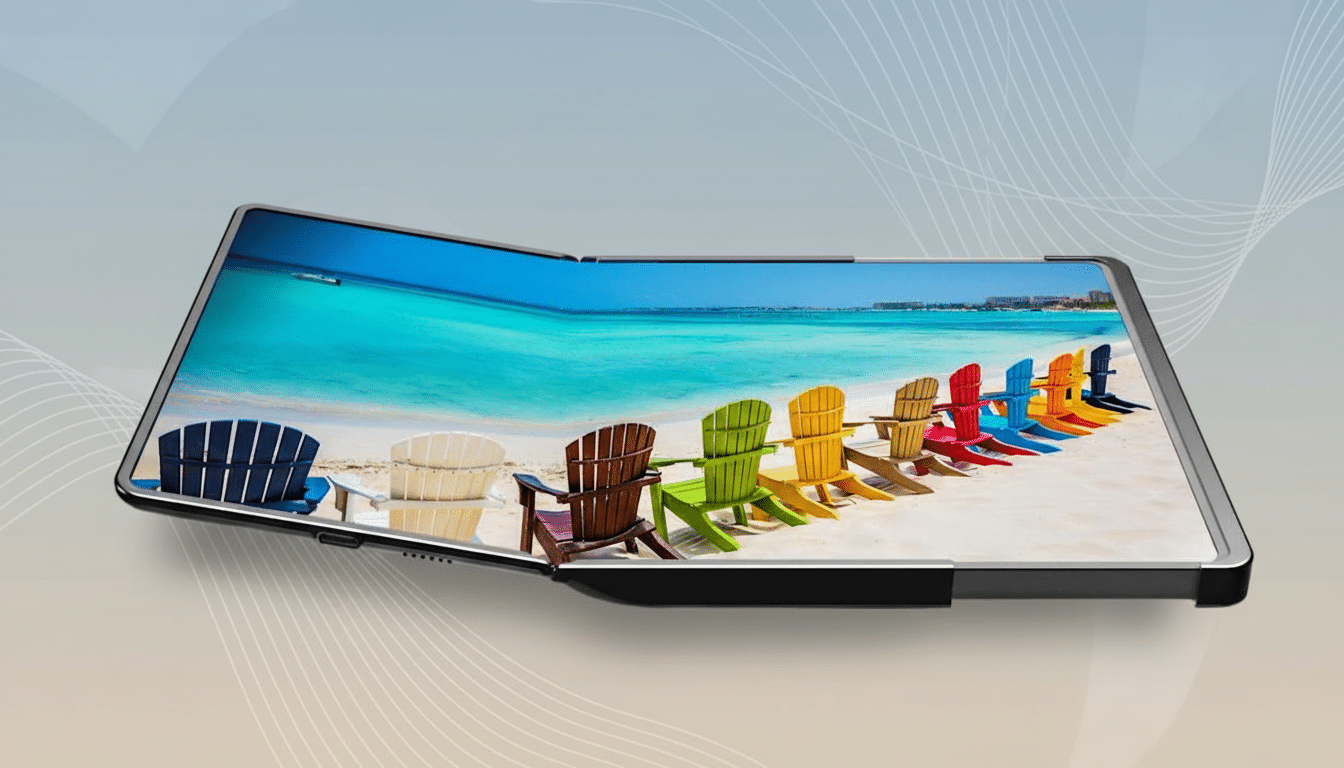
Specifications and aspect ratios for the slidable display
Samsung’s spec sheet labels the panel Samsung OLED Mobile Slidable and lists a transition from 5.1 inches at 16:9 to 6.7 inches at 22:9. Resolution is 1,080 x 2,640 (FHD+) with a dense 426 ppi. Measured by diagonal, the move from 5.1 to 6.7 inches is a roughly 31% gain, but the tall 22:9 aspect focuses that growth on vertical space, ideal for feeds, email threads, and split-screen layouts.
What the upward-sliding Samsung prototype demonstrates
The mechanism appears manual in this concept, with rails extending the top edge while a rollable OLED unfurls from within the chassis. The approach keeps the grip width unchanged, so one-handed use remains plausible in its compact state. Fully extended, the taller panel offers room for persistent toolbars, camera controls, or a second app without feeling cramped.
Why a top-slidable phone design could be significant
Most rollable experiments have widened from the side; expanding upward changes the ergonomics. For navigation, maps, long-form reading, and social timelines, extra vertical pixels are often more useful than added width. In landscape, 22:9 also aligns closely with cinematic formats, reducing black bars compared to 16:9 and making better use of pixels for streaming and gaming HUDs.
Software readiness and adaptive Android support today
Dynamic resizing only lands well if software cooperates. Android 12L and Android 13 improved resizable activities, continuity, and multi-window behavior for foldables and tablets. Those foundations help here, too: apps like Chrome, YouTube, and Gmail already reflow efficiently as the viewport changes. The concept underscores how OS-level work on adaptive UIs now extends to rollables without developers needing bespoke layouts for every niche form factor.
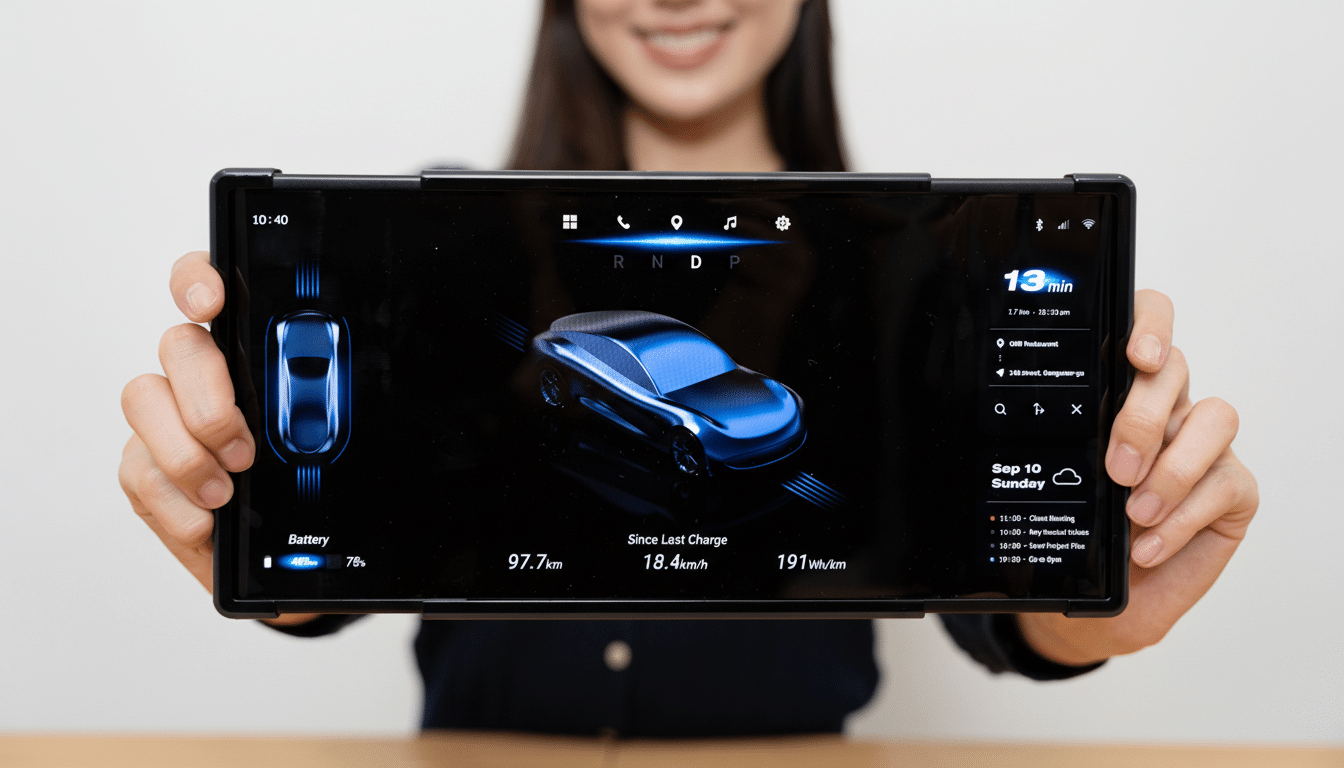
Engineering hurdles and durability questions still remain
Rollable OLEDs avoid a visible crease but demand careful handling of bend radii, tensioning, and dust ingress. Motors or rail systems add complexity, weight, and potential points of failure. While Samsung’s current foldables advertise 200k folds, comparable durability metrics for rollable mechanisms are not yet public. Water and dust resistance ratings, panel protection layers, and long-term wear on the rolling substrate are open questions that will determine if this concept can be production-ready.
Context from past rollable and slidable phone prototypes
Samsung previously flaunted a Flex Slidable prototype in 2022 that could extend from both the top and bottom at the press of a button. Elsewhere, LG’s canceled Rollable phone, Oppo’s X 2021 concept, TCL demos, and a Motorola Rizr prototype showed varied approaches but never reached mass-market shelves. Display analysts at DSCC have long argued that rollables are a logical next act after foldables, yet commercialization hinges on yield, reliability, and cost curves catching up.
Where this upward-sliding concept could fit in the market
Foldables have proven there is appetite for adaptable screens, with research firms expecting steady double-digit growth through mid-decade. A top-sliding design could carve out a niche among users who want an ultracompact phone that turns into a tall content machine without the bulk or hinge line of book-style foldables. If panel yields improve and mechanisms slim down, this form factor could appeal to commuters, creators, and anyone who lives in vertical apps.
What to watch next as Samsung refines the slidable phone
Timelines are undefined; Samsung labels the Mobile Slidable as under development. Signs to watch include supplier chatter around miniature actuators and rails, IP ratings on future prototypes, and whether app makers embrace vertical toolbars and adaptive UI elements that make the extra space feel indispensable. If those pieces align, an upward-sliding phone could be the most practical spin on rollables yet.
