


The premium phone showdown is back in full force as Samsung’s Galaxy S26 family goes head-to-head with Apple’s iPhone 17 lineup. Both brands are pushing harder on displays, silicon, and AI—areas now defining flagship value more than raw specs ever did. With prices brushing ultra-premium territory and lock-in ecosystems stronger than ever, the right choice comes down to which strengths you actually feel every day.
Pricing and configurations for Galaxy S26 and iPhone 17
Samsung’s pricing starts at $899.99 for the Galaxy S26, $1,099.99 for the S26+, and $1,299.99 for the S26 Ultra, all with at least 256GB of storage. Apple counters with the iPhone 17 at $799, iPhone 17 Pro at $1,099, and iPhone 17 Pro Max at $1,199, also starting at 256GB.
- Pricing and configurations for Galaxy S26 and iPhone 17
- Design and durability differences, materials, and sizes
- Displays and privacy features on Galaxy S26 and iPhone 17
- Performance, thermals, and on-device AI capabilities
- Cameras and video features for creators and travelers
- Battery life, charging speeds, and real-world endurance
- AI features and ecosystem lock-in across both platforms
- Connectivity options, 5G support, and noteworthy extras
- Bottom line: choosing between Galaxy S26 and iPhone 17
At the top end, Samsung’s 1TB S26 Ultra climbs to $1,799.99, while Apple’s 1TB Pro and Pro Max hit $1,499 and $1,599 respectively, plus a 2TB Pro Max option at $1,999. In pure dollar terms, Apple undercuts Samsung at the entry and halo tiers. That matters: Counterpoint Research notes the premium segment now drives over 60% of global smartphone revenue, and pricing gaps like these influence upgrades as owners hold devices longer.
Design and durability differences, materials, and sizes
Both lineups are minimalist slabs with IP68 ratings and aluminum frames. Samsung adds Corning Gorilla Armor on S26 and S26+, and Gorilla Armor 2 on the Ultra; Apple relies on Ceramic Shield 2 across iPhone 17 models. The S26 trio tends to be slightly thinner and lighter than comparable iPhones, which road warriors will appreciate during long stretches of one-handed use.
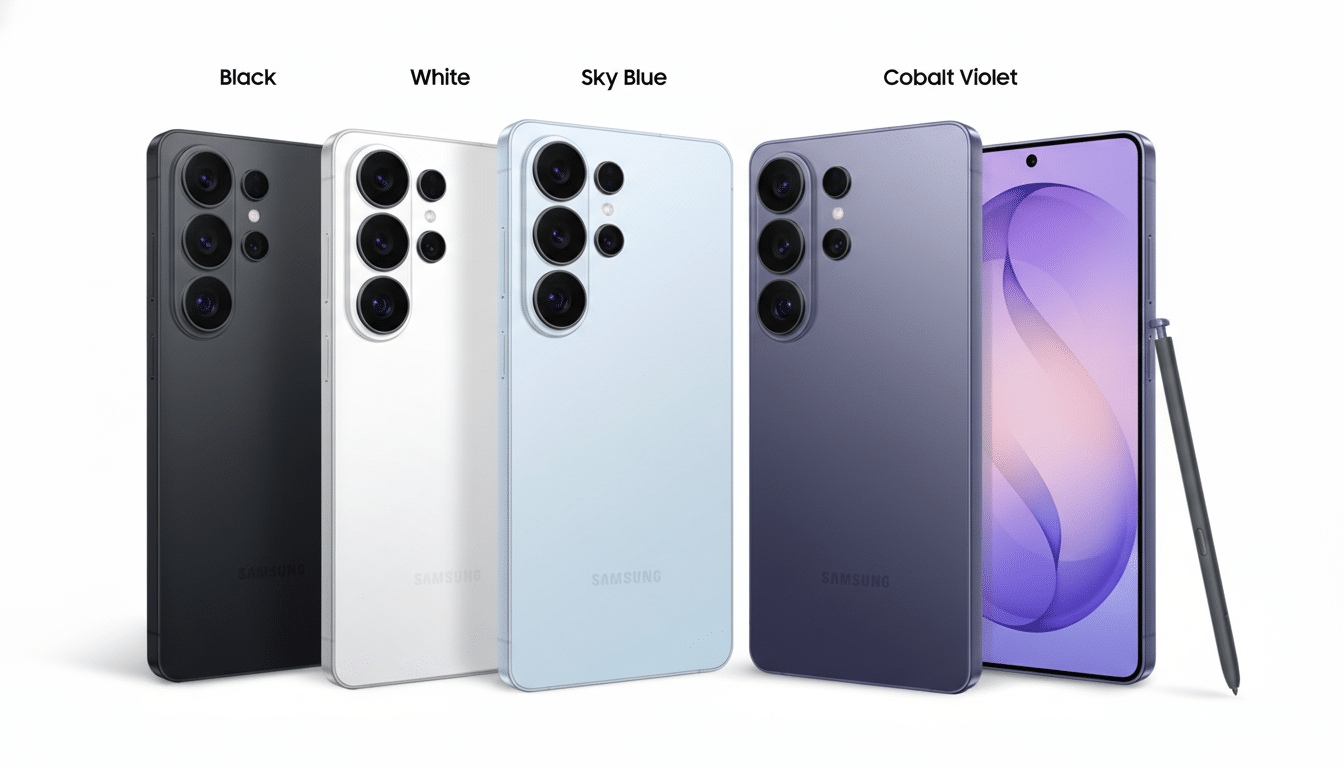
Colorways are conservative-with-a-twist on both sides, but if you like built-in tools, only one camp hides a stylus in the chassis: the S26 Ultra’s S Pen remains a practical differentiator for notes, markup, and precision edits.
Displays and privacy features on Galaxy S26 and iPhone 17
Samsung goes 6.3 inches (S26), 6.7 inches (S26+), and 6.9 inches (Ultra), with 1–120Hz LTPO refresh and up to 2,600 nits peak brightness. Apple mirrors the 6.3-inch and 6.9-inch extremes on iPhone 17 and Pro Max, while the 17 Pro also lands at 6.3 inches. Apple touts 1–120Hz ProMotion and peak brightness up to 3,000 nits, plus a new anti-reflective layer that improves legibility in harsh light.
Samsung’s clever ace is Privacy Display on the S26 Ultra, which narrows viewing angles on demand so seatmates can’t sneak a glance. It can be toggled per app or for notifications only—a small feature with big real-world impact on planes and trains. For sheer HDR punch, Apple likely edges brightness; for innovation that changes behavior, Samsung’s privacy trick is the standout.
Performance, thermals, and on-device AI capabilities
Every S26 runs Qualcomm’s Snapdragon 8 Elite Gen 5 for Galaxy with at least 12GB of RAM (the 1TB Ultra steps to 16GB). Apple splits silicon: iPhone 17 on A17, 17 Pro and Pro Max on A19 Pro. Expect lightning single-core snap on Apple’s chips and sustained multi-core muscle from Qualcomm’s latest, with both vendors leaning into larger NPUs for on-device AI.
Thermal behavior will separate these phones under long 4K recording or gaming sessions. Recent teardowns and analyses from outlets like AnandTech suggest both brands improved heat spreading; early indicators point to steadier performance over time versus prior generations, but independent benchmarks will tell the full story.
Cameras and video features for creators and travelers
Samsung fields 50MP main systems on S26 and S26+ (with 12MP ultra-wide and 10MP 3x telephoto). The Ultra escalates to a 200MP main, 50MP ultra-wide, plus 50MP 5x and 10MP 3x telephotos. Video captures up to 8K at 30fps. Apple’s iPhone 17 uses dual 48MP sensors (main and ultra-wide), while the Pros go triple 48MP including telephoto, and push 4K up to 120fps for buttery slow motion.

Historically, DxOMark and cinematography pros have praised Apple’s color science and video stability, while Samsung often wins on long-range zoom and aggressive detail. The key shift this year is software: generative clean-up, semantic editing, and smarter scene segmentation are increasingly as decisive as lens counts.
Battery life, charging speeds, and real-world endurance
Samsung lists capacities outright: 4,300mAh (S26), 4,900mAh (S26+), and 5,900mAh (Ultra), with charging peaks at 25W, 45W, and 60W wired respectively, and up to 25W wireless on Ultra. Apple keeps capacities under wraps but standardizes 30W wired and 25W wireless across the line with magnetic alignment.
In real life, the iPhone 17 Pro Max has already cleared the 32-hour mark in mixed-use endurance testing by multiple labs, and the Pro typically beats smaller siblings by a wide margin. Samsung’s larger batteries plus faster top-up on Ultra are promising; if you value quick fills, Samsung leads on wattage, while Apple maintains a consistent MagSafe experience and maturing Qi2 accessory universe.
AI features and ecosystem lock-in across both platforms
Samsung leans into Galaxy AI with tools like Audio Eraser for local background-noise removal, prompt-based edits in Gallery, and Now Brief for personalized digests, reinforced by partnerships with Google and Perplexity. Apple counters with Apple Intelligence, spanning Visual Intelligence for on-screen context actions, notification summaries, and two-way call translation. Siri’s promised evolution remains a work in progress.
Ecosystem gravity remains immense. iMessage, FaceTime, Continuity, and the Apple Watch keep iPhone owners planted. On Android, Google services are platform-native, and Samsung’s Galaxy Buds, Galaxy Watch, and SmartThings round out a cohesive stack. IDC has consistently found retention rates highest where services are sticky—choose the ecosystem your household already lives in to unlock the most value.
Connectivity options, 5G support, and noteworthy extras
All iPhones support both mmWave and sub-6GHz 5G. Samsung enables mmWave on S26+ and Ultra; the base S26 sticks to sub-6GHz, which is fine for coverage but limits peak speeds in select urban zones and stadiums. Both families offer Wi-Fi 7 and ultra-wideband on higher trims.
Apple’s MagSafe remains the gold standard for magnetic accessories and chargers. Samsung skips magnets but packs the S Pen into the Ultra, still unmatched for creators and heavy multitaskers who annotate, sketch, and scrub timelines.
Bottom line: choosing between Galaxy S26 and iPhone 17
If you want the strongest price-to-performance play and a bulletproof video pipeline, iPhone 17 Pro and Pro Max are easy picks. If you want bigger batteries, faster wired charging, long-range zoom, and a built-in stylus, the Galaxy S26 Ultra is the power user’s dream—Privacy Display is the sleeper feature you’ll show off on your next flight.
For most buyers, the best choice is the one that fits your ecosystem. If you’re platform-agnostic, choose based on what you do most: creators and note-takers should lean Samsung Ultra; mobile filmmakers and those deep in Apple services should lean iPhone Pro. There’s no wrong answer—only the one that makes every tap feel deliberate.
