


Samsung has acknowledged that the Galaxy S26 Ultra’s new Privacy Display can make the screen look dimmer at certain angles, confirming what early testers and buyers have been reporting. The company says users should expect “some variation” in brightness off-axis, while maintaining that the real-world impact on usability is minimal.
In a statement provided to TechRadar, Samsung noted the effect is most noticeable at maximum brightness and less apparent at lower levels. The feature is designed to reduce “shoulder surfing” by narrowing off-angle visibility, but that privacy win comes with a predictable trade-off in perceived luminance and uniformity when you’re not looking straight on.
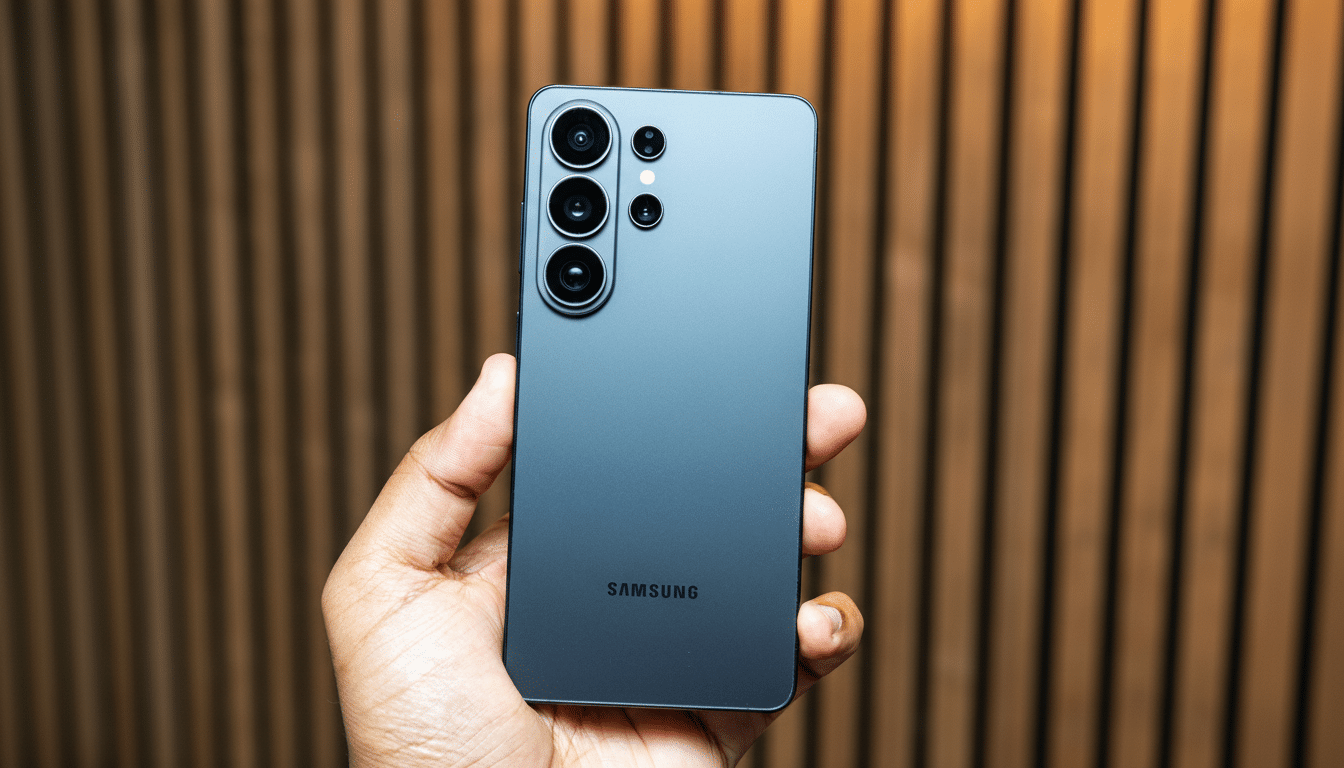
What Samsung Confirmed About Off-angle Brightness
Samsung’s position is clear: the display operates as intended, and small brightness differences at certain angles are part of the design. The company characterizes the effect as negligible for day-to-day use, emphasizing that the on-axis viewing experience remains bright and crisp.
The company also indicated the attenuation is more pronounced when the brightness slider is pegged at the top end. Indoors or at moderate brightness, visibility loss off-axis should be less noticeable, which aligns with how OLED panels typically behave under varied ambient lighting.
How Samsung’s S26 Ultra Privacy Display Technology Works
Rather than relying on a removable filter, Samsung’s approach uses a revamped pixel architecture with narrow and wide pixel elements. When Privacy Display is enabled, only the narrow elements emit light, constraining the viewing cone so adjacent passengers or bystanders see little more than a washed-out panel.
Turn the feature off and both pixel types activate, restoring a conventional viewing profile. Even so, Samsung concedes there can still be “some variation” in off-axis brightness due to the underlying structure. This is not unique to Samsung; display engineers and the Society for Information Display have long documented off-axis luminance and color shifts, especially on high-brightness OLEDs.
What Reviewers Are Seeing With Off-angle Brightness
Early lab tests and anecdotal reports suggest the S26 Ultra can appear dimmer than the S25 Ultra when viewed from an angle, particularly outdoors with brightness at its peak. Some reviewers also note that while switching off Privacy Display improves off-axis visibility, the screen doesn’t always match the predecessor’s apparent brightness at all angles.

This behavior tracks with how privacy-first displays work in other categories. HP’s Sure View technology on business laptops, for instance, intentionally narrows viewing angles and has been frequently critiqued by outlets like PCMag for reducing apparent brightness and contrast compared to standard panels. Integrated privacy always involves balancing discretion against luminance, color stability, and uniformity.
Why Off-angle Brightness Matters for Everyday Use
For commuters, field workers, and anyone handling sensitive information, visual privacy is not a theoretical concern. The Ponemon Institute’s 3M Visual Hacking Experiment found visual hacking attempts succeeded in 91% of trials across typical office settings. On a phone, even a quick glance from a nearby seat can expose personal messages, financial apps, or corporate data.
The S26 Ultra’s integrated approach could reduce reliance on bulky stick-on filters and give users a one-tap way to shield content. The cost is that content may not look as punchy when you’re sharing a video with a friend off to the side or checking a map at an awkward angle in bright sunlight. It’s a question of context: privacy on a plane versus punchy off-angle visibility at a picnic.
Practical Takeaways for Buyers Considering S26 Ultra
If you value privacy in public spaces, the S26 Ultra’s feature set offers a meaningful upgrade without extra accessories. Keep in mind that the effect on brightness is most visible at full blast; indoors or at moderate brightness, you may barely notice it. For frequent outdoor use where off-axis sharing matters, test the phone in bright conditions, toggle Privacy Display on and off, and see whether the trade-off fits your habits.
As firmware tuning and display calibration often evolve post-launch, watch for potential updates that refine brightness behavior and add quick toggles. Independent evaluations from labs and display specialists are also worth monitoring, as they typically measure on-axis luminance, off-axis falloff, color accuracy, HDR handling, and reflectance—all factors that shape real-world readability.
Bottom line: Samsung’s Privacy Display delivers real discretion with a measured cost to off-angle brilliance. Whether that cost is negligible or noticeable depends on how and where you use your phone.
