


Software investors are waking up to a harsh new reality. AI agents are eroding the per-seat economics that powered cloud software for a decade, sparking a broad sell-off in software and services and a reckoning for incumbents. Analysts have dubbed it the SaaSpocalypse, and the core driver is simple: when a handful of AI agents can do the work of dozens of licensed users, the math behind traditional SaaS breaks.
Why the Seat-Based Pricing Model Is Cracking
The classic SaaS playbook hinged on per-seat pricing, steady land-and-expand motion, and selling high-margin add-ons. AI short-circuits each step. Instead of every sales rep, analyst, or support agent logging into their own dashboard, teams now ask an AI assistant to extract, summarize, and act on data. One agent subscription can displace multiple human seats, compressing expansions and net revenue retention.
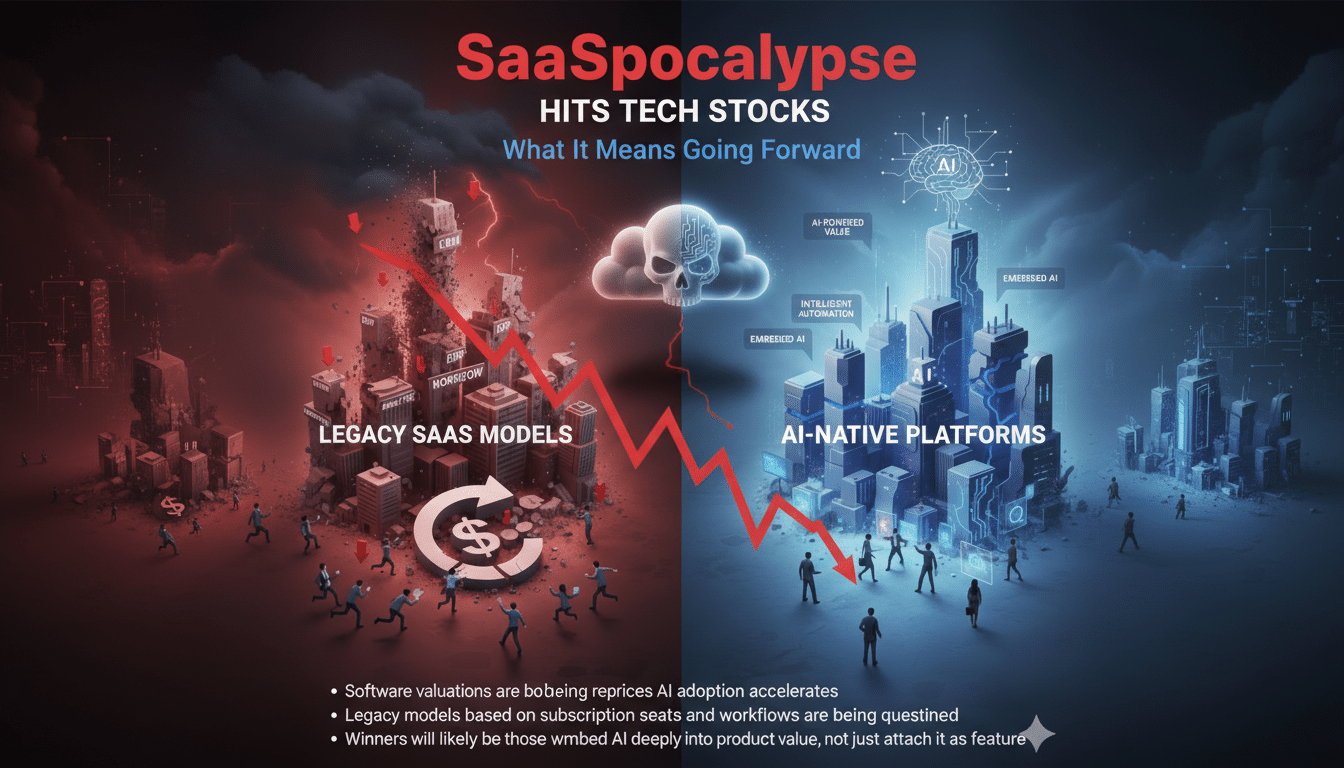
It is not just core workflows at risk. New AI tooling can replicate premium features that vendors relied on to lift average contract values — from analytics and forecasting to code generation and security triage. If a customer balks at a renewal, they can increasingly assemble a viable alternative in-house from foundation models, vector databases, and workflow orchestrators. Even the credible threat to “build” pushes prices down at renewal.
Consider Klarna’s decision to replace a top-shelf CRM with its own AI-driven system, a high-profile signal to enterprise buyers that bespoke is back. Once one flagship customer proves the path, procurement teams elsewhere take note, and the platform lock-in incumbents counted on starts to loosen.
Markets Start Pricing In Software Obsolescence Risk
Public markets are already moving. In early February, an investor exodus erased nearly $1 trillion from software and services names, with another wave later in the month. Shares of category leaders slid as each major AI capability launch added fresh doubt to long-dated revenue assumptions.
The reaction was visible around specific releases. When Anthropic introduced Claude Code for cybersecurity and later unveiled legal tools within its coworking suite, the iShares Expanded Tech-Software Sector ETF — which holds software firms including LegalZoom and RELX — dipped as traders recalibrated who captures future spend. This is FOBO in action: fear of becoming obsolete.
The end of the zero-interest-rate era compounds the pain. SaaS valuations rely on discounted future cash flows; higher rates and AI uncertainty simultaneously squeeze the numerator and lift the denominator. Some analysts argue the industry is confronting a first-principles question about software’s terminal value in a world where intelligent agents automate not just tasks but entire workflows.
AI-Native Startups Rewrite Software Pricing Models
While incumbents tack AI onto legacy SKUs, AI-native companies are rethinking what customers pay for. Two models dominate: consumption pricing tied to usage (often measured in tokens or API calls) and outcome-based pricing that charges only when the system achieves a defined result.
Outcome-based models are gaining real traction. Sierra, an AI customer service startup led by a former Salesforce CEO, has reportedly crossed $100 million in annual recurring revenue in under two years by aligning fees with resolved cases and deflections. That kind of speed is rare in classic SaaS and underscores how quickly AI-native offerings can scale when value is unambiguous.
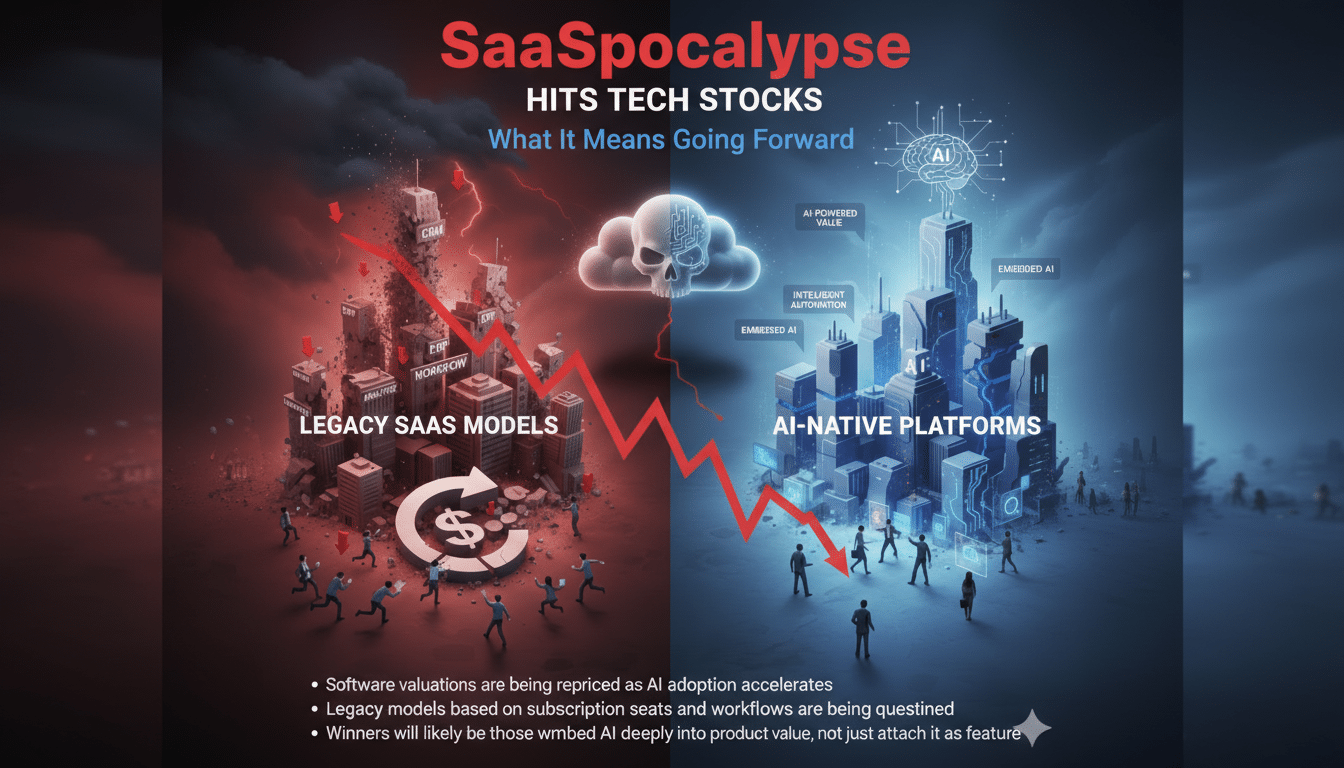
For buyers, the appeal is clear: less shelfware, clearer ROI, and costs that flex with performance. For vendors, it demands new telemetry, risk-sharing, and tighter integration with business processes — moats that are more about data, distribution, and workflow ownership than about features alone.
Build Versus Buy Dynamics Now Tilt Toward Build
Enterprises now have credible “build” options that did not exist a few years ago. Off-the-shelf models, retrieval-augmented generation, and commoditized orchestration tools let small platform teams prototype agents in weeks. Even when companies stick with vendors, this newfound leverage surfaces in negotiations, pressuring list prices, overage fees, and multi-year commitments.
Net effect: vendor consolidation accelerates. CFOs favor fewer platforms with broad native AI, open connectors, and clear security postures. Niche tools without defensible data advantages or embedded workflows become vulnerable, especially in categories where AI does more than assist — it executes.
IPO Window Narrows Further For Legacy SaaS Providers
Private markets mirror the chill. A recent Crunchbase analysis found no venture-backed SaaS offerings in the near-term pipeline, even as other sectors test the IPO waters. Late-stage companies like Canva and Rippling face a tricky mix: choppy comps among public software names, sky-high expectations around AI, and investors who would rather avoid sentiment-driven whiplash.
Meanwhile, investors are eager to see the financials of AI-native contenders should they file. Industry chatter suggests OpenAI and Anthropic are evaluating public debuts, and their disclosures would likely reset how growth, gross margin, and model costs are underwritten across the entire software stack.
What Will Endure After The SaaS and AI Shakeout
This downturn is not the end of SaaS so much as the end of its orthodoxies. Software that anchors compliance, auditability, data residency, and mission-critical workflows retains durable demand, especially when it becomes the system of record feeding enterprise AI. The strongest moats will come from proprietary data rights, deeply embedded processes, measurable outcomes, and distribution power — not from isolated features that models can learn overnight.
Expect pricing to converge around hybrid models: base platform access paired with usage or outcome tiers, with explicit ROI guarantees. Expect product design to assume an AI copilot as the primary user, not a human clicking through dashboards. And expect investors to refocus on fundamentals — retention, margins, cash efficiency, and Rule of 40 discipline — as the market separates enduring platforms from yesterday’s seat-count stories.
The SaaSpocalypse is real, but it is also a reset. Winners will be those that treat AI not as an add-on but as a business model change, meeting customers where value is created and paid for.
