


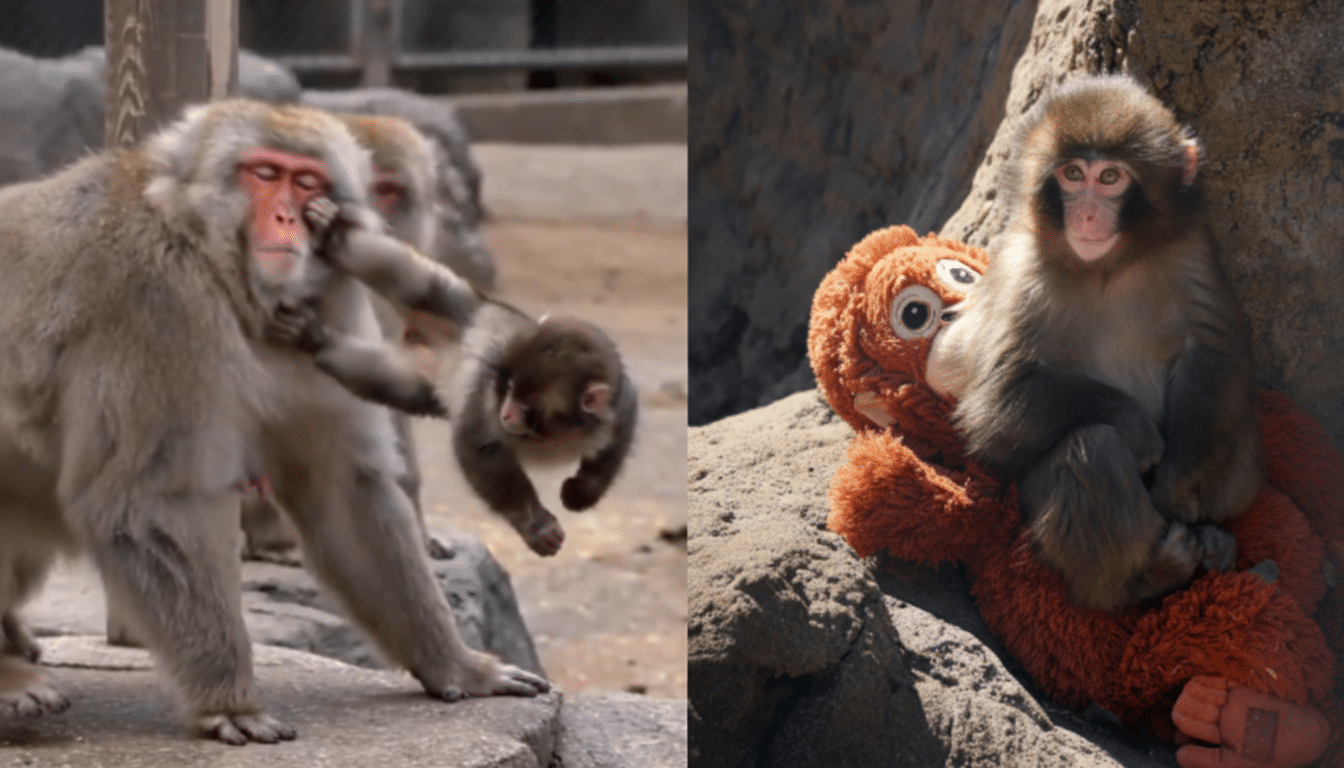
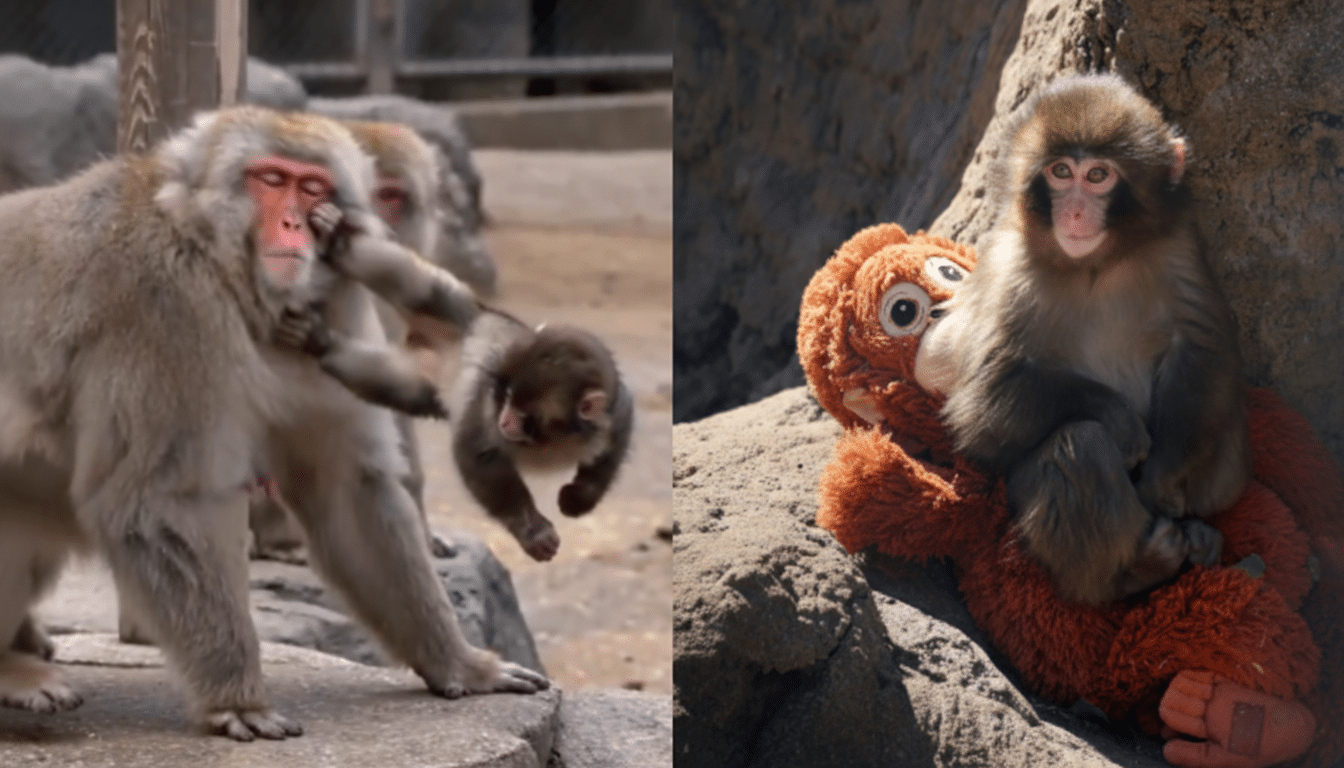
The internet’s favorite baby macaque, Punch, is everywhere right now—and so are AI fakes. As genuine clips from his home at Japan’s Ichikawa City Zoo charm millions, a parallel wave of synthetic “Punch” videos is racking up views, blurring the line between heartwarming reality and algorithmic fantasy.
Some creators label their work as parody. Others don’t. The result: adorable but fabricated scenes—like Punch cuddled by a perfectly serene surrogate or enacting cartoonish revenge—that look convincing at a glance yet fall apart under scrutiny. Here’s how to spot the tells fast, and why this specific story became ground zero for viral AI slop.
- Why Punch Became Prime AI Bait For Fake Videos
- The Tells Inside The Frame That Expose AI Fakes
- Sound And Motion Red Flags In Punch Videos
- Check The Context And The Source Before Sharing
- A 60-Second Verification Playbook For Punch Clips
- What Platforms And Experts Say About AI Animal Fakes
- The Bottom Line For Punch Fans And Responsible Sharing
Why Punch Became Prime AI Bait For Fake Videos
Cute, high-contrast subjects with predictable settings are ideal for current text-to-video models. Punch checks every box: expressive eyes, soft fur, simple backgrounds, and huge engagement. Low-quality content mills know this, and they churn out short “aww” clips to farm attention and ad money.
The public’s uncertainty is the accelerant. Pew Research Center reports that 52% of U.S. adults say they’re more concerned than excited about AI’s growing role in everyday content, and the Reuters Institute has found that over half of news consumers worry they can’t tell real from fake online. That anxiety fuels sharing and debate—exactly what engagement-gaming accounts want.
The Tells Inside The Frame That Expose AI Fakes
Look for physics that don’t cooperate. In several viral Punch clips, limbs subtly interpenetrate—an arm gliding through another arm or a plush toy clipping into fur. Real contact creates compression, shifting fur and skin; fakes often “ghost” at the touch point.
Scan textures and edges. AI-rendered fur can appear too glossy or uniformly perfect, with highlights that don’t match the scene’s lighting. Ear edges and whiskers may shimmer or wobble frame to frame. Teeth and nails often look ceramic or over-bright. In one widely shared fake, the adult macaque’s chest anatomy appears hyperreal and oddly symmetrical—details that jump out once you pause.
Background continuity is a giveaway. Repeating patterns in rails, enclosure mesh that subtly morphs, or signage with gibberish text betrays generative tools. Shadows and reflections should behave consistently; if Punch moves but his shadow “sticks,” it’s suspect.
Sound And Motion Red Flags In Punch Videos
AI videos love dreamlike camera motion—slow dollies, perfect focus, and buttery stabilization. Real phone footage from zoos is shakier and riddled with micro-judders. Motion blur in fakes can be too clean or evenly smeared, especially around fingers and tail tips.
Audio rarely keeps pace. Looping ambience, generic “nature” soundbeds, or lip and jaw movements that don’t match coos or screeches point to synthesis. Authentic zoo clips usually carry messy audio: crowd chatter, PA announcements, clanking gates, or overlapping animal calls.
Clip length alone isn’t proof, but it’s context. Many public tools (Runway Gen-3, Pika, Luma) tend to produce polished 5–20 second bursts, while OpenAI’s Sora demos have shown up to about a minute in one shot. If you see a long, continuous, cinema-smooth scene with unreal lighting, stay skeptical.
Check The Context And The Source Before Sharing
Start with the poster. Does the account regularly upload animal clips with identical vibes and vague captions? Was the video dropped alongside a batch of similarly glossy shorts? That pattern screams “synthetic feed.” Look for disclaimers like “AI” or “parody,” but don’t rely on them; labels can vanish when clips are re-uploaded.
Cross-reference with credible originators. For real Punch updates, look for posts or coverage from Ichikawa City Zoo, as well as mainstream Japanese outlets such as NHK, Asahi Shimbun, or Kyodo News. BBC Verify, AFP Fact Check, and AP Fact Check frequently analyze viral animal clips; if a scene looks extraordinary, see if they’ve weighed in.
Geography and season matter. Does the enclosure match known photos? Are keepers’ uniforms, signage language, or foliage consistent with Chiba Prefecture? AI often stumbles on localized details that eyewitness footage nails.
A 60-Second Verification Playbook For Punch Clips
- Pause on contact points—hands, ears, and where bodies touch. Check for clipping, unnatural compression, or vanishing fur.
- Scrub frame by frame. Watch shadows, reflections, and background grids for morphing or jitter.
- Listen with eyes closed. Looping ambience and canned animal sounds are common in fakes.
- Extract a few frames and run a reverse image search. Tools like InVID or Google’s image search can surface earlier uploads and originals.
- Trace the uploader. Check their history, posting cadence, and whether they credit the zoo or news sources. Newly created accounts posting nothing but viral-ready shorts are red flags.
What Platforms And Experts Say About AI Animal Fakes
Major platforms have rolled out synthetic-media policies—YouTube and Meta require disclosures for materially altered content, and TikTok says AI-generated posts should be labeled. Enforcement remains uneven. Newsrooms with open-source intelligence teams, including BBC Verify and Bellingcat, recommend combining provenance checks with frame-level analysis rather than relying on labels alone.
Researchers at MIT CSAIL and the University of California, Berkeley note that state-of-the-art detectors are improving but can be brittle when videos are resized, filtered, or re-encoded by social apps. Practical vigilance—source, context, and frame-by-frame checks—still beats automated detection in fast-moving feeds.
The Bottom Line For Punch Fans And Responsible Sharing
It’s okay to love the real Punch—and still side-eye the perfect, cinematic ones. Slow down before you share, reward accounts that credit originals and the zoo, and treat too-cute-to-be-true moments as a prompt to verify. The more we train ourselves to spot the seams, the less oxygen there is for the AI slop factories riding Punch’s fame.
