


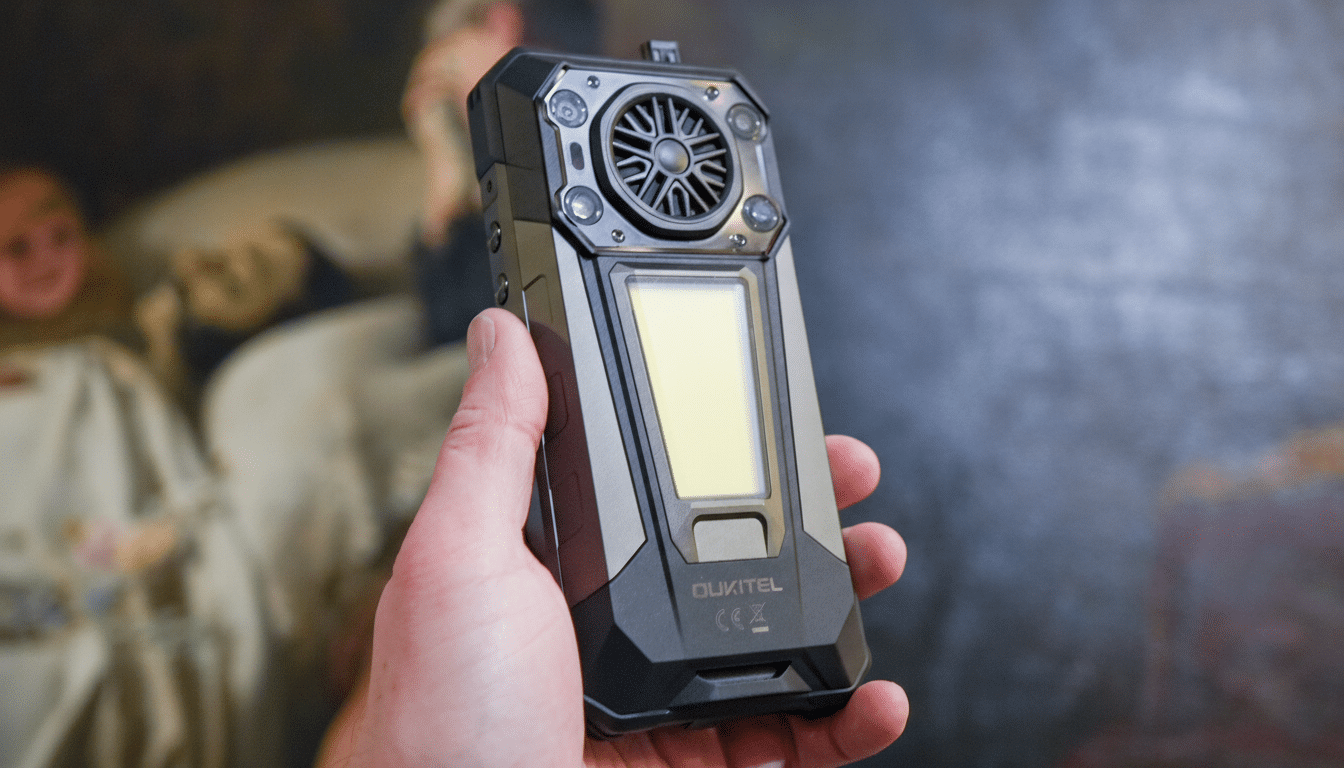
Mobile World Congress is no stranger to outlandish concepts, but a smartphone that can light a campfire still turns heads. Oukitel’s WP63, shown on the floor in Barcelona, is a hulking rugged handset built for the backcountry, complete with a pop-out electric igniter designed to spark tinder in emergencies. It pairs that party trick with a gigantic battery, floodlight-grade illumination, and the ability to top up other devices on the trail.
A Phone That Actually Sparks: Oukitel WP63’s Built-In Igniter
The firestarter sits behind a small, gasketed door at the top edge and deploys like a miniature utility tool. Inside is a compact heating element—think the glow coil from an old car lighter—engineered to ignite dry kindling. On the show floor, the element reached red heat in a heartbeat, underscoring that this is more than a gimmick. Oukitel positions the feature for rescue kits, remote work crews, and expedition use, where a controlled flame can be as critical as a radio or flashlight.
- A Phone That Actually Sparks: Oukitel WP63’s Built-In Igniter
- Endurance First, Battery Second on Oukitel’s Rugged WP63
- Rugged Compromises and Key Unknowns for the Oukitel WP63
- Why a Firestarter Belongs in a Phone Built for Field Work
- A Sibling Built for the Job Site: Oukitel WP61 Previewed
- Market Context and Safety Questions for Ignition-Equipped Phones
- What to Watch Next for Oukitel WP63’s Launch and Testing
Endurance First, Battery Second on Oukitel’s Rugged WP63
The WP63’s battery dwarfs mainstream phones. At 20,000mAh, it’s roughly four times the capacity of a typical modern handset, which usually lands around 4,500–5,000mAh. The company touts “extreme battery endurance,” and it doubles as a power bank with 18W reverse charging via USB-C—handy for juicing a headlamp, earbuds, or a teammate’s phone. There’s also a large integrated camping light and a booming loudspeaker aimed at alarms and group comms in noisy worksites.
Rugged Compromises and Key Unknowns for the Oukitel WP63
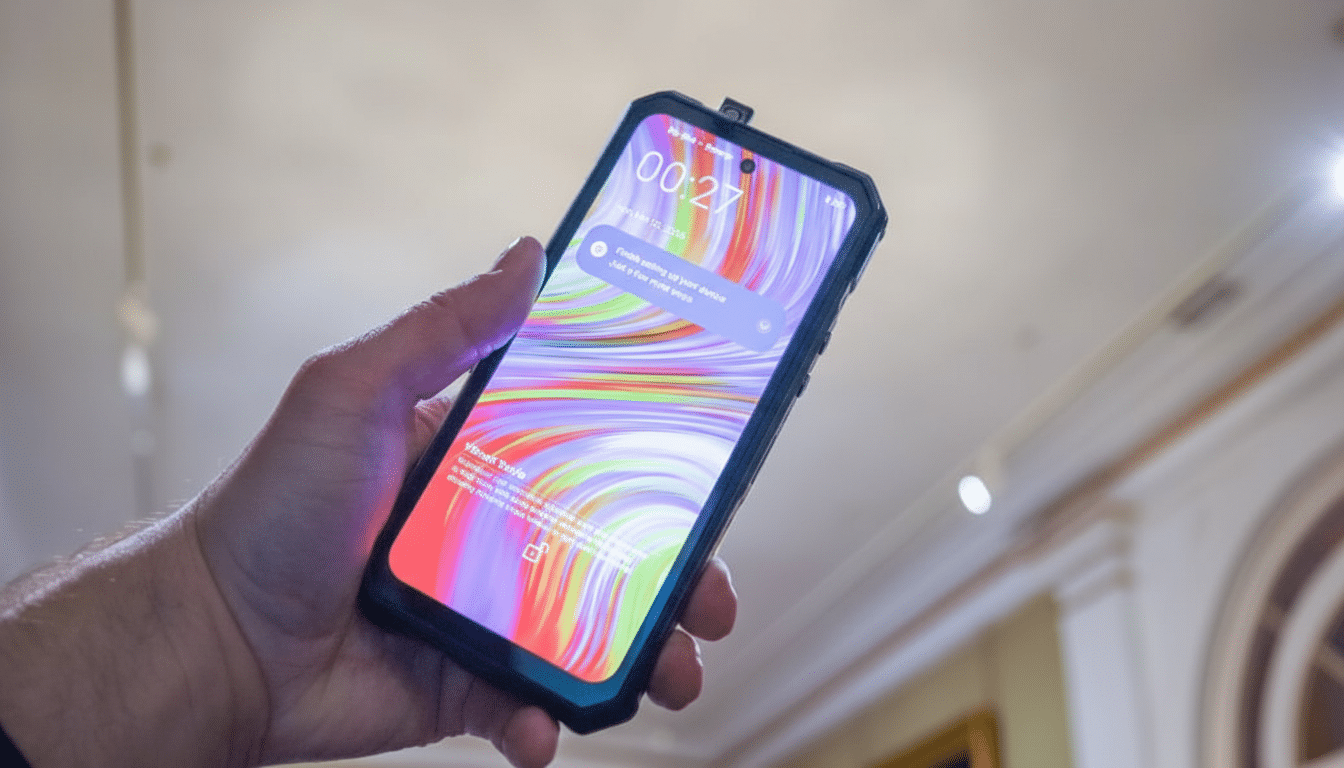
Durability-focused devices often trade polish for practicality, and the WP63 leans into that formula. The 6.7-inch display sticks to a basic 720p resolution but runs at a slick 120Hz for smooth scrolling and maps. Under the hood is a Unisoc T8200 (T765) chipset. Oukitel has yet to detail full specs, regional availability, or pricing, and it has not publicly listed ingress ratings or military-grade certifications. Many rugged competitors advertise IP68/IP69K and MIL-STD-810H testing; buyers will want to see similar disclosures here.
Why a Firestarter Belongs in a Phone Built for Field Work
Field pros and adventure travelers already carry multitools and emergency gear; converging essentials into the one device you always pack—the phone—reduces weight and can shave critical seconds in a crisis. The World Health Organization and international disaster agencies routinely emphasize preparedness and redundancy in remote operations, and a self-contained ignition source fits that ethos. Just as satellite messaging has migrated into consumer phones, an on-demand heat element is a logical, if audacious, next step for niche users.
A Sibling Built for the Job Site: Oukitel WP61 Previewed
Oukitel also previewed the WP61, a more fully loaded rugged flagship aimed at industrial operations and outdoor professions. It adds satellite emergency features, walkie‑talkie functionality, and a thermal imaging camera for spotting heat signatures through smoke or drywall—tactics increasingly used by inspectors and first responders. Specs include a 20,000mAh battery with 45W charging, a MediaTek Dimensity 7025, 12GB of RAM, 512GB of storage, a 108MP main camera, a 1,200-lumen light, a 5W 130dB loudspeaker, and Android 16.
Market Context and Safety Questions for Ignition-Equipped Phones
Rugged smartphones remain a sliver of the overall handset market—IDC tallied more than 1.1 billion smartphones shipped worldwide last year—yet they punch above their weight in construction, logistics, and emergency services. Brands like Ulefone and Doogee court similar buyers with giant batteries, high-output lights, and thermal sensors; Oukitel’s built-in igniter is a notable differentiator.
The feature also raises practical considerations. Aviation authorities including the FAA and IATA restrict lighters and heating elements in baggage; travelers should expect airline-specific rules to apply to a phone with an integrated igniter. In regulated workplaces, safety officers may require clear labeling, lockouts, or removal in hazardous environments. Oukitel will need to clarify safeguards—such as caps, interlocks, or software permissions—to satisfy enterprise buyers and compliance teams.
What to Watch Next for Oukitel WP63’s Launch and Testing
As impressive as the demo was, the WP63’s real test will come down to certification details, heat-cycle durability of the coil, and how much runtime that 20,000mAh pack delivers in mixed GPS, camera, and light use. Price and distribution will determine whether this stays a curiosity or becomes standard kit for guides, surveyors, and search-and-rescue teams.
At a show where AI dominates the headlines, a phone that can literally start a fire cuts through the noise. If Oukitel can match the spectacle with robust safety measures and clear specs, the WP63 could be the year’s most unconventional—and unexpectedly useful—rugged handset.
