


I spent time with the OPPO Find N6 on the MWC show floor, and the headline is simple but seismic for foldables: the display crease is practically imperceptible. Open or partially folded, under harsh hall lighting or angled toward glare, the center seam all but disappears. It’s the closest I’ve seen a book-style foldable come to feeling like a single uninterrupted tablet screen.
First Impressions From the MWC Show Floor
The Find N6 feels immediately refined in hand—thin, light, and balanced. There’s no top-heavy hinge sensation, and the frame doesn’t dig into your palm when closed. Side by side with the latest book-style rivals, including Samsung’s tall-and-slim approach, OPPO’s ergonomics land in the sweet spot: pocketable when shut, expansive when open, and reassuringly solid with each open-close cycle.
- First Impressions From the MWC Show Floor
- A Crease You Must Squint to See on the Find N6
- Hinge and Display Engineering Behind the Design
- Thin, Light, and Confident in Daily Handling
- Specs at a Glance and Performance Potential
- Why This Matters for the Future of Foldables
- What We Still Need to Test Before a Full Review
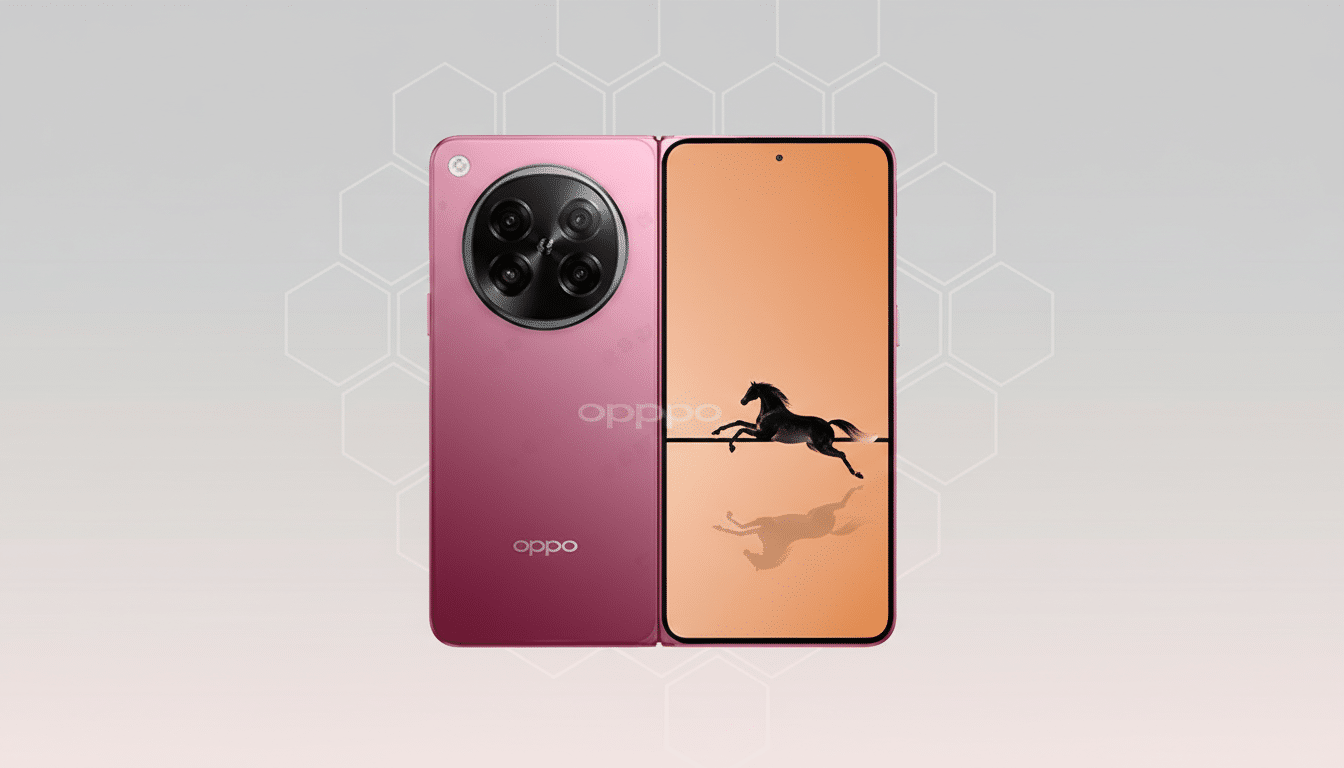
The hinge action is smooth but decisive, with no gritty resistance and no audible crunch. It closes without a gap, which helps dust ingress resistance and overall silhouette. The outer display is comfortably proportioned for one-handed use, avoiding the remote-control feel some taller devices still struggle with.
A Crease You Must Squint to See on the Find N6
I tried to make the crease reveal itself—raking the panel under spotlights, hunting for distortions against white backgrounds, and running a fingertip across the centerline. There’s no distracting light warp and only the faintest change in texture if you know exactly where to look. In casual use it reads as a flat panel, which is a meaningful leap over most current book-style designs and at least on par with the flattest folds we’ve seen from leaders in the space.
This matters because the crease has been the single most visible reminder that foldables are a compromise. Removing that visual and tactile cue shifts the experience from “impressive prototype” to “no-compromise flagship.” It’s the first time I’ve felt comfortable saying the crease conversation might finally be over for many buyers.
Hinge and Display Engineering Behind the Design
OPPO isn’t disclosing all the underlying tricks yet, but the results point to a mature waterdrop-style hinge that allows a wider folding radius, spreading stress across the ultra-thin glass stack and diffuser layers. That typically reduces panel deformation at the fold and softens the ridge your finger can feel. The brand has form here: a close relative in the company’s portfolio previously secured a TÜV Rheinland rating of 1,000,000 folds, signaling deep investment in hinge tolerances and wear components.
On the display side, the lamination stack seems well-optimized. There’s no visible pooling of adhesive under direct light and no telltale shimmer across the fold line when scrolling high-contrast content. Taken together, the hinge geometry and panel layering are doing exactly what they should—managing stress so the fold becomes a non-event.
Thin, Light, and Confident in Daily Handling
Even with the crease subdued, a foldable can fall apart if it’s unwieldy. The Find N6 avoids that trap. Closed, it has the tidy footprint of a conventional flagship, and open, it feels uniformly supported edge to edge, without flex or bowing at the center. Weight distribution is even, which makes extended reading or sketching sessions less tiring on wrists than some heavier competitors.

The hinge holds intermediate positions reliably for tabletop video calls or tripod-free content capture. That consistency, paired with a nearly invisible fold, nudges the device from a novelty into a genuine productivity companion.
Specs at a Glance and Performance Potential
The demo unit’s info panel points to top-shelf internals and a camera system that clearly aims at true flagship territory. In a brief hands-on, UI animations were fluid, app launches were instant, and the large canvas made multitasking feel natural. As ever, real verdicts will require full testing—sustained performance, thermals, battery endurance, image processing, and display calibration under sunlight—but nothing in this early encounter hinted at compromise.
Why This Matters for the Future of Foldables
Analyst firms such as Counterpoint Research and Display Supply Chain Consultants have charted steady, multi-year growth for foldables, driven by thinner chassis, brighter panels, and improved hinges. Yet consumer hesitation has consistently clustered around durability and the crease. By making the fold line fade from view, the Find N6 addresses one of the last visceral objections people voice at retail counters.
If this crease performance holds up in mass production, it could reset expectations across the category, much like gapless hinges did a generation ago. Competitors will have to match or exceed this visual smoothness to stay in the conversation.
What We Still Need to Test Before a Full Review
The checklist for a full review remains long:
- Outdoor readability and reflectance
- PWM behavior for sensitive eyes
- Long-term crease stability
- Fold-cycle durability
- App continuity across displays
- Any stylus or pro-mode camera extras
But based on this hands-on, one conclusion is clear—the Find N6 finally makes the fold feel like a feature, not a flaw.
