


OpenAI has disclosed new specifics about its agreement with the Pentagon, positioning the deal as a tightly controlled, cloud-first deployment designed for classified environments and bounded by explicit prohibitions. The move follows the collapse of talks between Anthropic and the Department of Defense and an ensuing directive for federal agencies to wind down use of Anthropic’s tools, setting the stage for OpenAI to step in with an approach it says embeds safeguards at the architecture and contract levels.
The company emphasized that its models will not be used for mass domestic surveillance, fully autonomous weapons, or high-stakes automated social scoring. Critics argue, however, that the legal scaffolding referenced in the framework could still leave room for broad data collection, underscoring how contested the boundary lines for defense AI remain.
- What OpenAI Says Is Off Limits in Pentagon AI Deal
- Why This Deal Advanced After Anthropic Talks Collapsed
- The Architecture and Oversight Claims OpenAI Emphasizes
- The Surveillance Flashpoint and Legal Authorities Cited
- What It Means for Military AI Adoption and Oversight
- What to Watch Next as Pentagon AI Deployment Proceeds
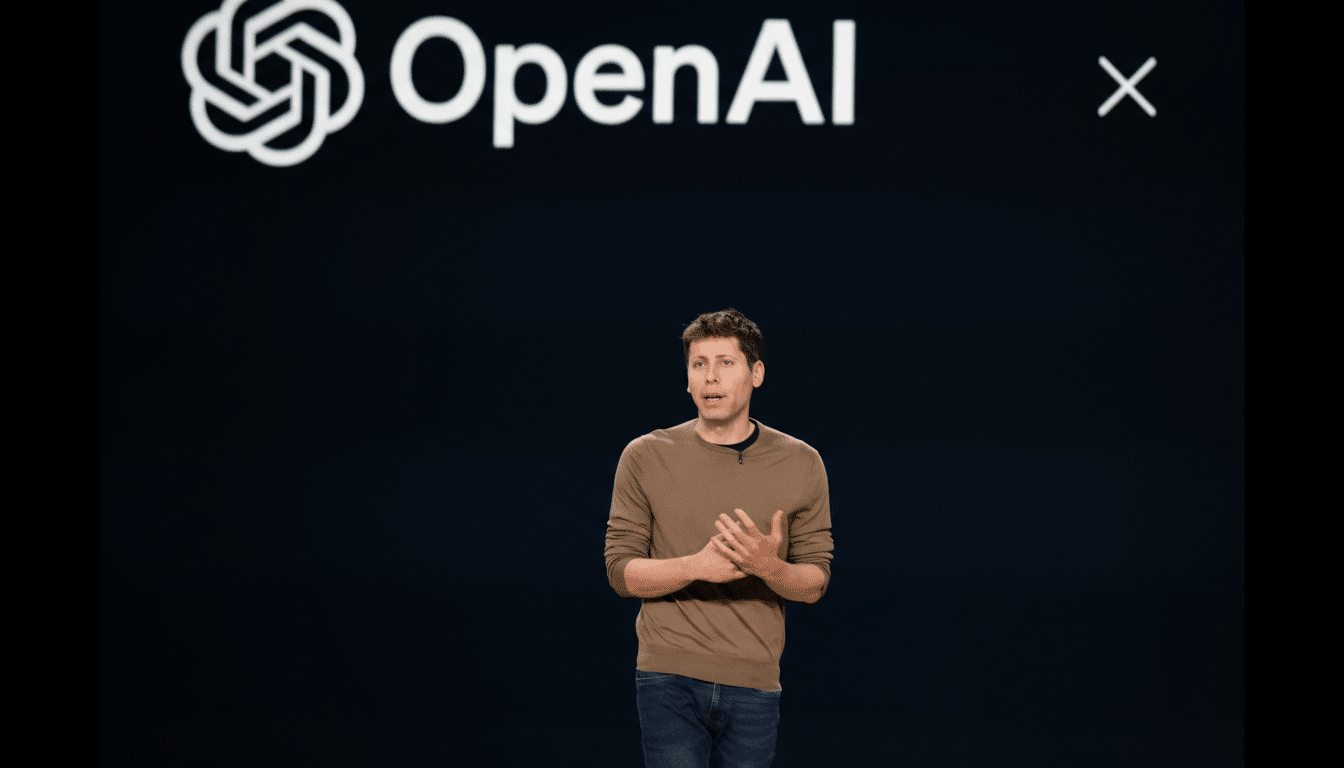
What OpenAI Says Is Off Limits in Pentagon AI Deal
OpenAI outlined three firm prohibitions:
- no mass domestic surveillance
- no integration into autonomous weapon systems
- no use for high-impact automated decision regimes such as social credit scoring
These red lines mirror long-standing concerns from civil society groups and echo the Defense Department’s Responsible AI Principles, which call for governable systems with human judgment in the loop.
The company says enforcement goes beyond surface-level usage policies. OpenAI retains control of its “safety stack,” deploys solely via its cloud API, and requires cleared OpenAI personnel to remain involved for sensitive workflows, reinforced by contractual terms and existing U.S. law. In practical terms, that suggests the model weights are not installed on customer hardware and that OpenAI can update safeguards, throttle access, or switch off features if risks emerge.
Why This Deal Advanced After Anthropic Talks Collapsed
OpenAI’s announcement arrived rapidly after Anthropic’s talks with the Pentagon broke down, prompting questions about what changed. OpenAI leaders argue the difference lies in technical deployment and oversight: cloud-only access, stricter control of integration pathways, and in-the-loop cleared staff. Company executives also framed the decision as a bid to cool rising tensions between AI labs and the defense establishment, even as they acknowledged the rollout was rushed and generated backlash, including a visible hit in consumer app store rankings.
The episode underscores a strategic calculation: accepting public criticism now to set a template for future government AI contracts that others can follow. Whether that template becomes industry standard will depend on how convincingly it blocks the two flashpoints most feared by the public—weaponization and surveillance creep.
The Architecture and Oversight Claims OpenAI Emphasizes
OpenAI’s deployment design hinges on keeping models accessible only through controlled cloud endpoints. By avoiding local installation on sensors, fire-control systems, or other hardware, the company argues its tools cannot be wired directly into kinetic operations. Cleared OpenAI personnel “in the loop” implies governed escalation paths, audit logs, and revocation capabilities—features that align with the Pentagon’s test and evaluation playbooks and the NIST AI Risk Management Framework.
If implemented as described, this architecture would complement existing DoD guardrails such as Directive 3000.09 on autonomy in weapon systems and the Responsible AI Strategy’s emphasis on traceability. The critical test will be operational: how permissions are scoped, how quickly model behavior updates are propagated to air-gapped or classified environments, and whether third-party red-teamers and independent assessors can verify compliance without exposing sensitive missions.
The Surveillance Flashpoint and Legal Authorities Cited
Policy observers seized on references to legal authorities like Executive Order 12333, noting that overseas collection under this framework can incidentally sweep up data about Americans with limited court oversight. Commentators including longtime digital rights advocates have warned that citing these authorities, while promising a ban on “mass” surveillance, still leaves a wide aperture for data ingestion and analysis tasks.
OpenAI maintains that its contractual and technical approach prevents its systems from being weaponized for bulk domestic monitoring. The unresolved question is definitional: what counts as “mass,” what thresholds trigger enhanced review, and who independently adjudicates gray zones when collection and analysis happen far from public view. Transparent reporting to oversight bodies and auditable controls—down to dataset provenance and query logging—will be essential to credibility.
What It Means for Military AI Adoption and Oversight
The Pentagon’s AI push has been shifting from pilots to programs of record through organizations like the Chief Digital and Artificial Intelligence Office and the Defense Innovation Unit. Most near-term uses are non-kinetic—intelligence triage, logistics optimization, cyber defense assistance, multilingual translation, and training simulation. A cloud-gated, human-in-the-loop model could accelerate those missions while keeping a hard stop on weapons integration.
Procurement pathways such as the Tradewinds marketplace have already streamlined AI onboarding for federal buyers. If OpenAI’s structure proves workable, expect templates for accreditation at higher classification levels, standardized red-teaming protocols, and incident reporting procedures modeled on existing software assurance regimes. The flip side: if oversight gaps surface, Congress and watchdogs will likely demand stricter statutory limits.
What to Watch Next as Pentagon AI Deployment Proceeds
Key signals will include the exact language of allowable use cases, the independence of compliance audits, clarity on kill-switch authority, and how frequently OpenAI publishes aggregate transparency metrics without compromising classified operations. Evidence that models cannot be co-opted into sensor fusion or targeting loops—paired with documented refusal handling—would validate the “architecture over policy” claim.
For now, the deal’s promise rests on technical gates, human oversight, and legal boundaries working in unison. OpenAI has drawn bold lines on paper; proving those lines hold under operational pressure will determine whether this becomes a model for responsible defense AI—or a cautionary tale about the limits of contractual guardrails.
