


Netflix is lifting monthly rates across its major plans, marking another price bump for the world’s largest subscription streamer. The increases arrive with no new perks attached, underscoring Netflix’s steady pivot to higher average revenue per user as it doubles down on live events, bigger franchises, and an expanding ads business.
What Changed and By How Much in Each Netflix Plan
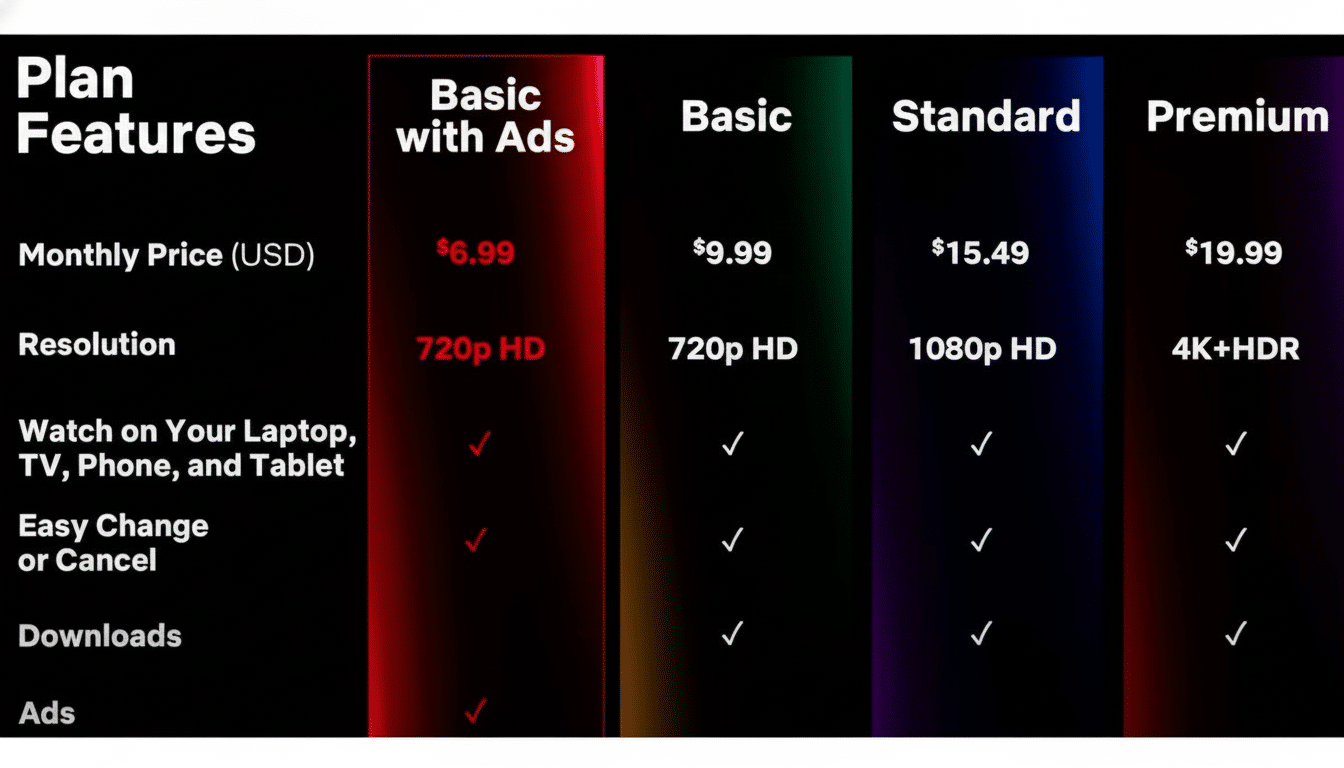
The ad-supported Standard plan rises to $8.99 per month. The ad-free Standard tier jumps to $19.99. Premium, which includes 4K streaming and more simultaneous devices, climbs to $26.99.
Fees for “extra members” outside a primary household are also up by $1. An added member now costs $7.99 on an ads plan and $9.99 on an ad-free tier.
The new prices apply immediately for new sign-ups, while existing customers will see the change at their next billing cycle after receiving in-app and email notices from the company.
Why Netflix Is Pushing Subscription Prices Higher
Pricing power has become central to Netflix’s strategy. Executives have consistently emphasized prioritizing sustainable revenue growth—via plan optimization, paid sharing, and advertising—over raw subscriber counts on earnings calls and in shareholder letters. That focus has coincided with a broader shift from pure on-demand catalogs to must-see moments that drive appointment viewing.
Live programming is the clearest signal. Netflix now airs WWE Raw each week and has tested marquee one-off sports and entertainment broadcasts, including baseball and combat sports events. Those rights are expensive, but they create spikes in tune-in that support higher ad rates and justify premium subscription tiers, a playbook long used by traditional sports networks.
The company’s ad-supported push also informs the math. Netflix said at its advertising upfront that tens of millions now use the ad tier monthly, and industry analysts at MoffettNathanson and Ampere Analysis have noted that ad impressions are ramping quickly. By nudging price-sensitive viewers to the lower-cost, ad-backed option while lifting ad-free rates, Netflix grows total revenue per household without relying solely on price hikes.
Will Subscribers Stick Around After These Price Hikes
History suggests many will. After previous increases and the crackdown on password sharing, Netflix’s sign-ups rose and churn stabilized, according to measurement firms like Antenna and Kantar. The company ended the most recent year with well over 300 million members globally, per its annual filing, indicating that perceived value—depth of catalog, big-brand series, and growing live moments—continues to outweigh periodic sticker shock for most households.
Still, price sensitivity is real. Antenna data has shown temporary churn bumps after industry-wide increases. Netflix’s bet is that a consistent drumbeat of buzzy originals, licensed hits, and live tentpoles reduces cancellation risk and keeps customers rotating to lower tiers rather than leaving outright.
How It Stacks Up Against Rivals in the Streaming Market
Most major streamers have moved prices higher as content costs and profitability goals converge. Ad-free tiers across competitors now cluster in the mid-to-high teens, while premium, 4K-heavy options push into the twenties. Live sports and news packages often sit above that range, and virtual pay-TV bundles cost considerably more. In that context, Netflix is planting its flag near the top of stand-alone entertainment services—especially at Premium—while preserving a relatively accessible on-ramp through the ads tier.
What Viewers Can Do Now to Manage Higher Netflix Bills
If the new rates sting, consider right-sizing. Dropping from Premium to Standard (or to the ad-supported plan) can shave monthly costs while preserving the shows you watch most. Removing extra members you no longer need or pausing between binges also helps, and Netflix’s easy cancel/return model supports a “rotate your services” strategy many households already use.
For Netflix, the move is a continuation, not a pivot: fewer, bigger swings in content and live events; more emphasis on ad-supported monetization; and selective price increases to fund it. For subscribers, the calculus is simple but personal—decide which tier matches your viewing reality, and switch when it doesn’t.

