


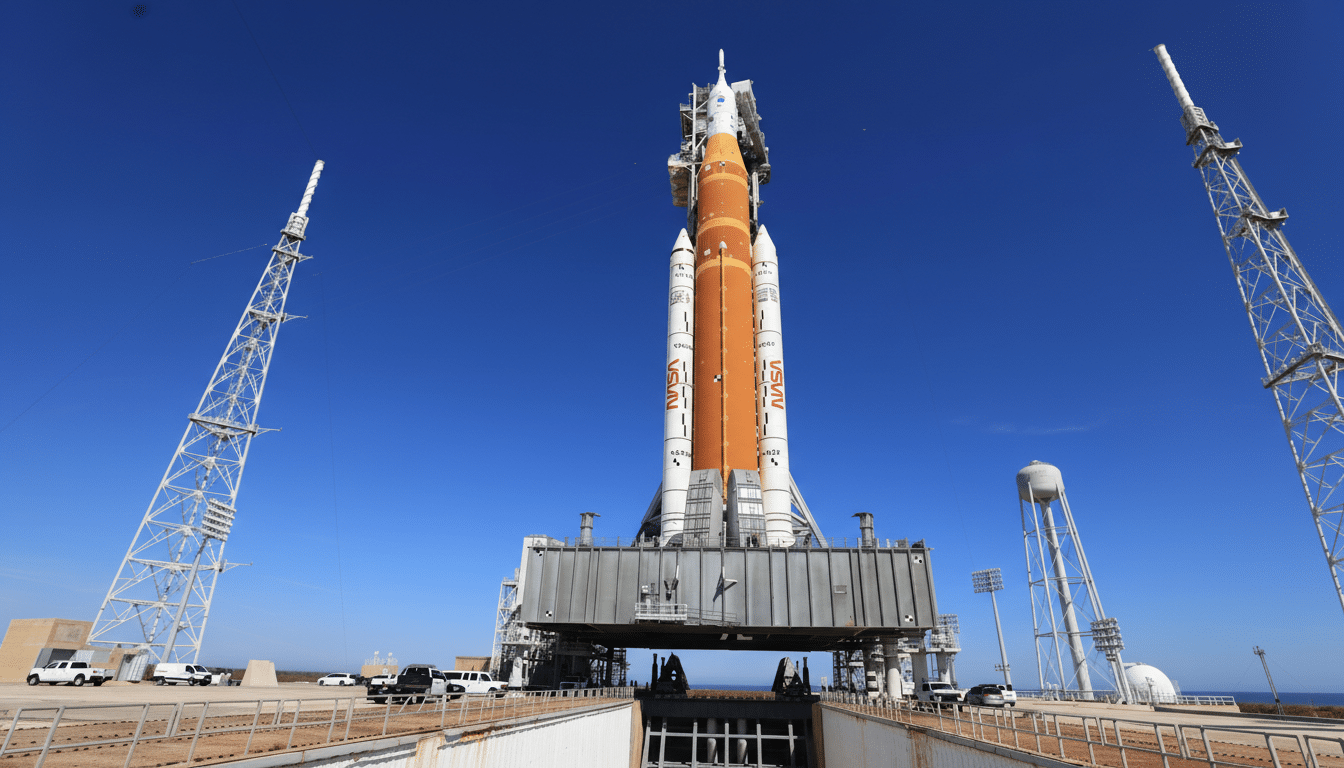
NASA is sending the fully stacked Artemis II moon rocket back to the Vehicle Assembly Building for unplanned repairs, pausing pad operations after more than a month on Launch Complex 39B without liftoff. The rollback is precautionary and aimed at giving engineers direct access to a helium system in the upper stage that has shown irregular flow behavior during recent tests.
The four-mile journey will be slow, deliberate, and high-stakes: the Space Launch System, Orion spacecraft, and their mobile launcher together weigh about 18 million pounds. With billions in hardware at risk, the decision underscores NASA’s bias toward fixing issues in the hangar rather than attempting intricate troubleshooting on the pad.
Why the Artemis II Rocket Rollback Is Happening Now
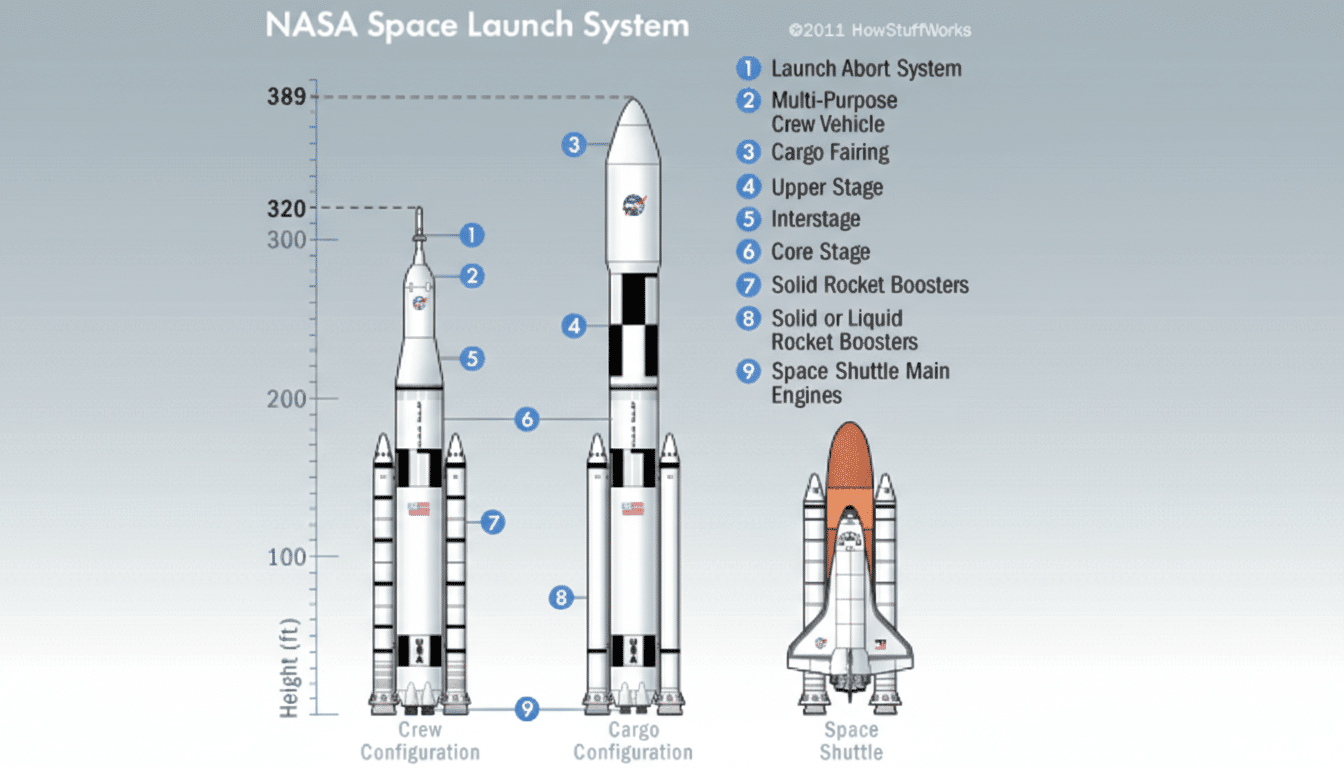
Program managers flagged a helium flow concern in the SLS upper stage — the Interim Cryogenic Propulsion Stage — a component derived from proven hardware used on Delta IV missions. Helium is critical for pressurizing propellant tanks, protecting engines, and enabling purges that keep lines clean and dry. Anomalies in that system can ripple through countdown operations, propellant loading, and engine conditioning.
Teams saw a pattern reminiscent of an issue investigated ahead of Artemis I, the uncrewed test flight that successfully circled the moon. This time, with astronauts slated to fly, managers opted to roll back and inspect potential culprits, including a ground-to-vehicle interface, a suspect valve, or a filter in the helium line. NASA’s approach reflects lessons learned from Artemis I: resolve fluid systems at their source and verify performance with direct access and certified ground hardware in the VAB.
The Crawler-Transporter’s Heavy Lift Challenge
Moving the stack falls to Crawler-Transporter 2, a tracked behemoth built in the 1960s and modernized for today’s heavier rockets. The crawler itself weighs 6.6 million pounds and creeps along at walking speed, leveling and steering to keep the 322-foot vehicle steady over sloped terrain and under changing winds. Drivers rotate about hourly across the roughly half-day trip to maintain absolute focus.
The Space Launch System pushes the crawler to its upgraded limits — roughly 50% more mass than the Apollo era’s Saturn V. NASA has outfitted CT-2 with new brakes, power-generation systems, reinforced structures, and enhanced controls. Even so, the massive steel treads, or “shoes,” wear quickly under Artemis payloads, with technicians replacing several after each roll. Guinness World Records has recognized CT-2 as the heaviest self-powered vehicle, a nod to the equally heavyweight logistics behind modern lunar exploration.
Inside the VAB: What Gets Fixed on Artemis II
Once secured in the high bay, crews will install work platforms around the upper stage to probe the helium system. The inspection plan pairs nondestructive evaluation with targeted part swaps so engineers can isolate a root cause without introducing new variables. Ground systems at Kennedy Space Center will be rechecked in parallel to rule out interface effects that only appear when the rocket is on the pad.
While access is open, teams will execute additional maintenance, including battery replacements across the stack. That list includes the range safety flight termination system, which must meet strict certification timelines set by the Eastern Range. Consolidating this work during the rollback reduces future schedule risk and avoids having to unstack later for time-limited hardware.
Launch Windows and Program Stakes for Artemis II
Artemis II is designed as a roughly 10-day lunar flyby, the first crewed mission beyond low Earth orbit since Apollo 17. The crew — Commander Reid Wiseman, pilot Victor Glover, mission specialist Christina Hammock Koch, and Canadian Space Agency astronaut Jeremy Hansen — will validate Orion’s life support and navigation on a distant retrograde trajectory around the moon.
NASA has pointed to early spring opportunities, with specific dates identified for April and more likely in May, contingent on resolving the helium issue and completing recertifications. Artemis II’s readiness sets the pace for Artemis III and the first lunar surface attempt using a commercial lander and a new-generation spacesuit. As the agency’s Office of Inspector General has noted in prior reports, early risk retirement on ground and stage systems often pays back with fewer campaign-wide delays.
How to Follow the Artemis II Rollback Move Live
NASA plans to air live coverage of the rollback and provide progress updates through its official channels, including the Artemis campaign blog and broadcast platforms. Viewers can expect long, quiet stretches punctuated by engineering callouts as the crawler inches along the 39B-to-VAB route at less than 1 mph, navigating turns with milliradian precision.
The rollback is not a setback so much as a systems check on one of the most complex rockets ever assembled. By trading a few days on the pad for a clearer fix in the hangar, NASA is buying down risk ahead of a crewed flight that will push U.S. human spaceflight farther from Earth than it has gone in more than half a century.

