


Motorola’s plan to preinstall GrapheneOS on select smartphones starting in 2027 signals a rare, decisive win for privacy tech and open source advocates—and a potential turning point in how mainstream devices handle security by design.
Announced around the industry’s biggest stage, the partnership brings a hardened Android fork long favored by security purists into the retail channel for the first time from a major handset brand. For a community that has relied on do‑it‑yourself installs on Google Pixel hardware, this is the moment they’ve been waiting for.
- Why This Deal Matters For Privacy And Security
- Open Source Without The Usability Compromises
- From Niche Install To A Mainstream Retail Option
- Real‑World Usability And The Practical Limits
- Addressing The Lenovo Trust And Supply Chain Question
- Why This Is A Meaningful Win For Everyday Users
- What To Watch Before Launch In 2027 Rollout
Why This Deal Matters For Privacy And Security
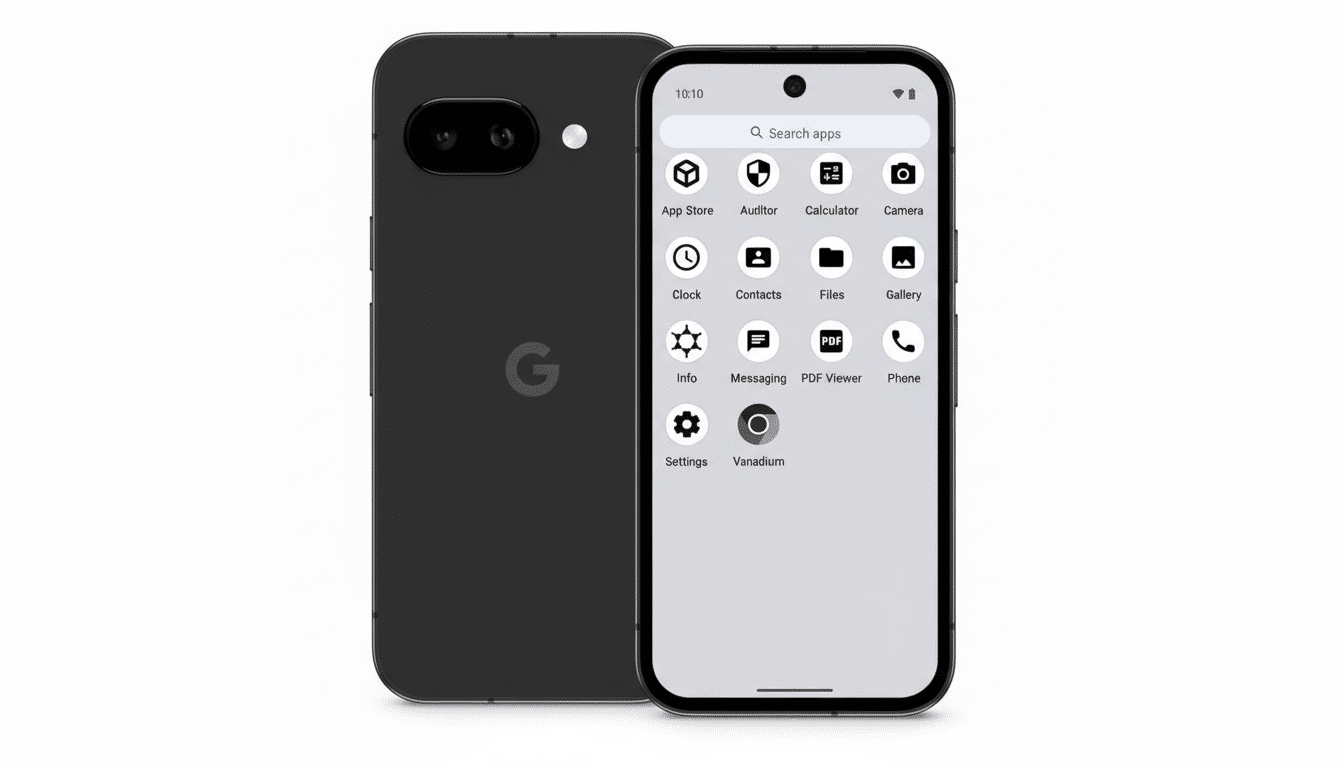
GrapheneOS builds on the Android Open Source Project and adds deep security hardening: stronger app sandboxing, per‑app network and sensor controls, and a security‑tuned browser called Vanadium. It also supports sandboxed Google Play services, letting many popular apps run without ceding system‑level access.
The hardware side is just as important. Motorola and GrapheneOS say future devices will meet strict criteria like memory tagging and multi‑year updates. That first item matters because memory safety bugs drive a disproportionate share of severe exploits; Microsoft’s security team has reported that roughly 70% of serious vulnerabilities over a decade stem from memory safety issues. ARM’s Memory Tagging Extension, already present on recent flagship silicon, is a proven mitigation that makes whole classes of attacks far harder.
Pair that with a commitment to timely patches—a sore spot for many Android OEMs—and you get a phone that not only starts secure, but stays secure. If Motorola delivers extended support windows closer to the leaders in Android updates, the privacy promise won’t taper off after year two.
Open Source Without The Usability Compromises
GrapheneOS is unapologetically open source, using permissive licenses like MIT for its own code, Apache 2.0 for AOSP changes, and GPLv2 for kernel components. That transparency enables public auditing, faster community‑driven fixes, and verifiable builds—advantages closed systems can’t match.
Crucially, it’s not a walled garden. The GrapheneOS App Store provides core components, while third‑party repositories such as F‑Droid and Obtainium are supported for open source software. When you do need proprietary apps, sandboxed Play services provide a compatibility bridge that preserves isolation. The result is a usable daily driver that doesn’t require surrendering telemetry by default.
From Niche Install To A Mainstream Retail Option
Until now, running GrapheneOS meant buying a late‑model Pixel and flashing it yourself—something the project’s maintainers explicitly prefer over third‑party preloads. The foundation says its web installer is straightforward, but a large swath of consumers won’t cross that threshold.
Motorola’s move changes the equation. Co‑developed hardware means features like memory tagging are present and properly enabled. Out‑of‑the‑box availability means fewer users get stranded on stock firmware. And distribution at scale gives privacy a seat at the same table as camera specs and battery life.
Real‑World Usability And The Practical Limits
Most mainstream apps work on GrapheneOS through sandboxed Play, but some edge cases remain. Apps that demand strict device integrity attestation or deep system hooks—certain banking tools, enterprise agents, and contactless payment stacks—may require additional certification or simply be incompatible. That’s not a flaw in GrapheneOS so much as a byproduct of how some app ecosystems enforce trust.
The trade‑off is clear: a security model that minimizes privileged services reduces the blast radius of any given app. For journalists, activists, and privacy‑conscious professionals—groups repeatedly targeted in mobile spyware cases documented by organizations like Citizen Lab—those defaults are a feature, not a bug.
Addressing The Lenovo Trust And Supply Chain Question
Some skeptics point to Motorola’s parent company, Lenovo, and raise supply‑chain trust concerns. It’s a fair question that any serious security product must confront. Here, open source helps: GrapheneOS code is auditable, and the project offers tooling like its Auditor for device integrity checks using hardware‑backed attestation.
That doesn’t eliminate every risk—firmware blobs and baseband components are still largely proprietary across the industry—but it narrows the trust surface and gives users verification mechanisms they can actually use. Transparency and verifiability beat blind trust every time.
Why This Is A Meaningful Win For Everyday Users
The GrapheneOS community is still relatively small—around 250,000 users today by project estimates—but their priorities have outsized influence on modern mobile security. Features once seen as power‑user niceties, from granular permission toggles to on‑device encryption defaults, are now table stakes. Bringing a hardened AOSP fork to retail buyers accelerates that trajectory.
This is also a statement of values. At a time when data collection frequently outpaces user control, a mainstream OEM shipping a privacy‑first configuration by default is significant. It aligns with guidance from groups like the Electronic Frontier Foundation that emphasize minimizing data exposure, shortening update windows for vulnerabilities, and using open tooling where possible.
What To Watch Before Launch In 2027 Rollout
Three questions will determine how big this gets.
- Update commitments — will Motorola match the extended support cycles that privacy‑minded users demand?
- App compatibility — how widely will sandboxed Play and attestation support cover banking, transit, and enterprise apps?
- Certification and carriers — will these devices ship with the approvals needed for contactless payments and 5G features across networks?
If Motorola executes on those fronts, the company won’t just be selling another Android variant. It will be normalizing a security posture the market has needed for years. For anyone who cares about privacy and open source, that’s worth getting excited about.
