


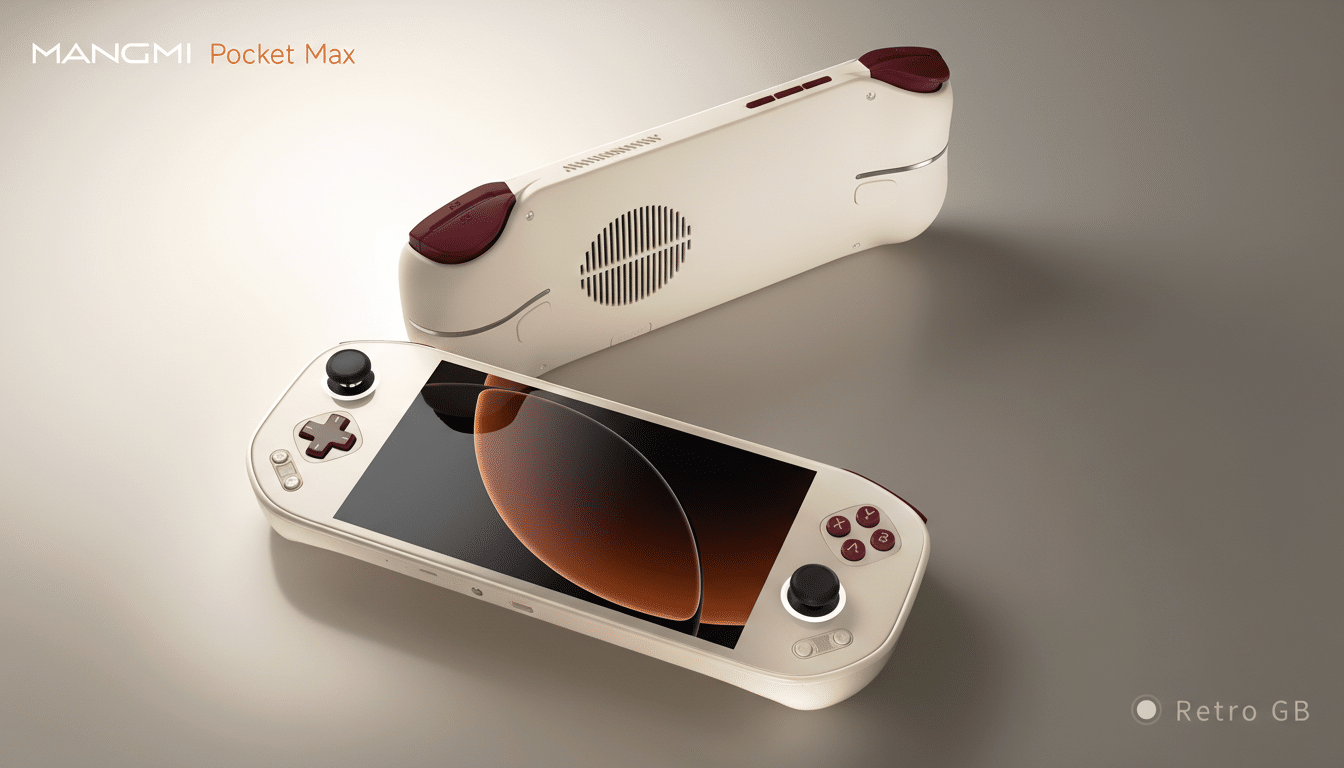
MANGMI has lifted the curtain on the Pocket Max, a large-format Android gaming handheld that pairs a standout 7-inch 144Hz AMOLED display with an 8000mAh battery and a modular control system. The spec sheet targets an enthusiast sweet spot: proven Snapdragon 865 silicon, 8GB of LPDDR4X memory, and 128GB of UFS 3.1 storage, framed by enthusiast-grade sticks and triggers. Pricing and release timing remain under wraps, but the hardware pitch is unusually ambitious for this class.
Pocket Max Display Leads With 7-Inch 144Hz AMOLED
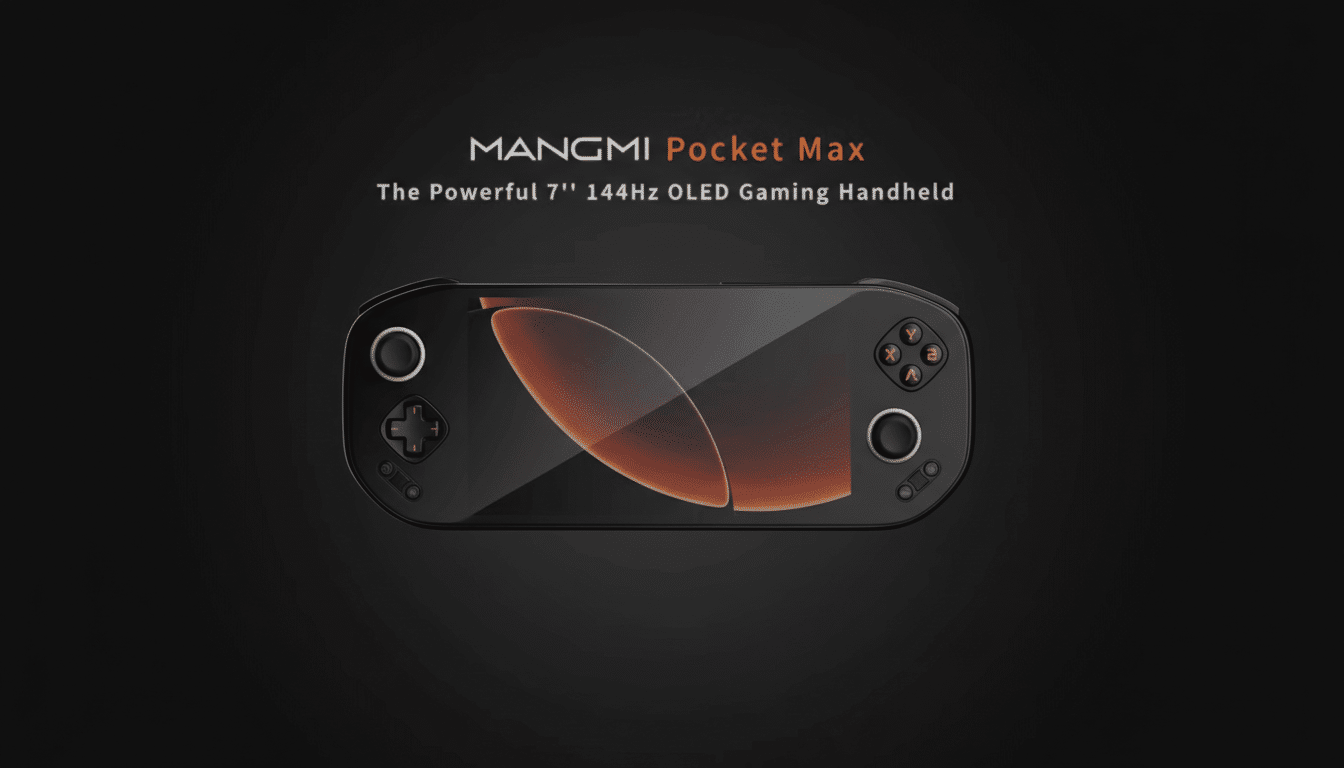
The headliner is that 7-inch FHD AMOLED running at up to 144Hz. In a category where many rivals top out at 60–120Hz or opt for smaller panels, the Pocket Max aims for ultra-smooth motion and punchy contrast on a larger canvas. AMOLED’s near-instant pixel response should minimize ghosting in fast-paced titles, while deep blacks give retro pixel art and modern shaders extra pop.
High-refresh isn’t just for bragging rights. It benefits cloud services that support elevated frame rates and helps emulators maintain fluidity when frame pacing fluctuates. Expect software-level refresh caps to extend battery life when a steady 60fps is preferable to 144Hz headroom.
Big Battery Targets Real Playtime With 8,000mAh Capacity
An 8000mAh pack places the Pocket Max alongside heavyweights like the AYN Odin series and AYANEO’s Android-centric models. Coupled with the 7nm Snapdragon 865—still efficient under sustained loads—this capacity should translate to long sessions for 2D classics and lighter 3D, with more variable endurance when driving the 144Hz panel and demanding emulators.
Realistically, users can expect multi-hour runs across GameCube, PSP, and PS2 emulation with sensible settings, and extended streaming sessions via Xbox Cloud Gaming or GeForce Now. As always, brightness and refresh choices will have a measurable impact on longevity.
Modular Controls For Power Users With Magnetic Modules
MANGMI’s “Magnetic Module” control system lets owners pop out and reorient the D-pad and face buttons, tailoring ergonomics and layouts to taste. It’s a flexible approach reminiscent of the swappable controls showcased by AYANEO and the upcoming X5 Aileron project from GameSir and Hyperkin, but tuned for Android handheld needs.
The hardware list rounds out with full-size TMR analog sticks and Hall-effect triggers—components valued for precision and long-term reliability. For players sensitive to dead zones or drift, that’s not just a spec line; it’s day-to-day peace of mind.
Proven Silicon With Solid Upside From Snapdragon 865
While no longer cutting-edge, Qualcomm’s Snapdragon 865 remains a known quantity with the Kryo 585 CPU cluster and Adreno 650 GPU powering smooth Android gameplay and robust emulation up through demanding sixth-gen consoles. The 8GB LPDDR4X and UFS 3.1 storage combo helps with quick app swaps and reduced loading times, two quality-of-life metrics that matter as much as raw frame rates.
In practice, that means excellent performance in Dolphin, PPSSPP, and strong results in AetherSX2 with appropriate settings, plus responsive cloud streaming. The real question is how often the device can leverage its 144Hz ceiling; even when it cannot, the panel’s responsiveness still enhances clarity and touch latency.
Price Will Decide The Winner In This Crowded Handheld Market
The missing piece is cost. Competitors in this space set a high bar: Retroid’s latest compact handheld starts around $220 with a Snapdragon 8 Gen 2 and a smaller 5.5-inch 120Hz AMOLED, while larger models from AYN and AYANEO command higher prices but offer premium batteries and features. If MANGMI can land the Pocket Max near the $200 mark, the combination of a 7-inch 144Hz AMOLED, large battery, and modular controls would be a rare value proposition.
If the sticker price drifts higher, the calculus changes—buyers might prioritize newer chipsets or Windows handhelds. But on paper, the Pocket Max is cleverly targeted: a best-in-class display for its segment, enthusiast-grade inputs, and endurance that encourages real travel, not just couch sessions.
With the spec sheet set, all eyes are on final pricing and availability. If MANGMI aligns the numbers with the promise of the hardware, the Pocket Max could become the new default recommendation for big-screen Android handheld gaming.
