


Maggie Gyllenhaal’s The Bride! doesn’t just dust off a classic; it detonates it with grin-inducing bravado. Her reimagining of the Bride of Frankenstein is a blazing cocktail of pulp noir, feverish romance, punk feminism, and old-Hollywood pastiche—led by a ferocious Jessie Buckley and an unexpectedly swoony Christian Bale. The result is unruly, hilarious, and deeply felt, a studio-scale curio that actually earns its exclamation point.
A Vision That Raids the Canon and Reclaims It
Gyllenhaal treats the Frankenstein myth as a living text, stitching together the eerie grace of James Whale’s 1935 masterpiece, the mordant silliness of Mel Brooks’ Young Frankenstein, the outlaw romance of Bonnie and Clyde, and the insurgent energy of Lizzie Borden’s Born in Flames. She also restores agency to a character long denied it: the Bride. In a shrewd twist, Buckley plays both the resurrected woman and Mary Shelley, whose ghostly fury seizes a Chicago gangster’s moll, Ida, turning a smoky 1930s nightclub into the launching pad for a righteous rampage.
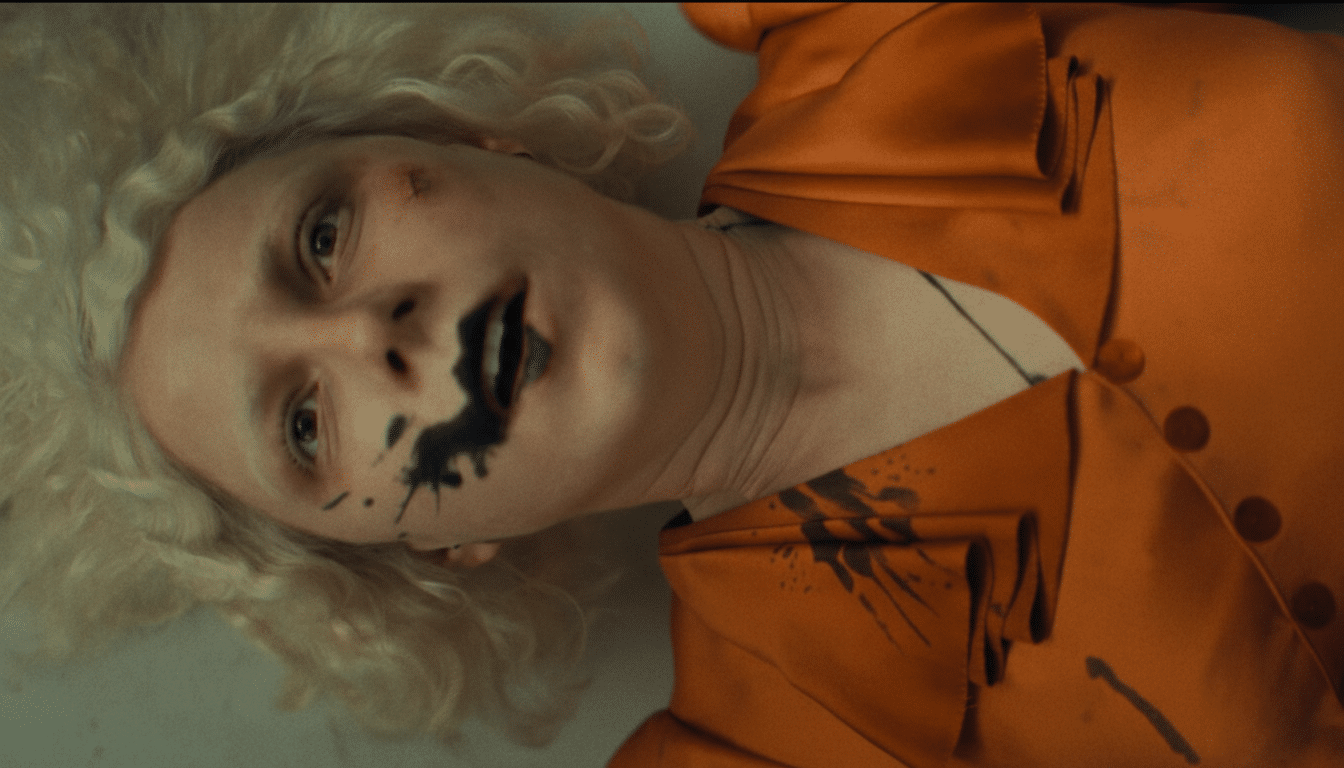
Whale’s influence is lovingly preserved—right down to the iconic cupid’s-bow mouth and shock of white in the Bride’s hair—but Gyllenhaal refuses to revere the past at the expense of the present. She lets Shelley speak, in every sense, reframing the Bride not as a mute emblem but as a disruptive voice that threatens the order of men who profit from women’s silence.
Performances That Pulse With Voltage and Heart
Buckley tears into the dual role with a switchblade’s gleam. As Ida, she’s a razored flapper resurrected with a wild streak—equal parts nightclub siren, prophet, and street brawler. As Shelley’s specter, she rages with articulation that’s both comic and chilling, steering scenes like a conductor riding a lightning strike. It’s the kind of big, risk-forward performance critics often beg for and rarely get in studio films.
Bale’s Frank is a revelation of tenderness. He’s a bruiser built from grief, lit by an almost childlike awe at the Bride’s mind. The romance works because he doesn’t love her despite her volatility; he’s enamored of it, the way you love a storm for being a storm. Annette Bening brings impish menace to Dr. Euphronious, the scientist who can’t resist the dare of resurrection. Peter Sarsgaard amuses as a preening detective boosted (and bested) by his razor-sharp “secretary,” played with cool precision by Penélope Cruz. And in a killer meta flourish, Jake Gyllenhaal appears as a tap-dancing matinee idol who bleeds straight into the movie’s dream-logic musical numbers.
Style as Argument: Color, Movement, and Mythmaking
The Bride! argues in color. Gyllenhaal and her designers swing from suffocating black-and-white close-ups to neon-slick alleys and monochrome dreamscapes doused in electric blues. A nightclub swirls in bisexual lighting; a graveyard glows like a bruised bruise. It’s maximalist, but not empty: the palette literalizes a thesis about visibility—when women are heard and seen, the world cannot stay gray.
And then there’s the dancing. The film’s showstopper is a party sequence that detonates into a delirious flash mob, with Bale bellowing a knowingly silly refrain that nods to Brooks while Gyllenhaal smirks at the audience for doubting she’d go there. These interludes aren’t garnish; they’re the fantasy lives of characters who learned to dream in movie palaces. The Bride and Frank shape themselves the way Hollywood taught them to—then bend the fantasy until it fits their bodies.
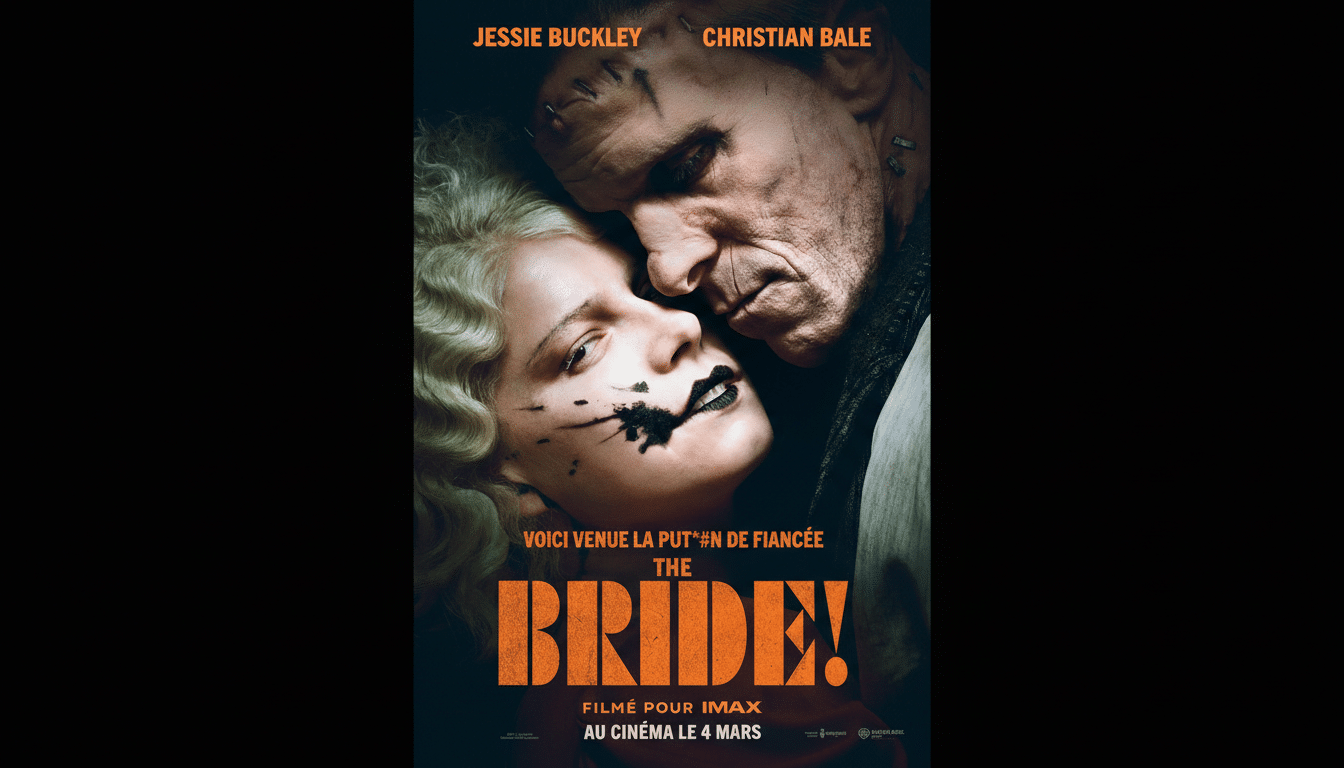
A Riot With Something to Say About Power
Gyllenhaal fires her politics from the hip. Speech itself becomes volatile—women who talk are dangerous, whether confessing to cops, naming abusers, or rallying copycats who paint their lips like the Bride and refuse to behave. The script flirts with #MeToo-era candor without lecture-halling the audience. When the Bride spits out “me too,” it lands not as slogan but as survival, and the film keeps hustling, letting action—not speeches—carry the argument.
For context, the British Film Institute notes that Frankenstein has been adapted and reworked across more than a century of cinema, an elastic mythology that absorbs the anxieties of each generation. Recent hits like The Invisible Man proved modern audiences are eager for monster stories with contemporary nerves. The Bride! pushes that appetite further, embracing camp and carnage as tools of critique—and fun.
Messy by Design and Gloriously Alive on Screen
Some beats are blunt, a few jokes overstay, and the tonal pivots might shear off viewers who prefer tidier lanes. But the gambles mostly sing. Warner Bros. backing an IMAX rollout for a movie this brazen signals rare studio confidence in risky vision. More importantly, the film moves—its pacing is all pulse, never solemn about its smarts, never too cool to giggle while covered in grave dirt.
The uptick in girls (and grown women) who will mimic the Bride’s look is not a side effect—it’s the text. This is fashion as armor, spectacle as declaration. Gyllenhaal’s monster romance is a jailbreak: from silence, from genre boxes, from the nagging sense that big movies can’t be both wild and meaningful. The Bride! insists they can, then dances on the table to prove it.
Verdict: A giddy, gutsy provocation that reanimates a legend with spark and bite. It’s imperfect, yes—but if a Frankenstein story isn’t a little stitched and scarred, is it even alive?

