


Lenovo is preparing a bold foldable concept for the global stage, with reports indicating the company could showcase a device called the Legion Go Fold at MWC. Framed as a gaming-first hybrid, the concept aims to morph from a compact handheld into a large-screen console and even a desktop-like setup, signaling Lenovo’s most adventurous take yet on portable PC gaming and flexible OLED design.
A Foldable Built For Multiple Play Styles
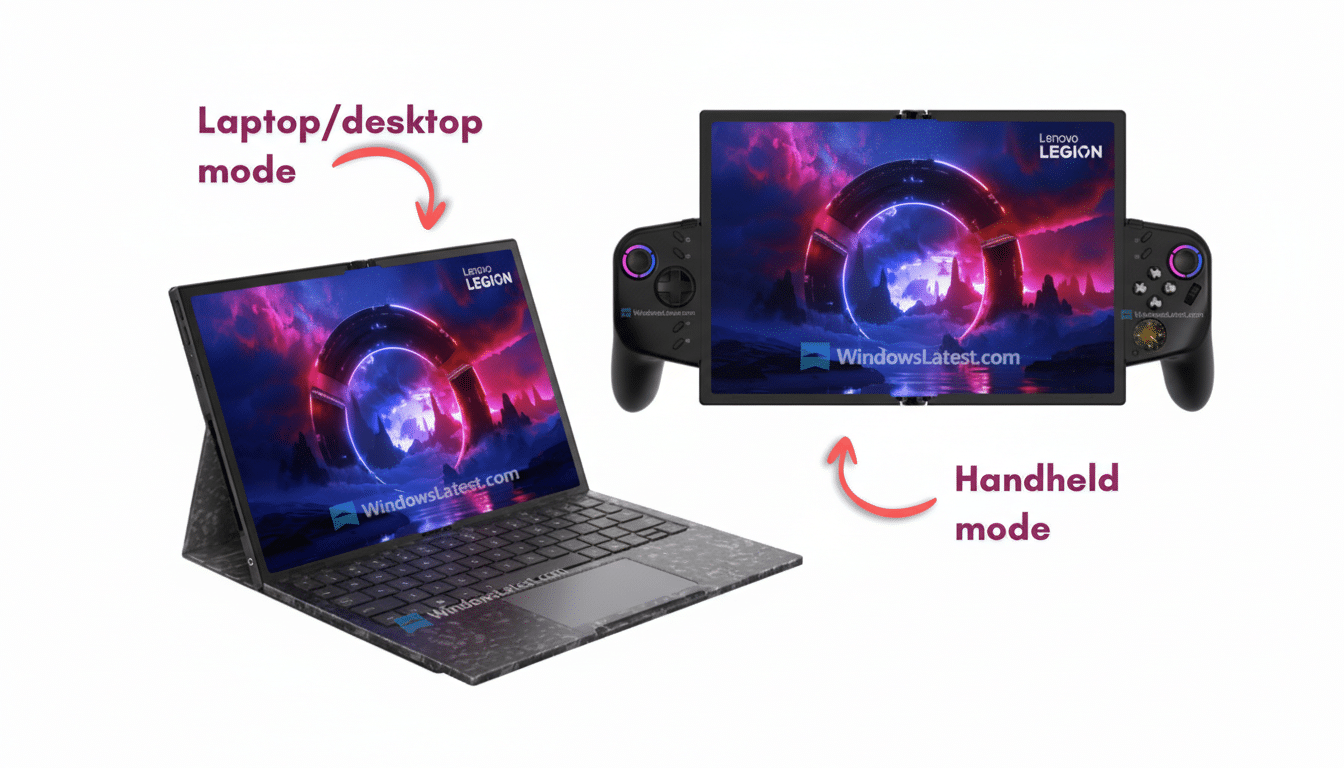
According to reporting from Windows Latest, the Legion Go Fold is designed to operate in several distinct modes: a traditional handheld layout, a vertical split screen for multitasking, a horizon-style full screen for immersive play, and an expanded desktop mode that pairs with a wireless keyboard. The goal is simple but ambitious—one device that can serve as a pocketable console and a productivity machine.
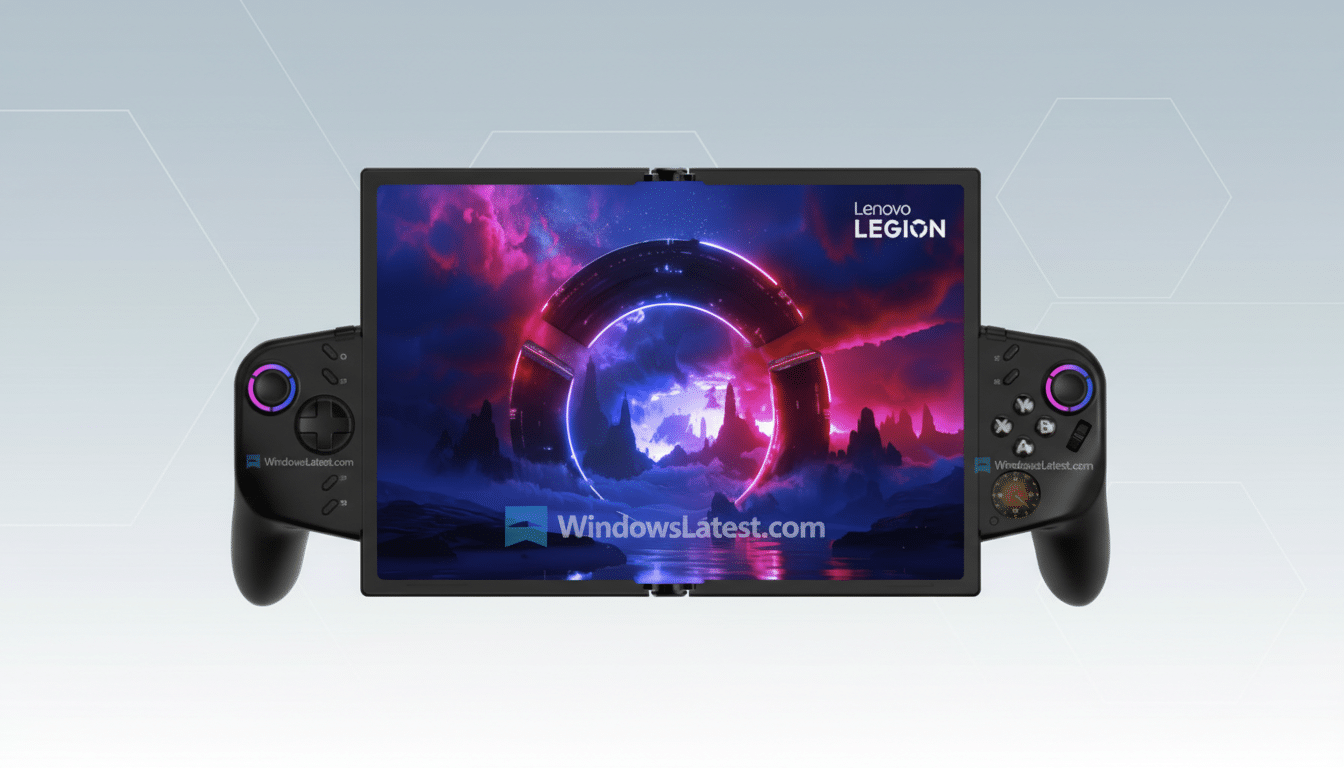
The concept reportedly uses a 7.7-inch POLED display when folded, expanding to around 11.6 inches when open. That would place it between a typical handheld and a small tablet, with a crease-sensitive hinge and panel stack that must withstand gaming’s constant taps and swipes. OLED’s deep contrast and speedy response should help with fast-paced titles, but the real test will be brightness and burn-in management across long sessions.
Detachable controllers flank the screen in handheld mode, and there’s a twist: the right controller can double as a vertical mouse. It apparently includes a small built-in display that can act as a touchpad, surface system telemetry like thermals and frame rates, or function as programmable hotkeys. If executed well, that could eliminate the usual awkwardness of navigating Windows on a small touchscreen.
Why This Concept Matters For Foldables And Gaming
Foldable devices have moved beyond novelty, with analyst firms tracking steady double-digit growth and forecasting shipments in the tens of millions within a few years. While phones and laptops dominate today’s foldable conversation, large-screen handheld gaming is a natural next frontier: gamers want more real estate without giving up portability, and foldables promise exactly that.
The handheld PC space is also heating up. Valve’s Steam Deck popularized the category, and competitors like ASUS ROG Ally and Lenovo’s own Legion Go have shown there’s demand for Windows-based portables with detachable gamepads. Marrying that format with a robust foldable display could unlock genuine flexibility—dock it to a monitor, prop it up for couch co-op, or unfold it for a near-tablet experience in strategy titles and creators’ apps.
The Big Questions Lenovo Must Answer About This Concept
Thermals and battery life remain the toughest hurdles. High-wattage x86 chips generate heat that is notoriously difficult to tame in handhelds. If Lenovo opts for an AMD Ryzen Z-series APU (as seen in the Legion Go), it will need smart cooling and aggressive power profiles to avoid fan noise and throttling. A foldable chassis complicates airflow even further.
Durability is the other elephant in the room. Foldable PC panels typically advertise six-figure fold cycles and reinforced ultra-thin glass or polymer layers, but gamers add pressure through rapid inputs and controller torque. Hinge stiffness, crease visibility, and scratch resistance will determine whether the screen still feels premium after months of play.
Software polish will make or break the concept. Windows scaling on small, high-DPI panels can be fussy, and fold-state awareness is still maturing. Lenovo’s Legion Space software is already built to streamline game libraries and performance modes; expanding that to handle split-screen presets, controller remapping, and on-device telemetry via the controller display would be a meaningful advantage.
Lenovo’s Track Record With Experimental Hardware
Lenovo has a history of showcasing bold form factors at major trade shows and turning at least some of them into retail products. The ThinkPad X1 Fold line proved there’s an audience for foldable PCs, and the brand has repeatedly demoed rollable concepts and shape-shifting laptops under its ThinkBook and Motorola banners. In gaming, the Legion Go established Lenovo as a serious player in Windows handhelds in short order.
That said, concept devices are meant to test reactions as much as they are to set roadmaps. Specs often change, and some demos never reach consumers. The Legion Go Fold’s path will hinge on feedback from developers and early testers, supply chain costs for large OLED foldables, and whether Lenovo can package the idea at a price that competes with fixed-screen rivals.
What To Watch For At The Show: Specs, Display, Cooling
Look for clarity on:
- Display refresh rate and peak brightness
- Hinge reliability claims
- APU and graphics pipeline
- Cooling design
- Whether the wireless keyboard and mouse-like controller are bundled or optional
Battery capacity, supported fast charging, and noise levels under sustained loads will be equally critical.
If Lenovo delivers on the promise—a handheld that folds into a bigger canvas without compromising performance—the Legion Go Fold could mark a meaningful evolution for portable gaming PCs. Even as a concept, it signals where the category is headed: fewer compromises, more modes, and hardware that adapts to the moment rather than forcing players to adapt to it.
