


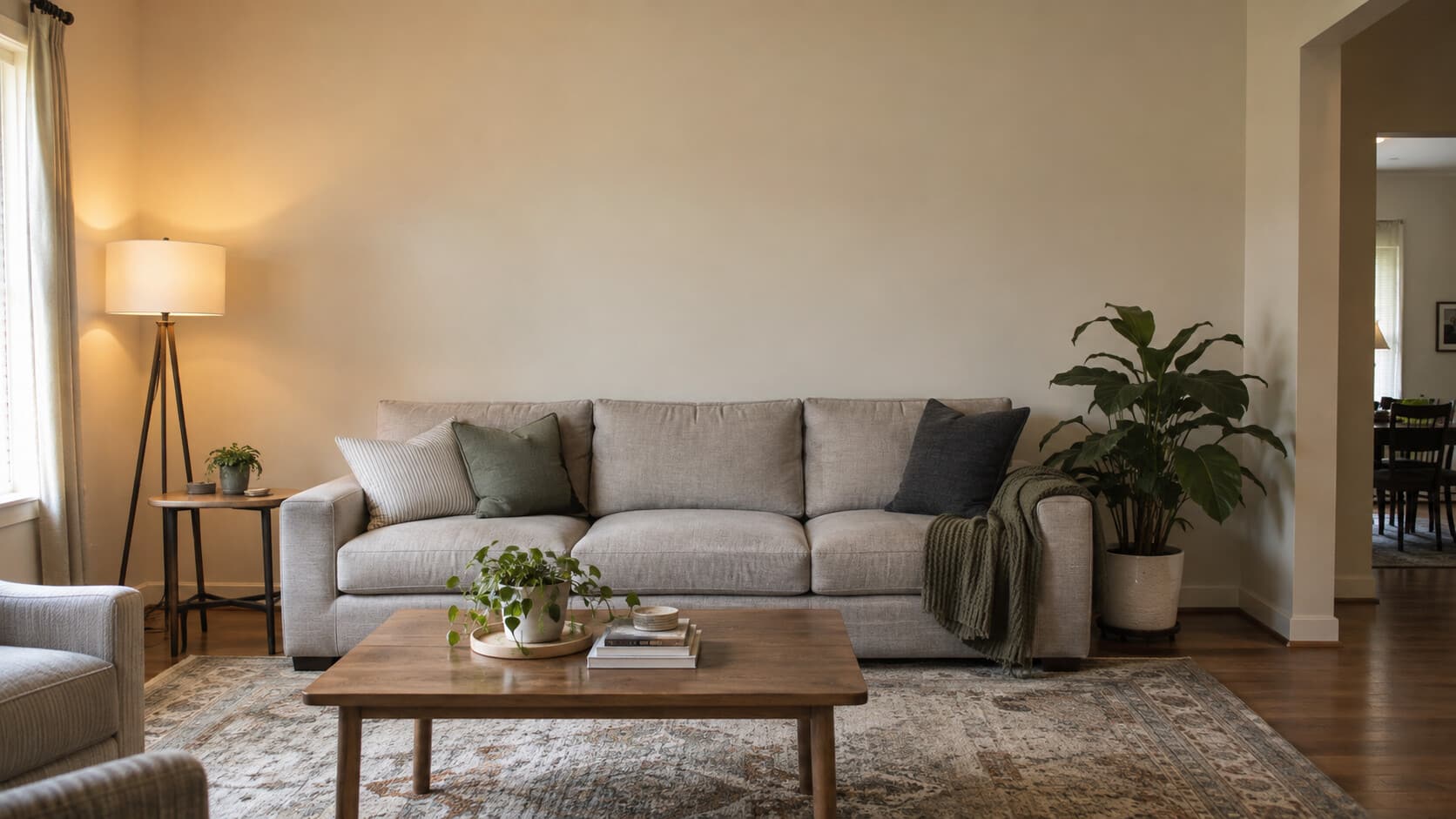
An empty living room wall is a blank canvas waiting for the right piece of art.
Most homes have one. A wall that’s been bare for months, maybe longer, because nothing felt right. It’s too expensive, too generic, or too much of a commitment to hang something you’ll have to look at every day. You don’t need a big budget or a design degree to fix it. Whether you want a hands-on project or a single piece that does all the talking, there’s a practical route that fits your wall, your room, and your wallet.
Start Small and Personal: DIY Wall Art You Can Make Yourself
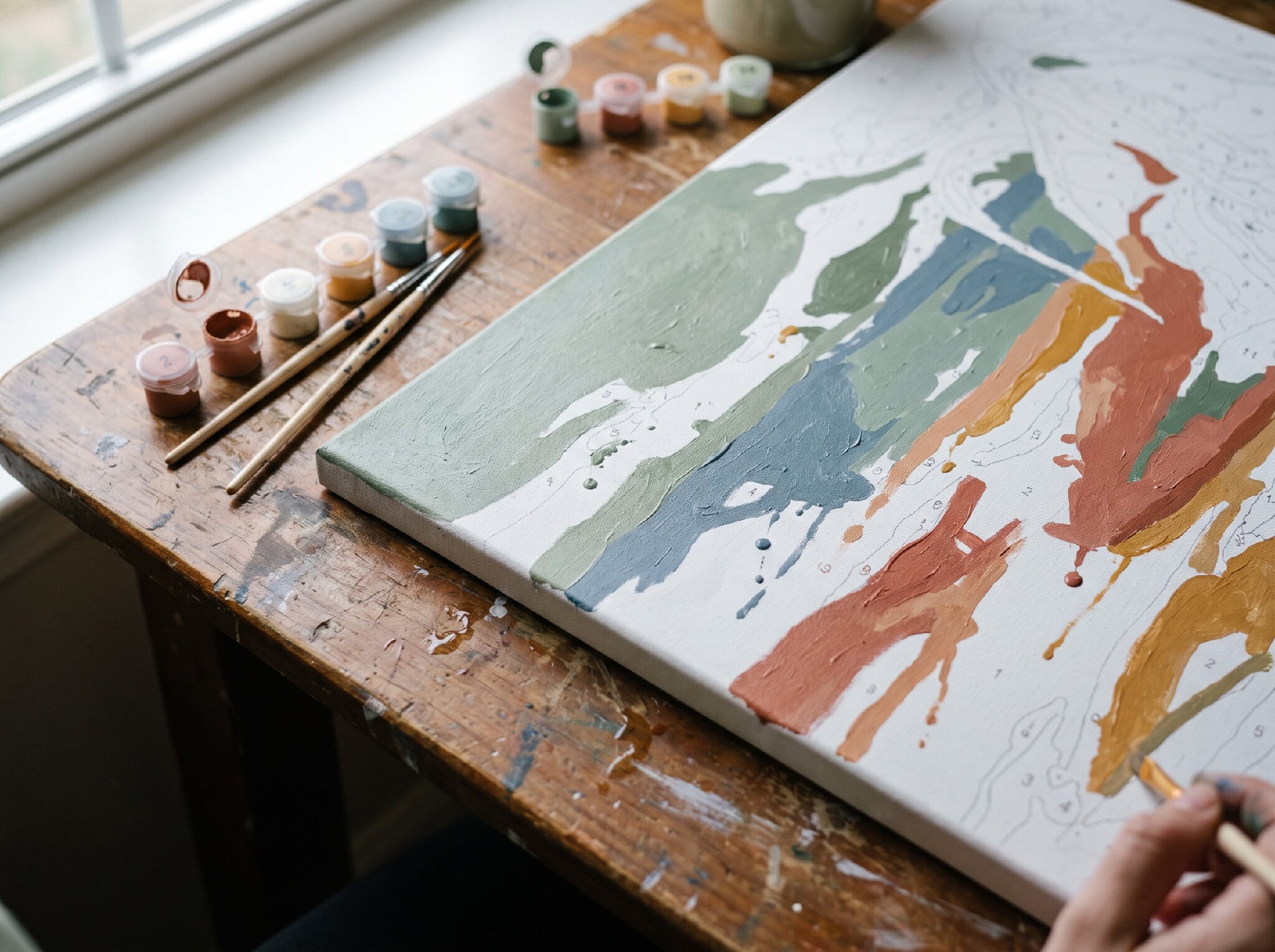
A paint-by-numbers canvas in progress makes a personal, budget-friendly starting point for wall decor.
Adult DIY hobbies aren’t a niche pastime anymore. Over 75% of U.S. homeowners now take on some kind of DIY project, and interior work is the single largest category at 59%, according to The Farnsworth Group’s 2026-2028 report on DIY statistics shaping home improvement. People want to make something with their own hands, and a blank wall is often where that instinct lands first.
If you want a personalized piece without needing art-school skills or a big budget, a good starting project is ordering a favorite photo turned into a color by number custom kit. You pick the image, whether it’s a family portrait, a pet, or a vacation shot, and work through it panel by panel until it looks like a real painting. It’s slow in a good way. Many people treat it the way they’d treat any other weekly hobby, not a one-off weekend project, and the finished canvas ends up meaning more than something bought off a shelf.
This kind of project pairs well with other small, high-value changes around the house. If you’re weighing where else to put your renovation budget, our guide to budget-friendly home upgrades covers several low-cost fixes that punch above their price tag.
Choosing the Right Piece for the Room and Wall Size
Before you commit to anything, measure the wall. A common mistake is buying art that’s too small for the space; it ends up looking like an afterthought rather than a focal point. As a rule of thumb, art above a sofa or bed should span roughly two-thirds of the furniture’s width.
Color matters just as much as scale. Designers are leaning further into original and expressive pieces this year: 46% of interior designers planned to display more paintings in clients’ homes in 2025 compared to prior years, with abstract art (48%) and contemporary styles (39%) topping the list of most-requested looks, according to the 1stDibs 2025 Interior Design Trends Survey. That’s a useful cue if you’re stuck choosing between a bold abstract print and something more literal.
Before you start hanging anything, it helps to get the rest of the room in order first. Our piece on organizing your space before you decorate walks through clearing clutter so the art you choose actually gets to be the focal point, not competition for attention.
When One Piece Should Do the Talking: Large-Format Statement Art
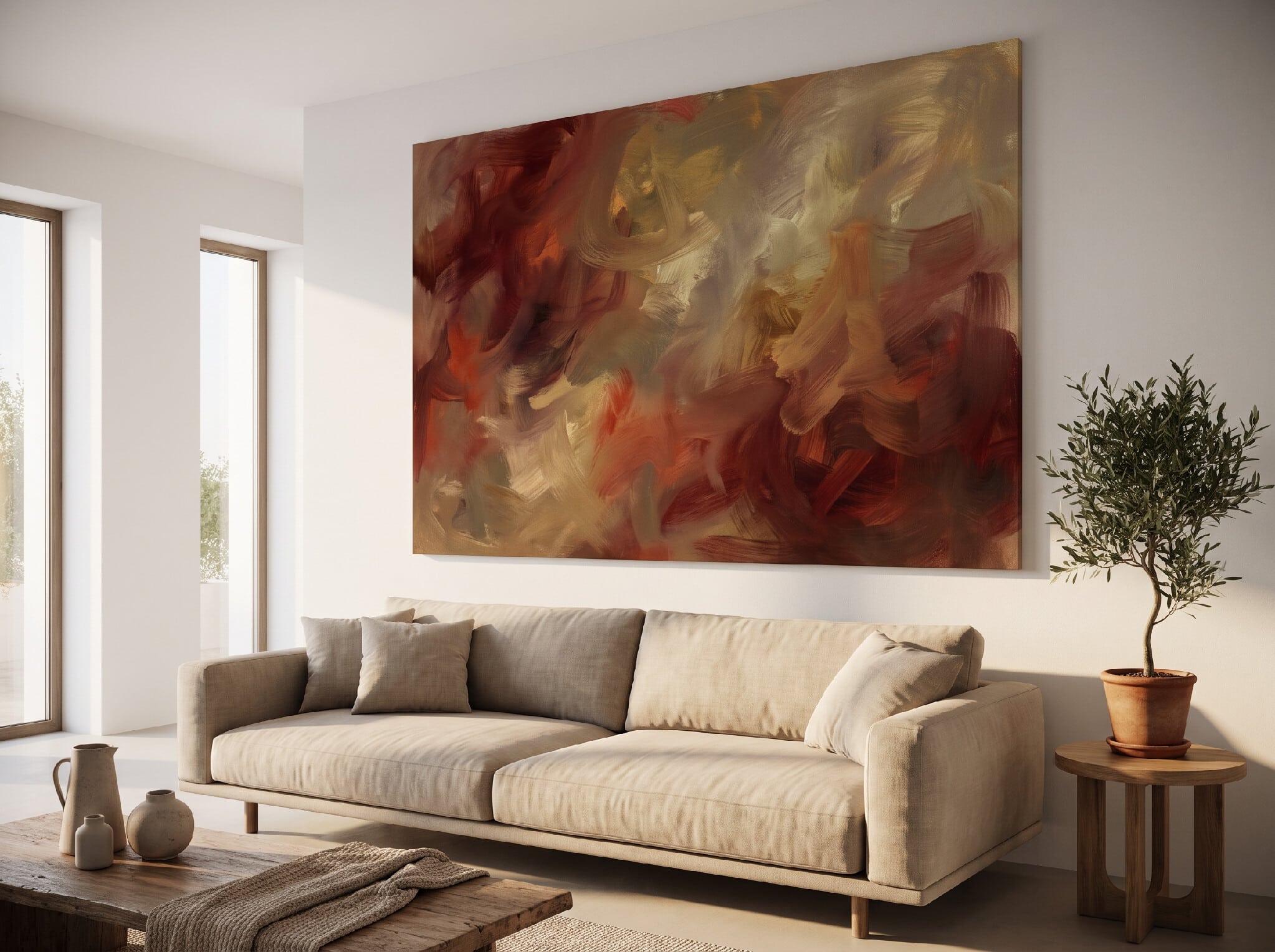
An oversized statement canvas can anchor an entire room without additional decor.
Sometimes a gallery wall isn’t the answer. Open-plan living rooms, walls above a sofa or bed, and rooms with high ceilings often look better with one confident, oversized piece rather than a cluster of smaller frames fighting for attention. A single large canvas gives the eye somewhere to land immediately.
This isn’t a niche indulgence anymore either. The global wall art market is projected to reach $99.15 billion by 2033, growing at a 6.4% CAGR starting in 2026, according to Grand View Research. That growth reflects a broader shift toward treating art as a real design investment, not an afterthought once the furniture’s in place. For a room that needs one bold anchor, browsing a curated collection of large wall paintings is the fastest way to get scale and impact without commissioning custom work or waiting months for a piece to be made.
Mixing Both: Building a Gallery Wall That Blends DIY and Statement Pieces
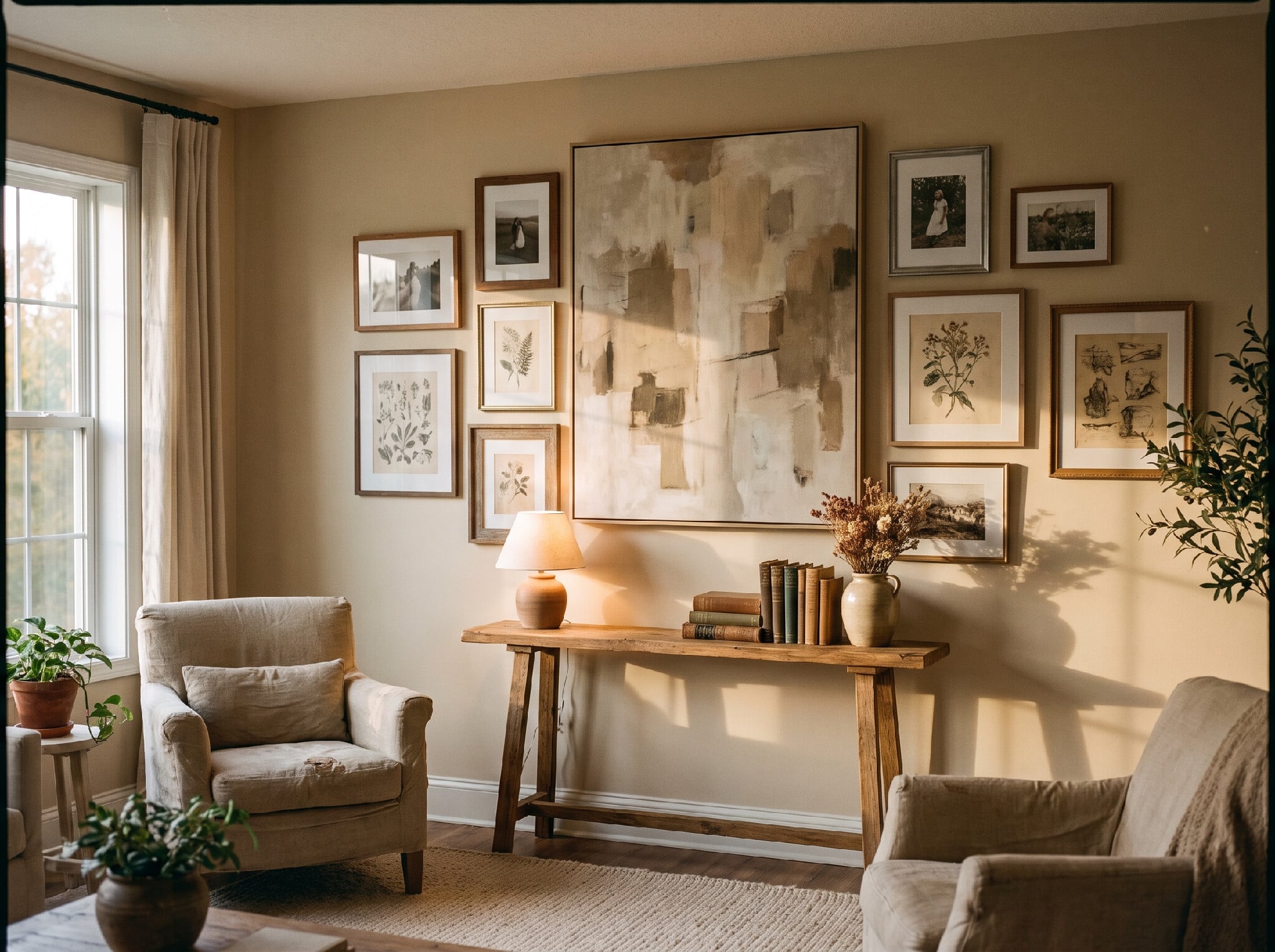
Combining a large statement piece with smaller personal artwork creates a layered, curated gallery wall.
You don’t have to pick a side. Some of the best-looking walls combine one large, confident piece with a scattering of smaller, more personal ones around it, like a paint-by-numbers canvas tucked next to a favorite photo print. The large piece anchors the layout; the smaller pieces add warmth and story.
This blend also tracks with where home decor is actually headed. Pinterest Predicts 2026 names personalization and “authenticity over mainstream” as leading themes for the year, with 91% of Gen Z saying the mainstream is over and home trends now moving roughly 4.4 times faster than they did seven years ago. Meanwhile, the print-on-demand market, which covers custom and personalized wall art, is projected to hit $57.49 billion by 2033 at a 23.6% CAGR from 2026, per Grand View Research. Personalized pieces and premium statement art aren’t competing trends; they’re growing side by side.
A gallery wall approach works especially well outside the living room too. If you’re setting up a workspace at home, our guide to setting up a home office that feels put together has ideas for building a similar layered look behind a desk.
Budget Planning: What to Spend Where
A little planning goes a long way here. Treat a DIY kit as your low-cost entry point, something you can finish for well under a hundred dollars and use to test what colors and styles you actually like living with. Save the bigger spend for a single oversized piece that anchors the room; it’s the one purchase worth stretching your budget for, since it does most of the visual work on its own.
A few hundred dollars and a little planning are all it takes to go from a bare wall to a room that feels finished. Start with the personal project if you’re not sure what you want yet. Go straight to a statement piece if you already know the room needs one big anchor.
Conclusion
A well-styled wall doesn’t require picking one approach and sticking with it forever. Most rooms that actually look finished layer a personal, hands-on piece with at least one confident, larger-scale statement to anchor the space. Start wherever feels right, whether that’s a paint-by-numbers canvas on a Sunday afternoon or a single bold print that changes how the whole room feels. Either way, that blank wall doesn’t have to stay blank much longer.

