


Quick Summary
- Metal casting exporters supply precision parts to manufacturers across many industries around the world. These components end up inside machines, vehicles, tools, and heavy equipment that people depend on every day.
- Modern casting techniques help produce metal parts that last longer and fit properly inside complex machinery. When the dimensions are right, assembly becomes easier, and machines run the way they’re supposed to.
- Regular inspections and global quality standards help maintain consistency in exported parts.
- Automotive, construction, and energy companies depend on reliable casting suppliers every day.
- The right exporter helps manufacturers avoid supply disruptions and keep production on track.
Why Precision Matters in Manufacturing
Manufacturing runs on small details. Tiny ones, sometimes. From the outside, an industrial machine might look basic. A metal body. A few visible components. Nothing that complicated. But once you open it up, things get crowded fast. Inside, there are dozens of parts working together, often under heat, pressure, friction, or all three.
If one component fails, the whole system can stop. And when that happens, the production floor feels it immediately. Lines slow down. Teams scramble. Procurement starts making urgent calls to suppliers. Nobody enjoys that situation.
This is exactly why component quality matters so much in industrial manufacturing. Many companies don’t operate their own foundries. It sounds nice in theory, but running a casting facility requires heavy investment, trained workers, strict safety systems, and a lot of space. And not all manufacturers want that responsibility.
So they rely on exporters. The production of these parts is handled by exporters, who then ship them to manufacturers in various countries. For companies grappling with tight delivery schedules and complex supply chains, that support can be crucial. It takes some of the stress of day-to-day procurement and production out.
So let’s take a closer look at how this actually works.
What Metal Casting Exporters Actually Do
At the most basic level, metal casting exporters produce metal parts and supply them to companies located in other countries. Manufacturers deal with constant pressure. Deadlines shift. Raw material prices move up and down. Customers want faster deliveries every year. Procurement teams often find themselves balancing three things at once. Quality, price, and delivery time. That balancing act isn’t easy.
Exporters help by producing components at scale and delivering them to buyers who need a steady supply. Industries like automotive manufacturing, heavy machinery, and construction equipment all depend on cast metal components. These parts must be strong. And consistent.
Some exporters even assist during early product development stages. Engineers may review technical drawings and suggest small design adjustments so that the component can be cast more efficiently. Those early conversations can save companies a lot of money later. Especially when production volumes grow.
Common Metal Casting Processes Used in Industry
Not every cast part is made in the same manner. This process is often determined based on part size, geometry, and operating environment. These are a few common methods that manufacturers use.
1. Sand Casting
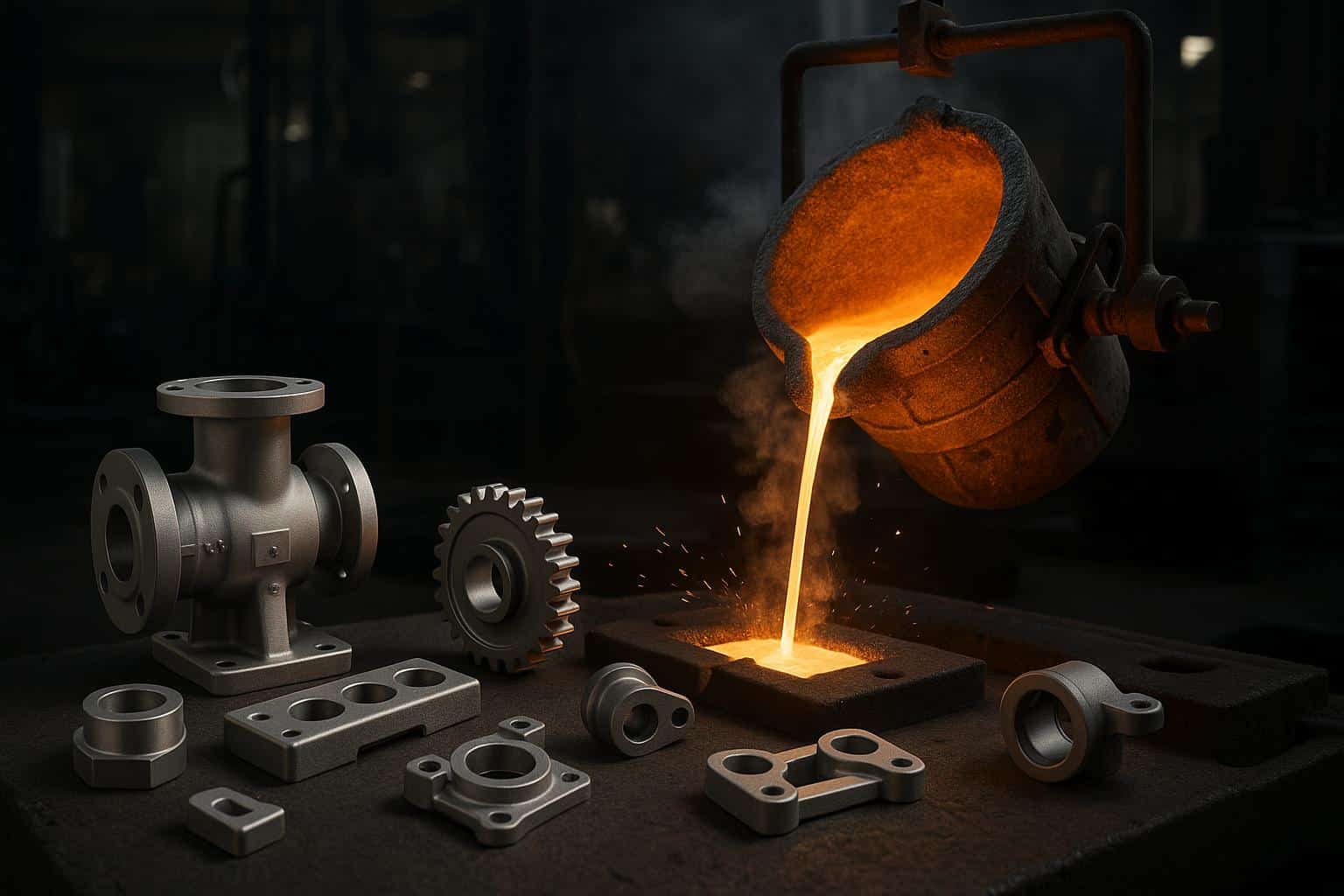
Sand casting is one of the oldest methods of casting still in use today. Molten metal is poured into a mold created from compressed sand. Once the metal cools and hardens, the sand mold is broken apart, and the component is cleaned.
It works well for large industrial parts. Heavy equipment manufacturers often use this method because it handles complex shapes quite well. Old method. Still useful.
2. Investment Casting
Investment casting is used when higher precision is required. The process begins with a wax pattern shaped exactly like the final component. That wax model gets coated in ceramic material to create a mold. When the wax melts away, molten metal fills the empty space and forms the final part. This method produces smooth surfaces and accurate shapes.
3. Die Casting
Die casting is common in high-volume production. Molten metal is injected into a steel mold using pressure. Because the mold remains consistent, manufacturers can produce thousands of identical components with the same dimensions. Companies producing large batches of parts often rely on this process.
4. Lost Foam Casting
Lost foam casting is used when a component design is complex. A foam model of the component is placed inside the mold. When molten metal is poured into the mold, the foam disappears, and the metal takes its place. This technique can simplify production for complicated shapes. Not always the first option. But it works well in certain cases.
Industries That Depend on Cast Metal Components
Cast components appear in more industries than most people realize. Once you start noticing them, you see them everywhere.
1. Automotive Manufacturing
Vehicles contain many cast metal parts. Engine components, transmission housings, brake parts, and structural elements. These components experience constant movement and heat. They must stay reliable for years. No shortcuts here.
2. Construction Equipment
Construction machines operate in harsh environments. Dust, vibration, heavy loads, and rough terrain. Excavators, cranes, and loaders. All depend on strong metal components that won’t crack under pressure. Casting helps produce those durable parts.
3. Energy and Power Systems
Energy systems need equipment that runs continuously. Turbines, pumps, and valves often include cast metal components designed to operate for long periods without failure. Reliability is everything in this sector.
4. Industrial Machinery
Factories depend on machines working day after day. Inside those machines are many metal components that must fit precisely and perform consistently. If a part wears out too quickly, production slows. Precision casting helps avoid that problem.
Final Thoughts
Metal casting exporters play a steady role in global manufacturing. Most people forget about it, but every single day, they rely on industries. Factories such as AKP Ferrocast make up metal parts that are used in automobiles, construction machines, factory appliances, and also power systems. Their manufacturing setup allows companies to source dependable parts without investing in large casting facilities of their own.

