


I held the Honor Magic V6 on the show floor, and for the first time a book-style foldable felt indistinguishable from a regular flagship in my pocket. At 4.0mm when open and 8.75mm closed, with a 224g chassis, it doesn’t just chase thin-and-light bragging rights—it reframes what a foldable can feel like in daily use.
That satisfying normalcy is the big story. Foldables have long traded comfort for capability. The Magic V6 finally narrows that gap, then adds a battery, brightness, and durability package that makes the design compromise math look different.
- A Foldable That Feels Like A Regular Phone
- Displays You Can Read Comfortably In Noon Sunlight
- Silicon‑Carbon Battery Sets A New Bar For Foldables
- Performance That Matches The Ambition And Design
- Durability And Real‑World Resilience In Daily Use
- Cameras Without The Typical Foldable Compromise
- Software And AI Features That Reduce Daily Friction
- Why This Thinness Truly Changes The Foldable Equation
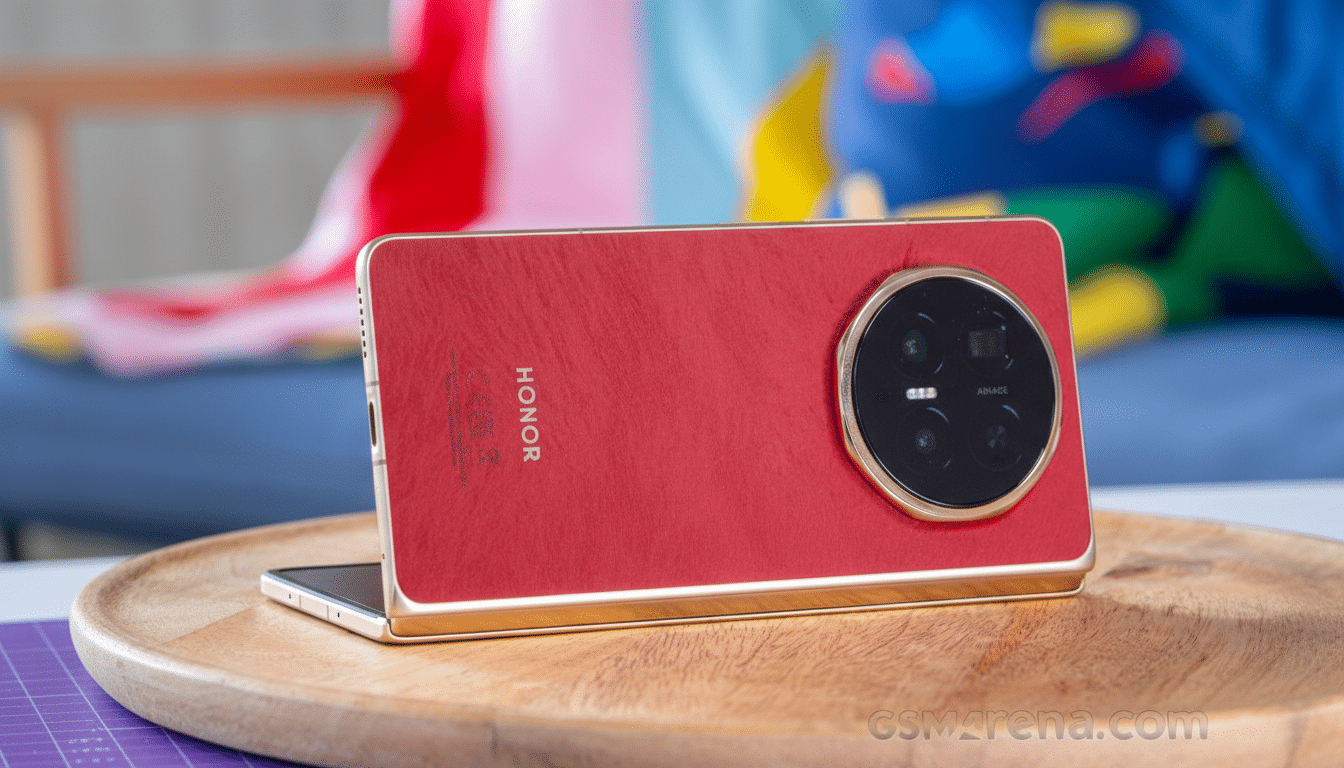
A Foldable That Feels Like A Regular Phone
The V6’s frame is so slim around the USB-C cutout that it looks scarcely thicker than the port itself. Folded, it’s no bulkier than many slab flagships I’ve carried recently, and the weight distribution helps it disappear in a jeans pocket. The hinge has firm, even resistance, and closes with a crisp snap; one-handed closing is easy, one-handed opening is doable with practice.
The red finish I tried has a satiny, fabric-like texture that resists fingerprints and catches light with subtle thread-like swirls. Gold framing complements the design without shouting. Other colors include Gold with a composite finish, plus White and Black.
Displays You Can Read Comfortably In Noon Sunlight
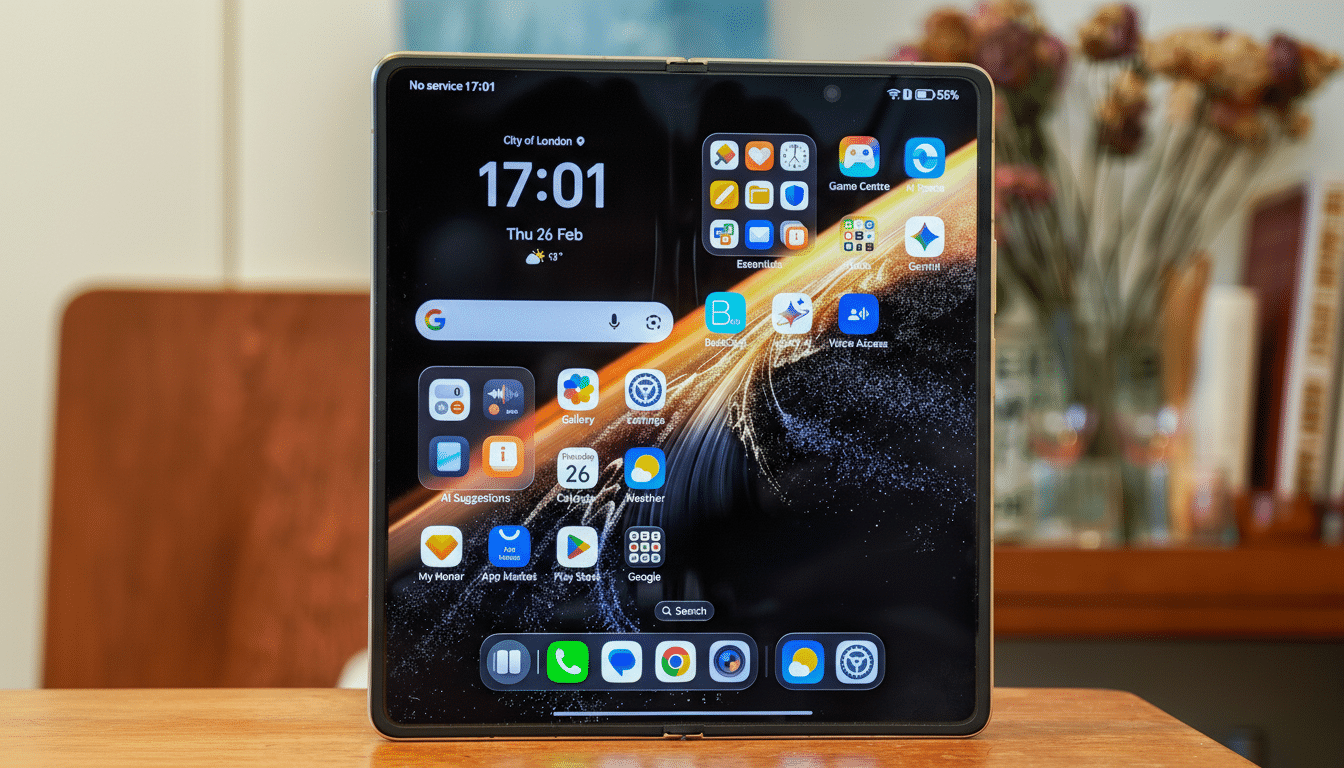
The outer 6.52-inch panel peaks at a stated 6,000 nits, while the 7.95-inch inner screen hits 5,000 nits. Under direct Mediterranean midday glare, I had no trouble reading maps, messages, or email. Both are LTPO 2.0 AMOLED with adaptive refresh from 1–120Hz, so motion feels fluid without needlessly burning battery at idle.
Crease anxiety? The V6’s is remarkably shallow. In bright light it’s there if you go looking, but during video playback and scrolling, I mostly forgot about it. Display Supply Chain Consultants has tracked steady industry progress in hinge stack height and crease management, and the V6 lands among the best I’ve seen—on par with recent top-tier foldables.
Silicon‑Carbon Battery Sets A New Bar For Foldables
Honor squeezes a 6,660 mAh silicon‑carbon pack inside this thin frame, claiming the largest capacity yet in a book-style foldable. The cell uses 25% silicon content—meaningfully higher than the ~16% industry norm—boosting energy density. TÜV Rheinland has certified 24 hours of inner-display use; I haven’t logged that much time yet, but early drain rates suggest all‑day stamina is realistic.
Charging peaks at 80W wired and 66W wireless, with reverse wireless on board for earbuds and watches. Silicon‑rich chemistries have been spotlighted in IEEE battery research for lifting capacity with fewer volume penalties, and the V6 is a practical showcase of those gains in a device that refuses to get chunky.
Performance That Matches The Ambition And Design
Inside is Qualcomm’s 3nm Snapdragon 8 Elite Gen 5 paired with 16GB LPDDR5X and 512GB UFS 4.1 storage. App launches are instant, multitasking across two and three panes didn’t stutter, and thermals felt well managed even when pushing the inner display with video, maps, and a spreadsheet side by side. The efficiency gains of advanced 3nm silicon are evident in the way the phone stays cool and responsive without devouring power.
Durability And Real‑World Resilience In Daily Use
Honor rates the hinge for 500,000 folds. At 100 opens a day, that’s roughly 13 years—comfortably beyond most upgrade cycles. The phone carries both IP68 and IP69 ratings, the latter guarding against high‑pressure water jets, unusual for a foldable. The cover screen adds a silicon nitride layer for improved scratch and drop resistance, while the inner panel uses reinforced flexible glass.
Analysts at IDC and CCS Insight have long flagged durability concerns as a primary barrier to foldable adoption. Ratings like these—and the feel of a hinge that doesn’t wobble—speak directly to those hesitations.
Cameras Without The Typical Foldable Compromise
The rear array brings a 50MP main with f/1.6 and OIS, a 64MP periscope telephoto with 3x optical zoom on a 1/2‑inch sensor, and a 50MP ultra‑wide. It’s rare to see a true periscope in a foldable this thin; most makers ditch telephoto to save volume. Dual 20MP selfie cameras—one per screen—cover video calls whether the phone is open or closed.
Software And AI Features That Reduce Daily Friction
MagicOS 10 feels polished, with a slick transparency aesthetic in notifications and quick settings. A bottom dock on the inner display keeps recent apps at hand, and split‑screen for up to three apps is straightforward. Google’s Gemini is the default assistant, and a three‑finger swipe captures on‑screen content with context to an AI Memories space—useful when juggling research across apps.
AI Meeting Agent goes beyond transcription with custom keyword alerts so key moments are flagged automatically. Unusually, the V6 also plays nice with Apple gear: notification sharing with iPhone and Apple Watch, one‑tap file transfers up to 60 MB/s, AirPods noise control and Find My support, plus access to iCloud files and iWork editing. If you straddle ecosystems, that’s a rare and welcome bridge.
Why This Thinness Truly Changes The Foldable Equation
Foldables have been a story of amazing capability offset by bulk. The Magic V6 proves you don’t have to pick sides. By hitting sub‑9mm closed and staying light while delivering a massive battery, flagship‑grade cameras, sunlight‑proof screens, and serious water resistance, it sets a new baseline that rivals will have to meet.
If you’ve been foldable‑curious but put off by thickness and heft, this is the first large foldable that truly behaves like a normal phone until the moment you need a tablet. That’s the standard many of us have been waiting for.
