


I ran a weeklong n-of-1 experiment tracking my cortisol at home to answer a buzzy question with real data: do blue light glasses actually tame the stress response we blame on nighttime screens? My results point to a qualified yes—blue light reduction helped—but the biggest wins came from how, and when, I used screens, plus one free technique.
How I Measured Cortisol At Home Across the Day
I used a lab-analyzed, finger-prick dried blood spot panel that samples cortisol across the day: on waking, mid-morning, afternoon, and late evening. The goal was to capture the diurnal curve and see how evening habits nudge the tail end of that rhythm.
- How I Measured Cortisol At Home Across the Day
- Baseline Results With Screens Blazing Late at Night
- Testing Blue Light Glasses for Evening Screen Use
- Night Mode and Low Blue Light Screens Trim Evening Arousal
- A Screen-Free Night And A Free Intervention
- What Changed and What Didn’t Across Sleep and Stress
- Practical Takeaways You Can Use for Better Evenings Tonight
- Limits of This N-of-1 Test and Why It Still Matters
Physiology primer: cortisol normally surges after waking—the cortisol awakening response often rises ~50% within 30–45 minutes—then declines steadily toward evening. Nighttime spikes can reflect stress, stimulants, or circadian disruption. The American Academy of Sleep Medicine and Harvard sleep researchers have long noted that short-wavelength light in the 460–480 nm range can delay circadian timing and suppress melatonin, with downstream effects on evening arousal.
Baseline Results With Screens Blazing Late at Night
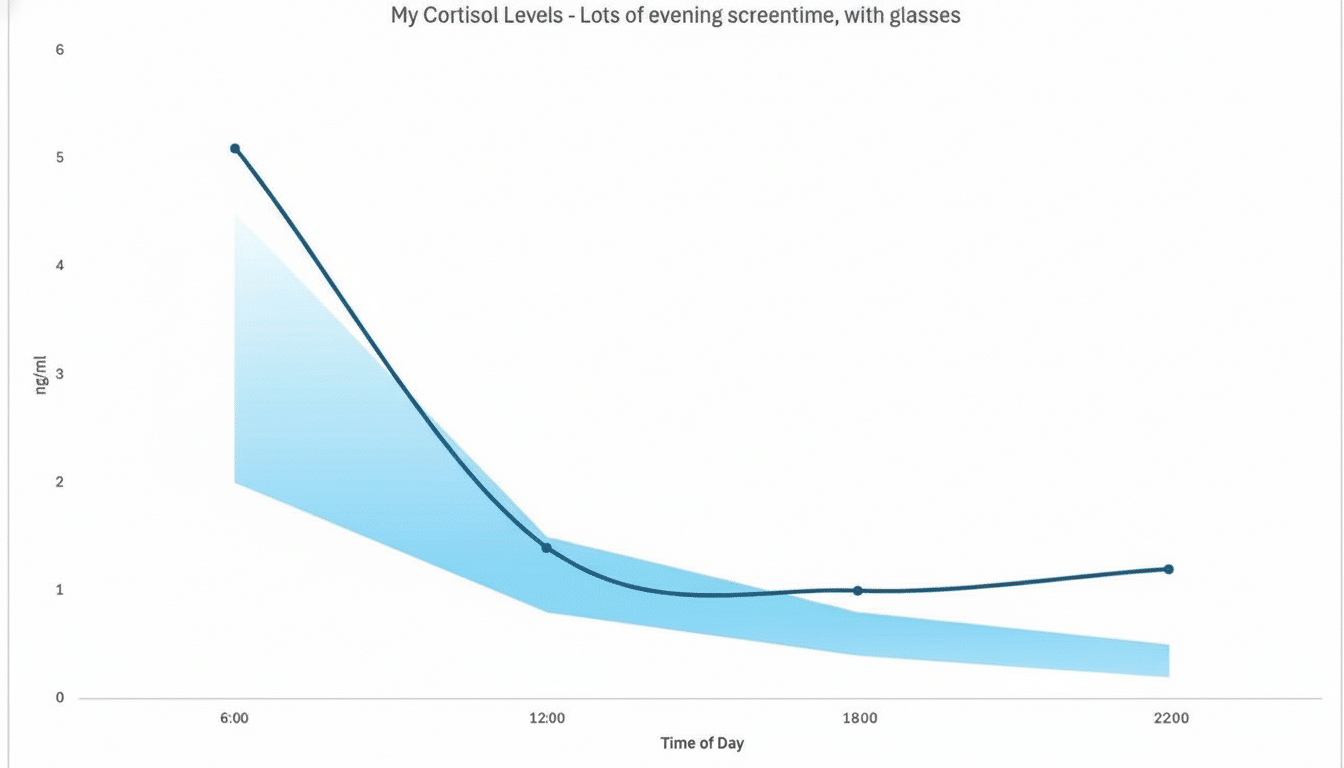
On a control evening I used my phone intensively until late. My evening cortisol landed above the lab’s reference band—clearly out of the gentle taper you want at night. Morning values were also punchy, which a sleep specialist I consulted said could reflect bright dawn light in my bedroom and lingering effects from late screens.
Testing Blue Light Glasses for Evening Screen Use
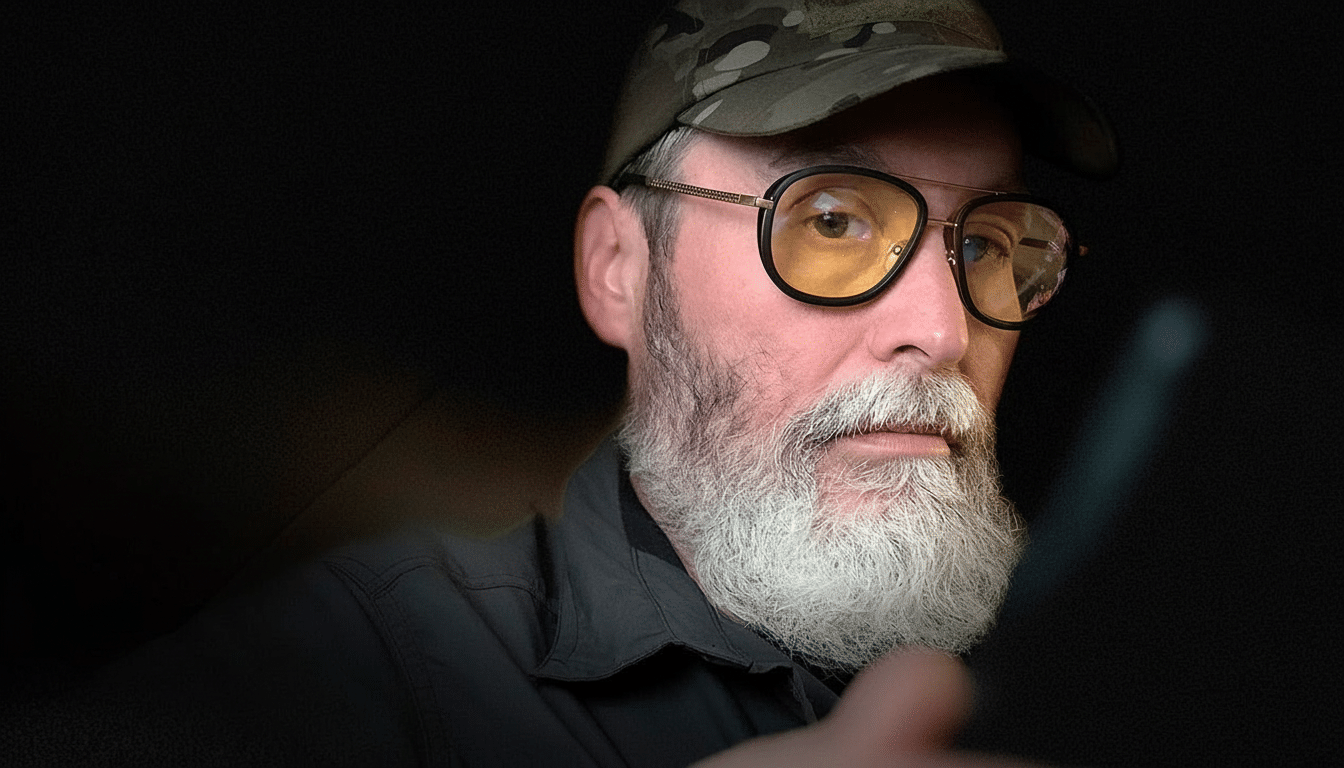
The next night I wore amber lenses rated to block 65% of blue light at 450 nm while keeping my routine the same. The evening cortisol spike shrank and edged closer to the expected range. Subjectively, my eyes also felt less gritty by bedtime.
It’s worth noting that a 2023 Cochrane review found limited evidence that blue-light filtering lenses improve eye strain or sleep in the general population. My data don’t contradict that—this is a single-user cortisol readout under specific conditions—but they do suggest targeted use can blunt late-evening cortisol drift when screens are unavoidable.
Night Mode and Low Blue Light Screens Trim Evening Arousal
I repeated the test with a phone featuring a TÜV-certified low blue light display. Evening cortisol was lower than my baseline phone session. Re-enabling my primary phone’s Night Shift—warmer color temperature after sunset—yielded a similar improvement.
These results track with lighting science: reducing short-wavelength content cuts melanopic stimulus, the signal that most directly tells the circadian system it’s “day.” Standards bodies like the CIE now quantify this via melanopic equivalent daylight illuminance, and night modes meaningfully reduce that metric even when screens look bright.
A Screen-Free Night And A Free Intervention
One evening I ditched screens entirely—walking, fixing a wobbly table, reading a paper book. Cortisol stayed comfortably within the evening reference band. No surprise there; removing the stimulus removed the problem.
More interesting: on another night I used my regular, cool-toned screen but did 20 minutes of box breathing (inhale, hold, exhale, hold, each for a slow count of four) before the final sample. That produced the best result short of going screen-free. Randomized trials show slow breathing boosts vagal tone and can reduce cortisol while increasing heart rate variability, and my numbers mirrored that literature.
What Changed and What Didn’t Across Sleep and Stress
Despite clear differences in hormone levels, my sleep felt roughly the same across nights. My wearable flagged a slightly better sleep score after the screen-free evening, but I didn’t feel subjectively transformed. That’s a reminder that cortisol is one piece of a larger sleep puzzle that also includes timing, total light exposure, caffeine, and stress load.
Practical Takeaways You Can Use for Better Evenings Tonight
- If you must use screens late, stack tactics: enable your phone’s warm night mode, dim brightness, and consider blue light glasses. Moving the device farther from your eyes also helps.
- Shift content, not just color. Calm, non-interactive tasks were less provocative than rapid-fire social feeds.
- Add a 10–20 minute slow-breathing session before bed. It costs nothing, and in my test it rivaled hardware fixes.
- Mind your mornings. Flooding your bedroom with early daylight can amplify the cortisol awakening response—great for alertness, but consider blackout shades if you’re already wired.
Limits of This N-of-1 Test and Why It Still Matters
This was a small, real-life test with plenty of noise: day-to-day biological variability, assay error, and one participant—me. Yet the signal was consistent across conditions. Evening blue light reduction and paced breathing each nudged cortisol in the right direction, and doing both worked best.
The broader science supports the mechanism—short-wavelength light delays the body clock and can slow the evening cortisol decline—while also cautioning that not everyone will notice dramatic sleep improvements. My bottom line: blue light glasses can help, but they’re most effective as part of a routine that also tames stimulus, warms the light, and calms the nervous system.

