


Damian McCarthy’s Hokum is the kind of horror film that makes you grateful for a dim theater, if only so your seatmates can’t clock how hard you’re flinching. I walked out croaking, my voice wrecked from yelps that slipped past clenched teeth. It is McCarthy’s most controlled and sadistic exercise in tension to date, a folk-horror chamber piece that toys with your nerves until they twang.
Premiering to a jumpy crowd at the SXSW Film & TV Festival, the NEON release stars Adam Scott as Ohm Bauman, a bestselling author whose arrogance curdles into terror inside an Irish hotel with a rotten past. The setup sounds familiar; the execution is anything but. McCarthy, the Irish filmmaker behind Caveat and Oddity, refines his signature blend of occult rumor, tactile production design, and wicked timing into a relentless scare machine.
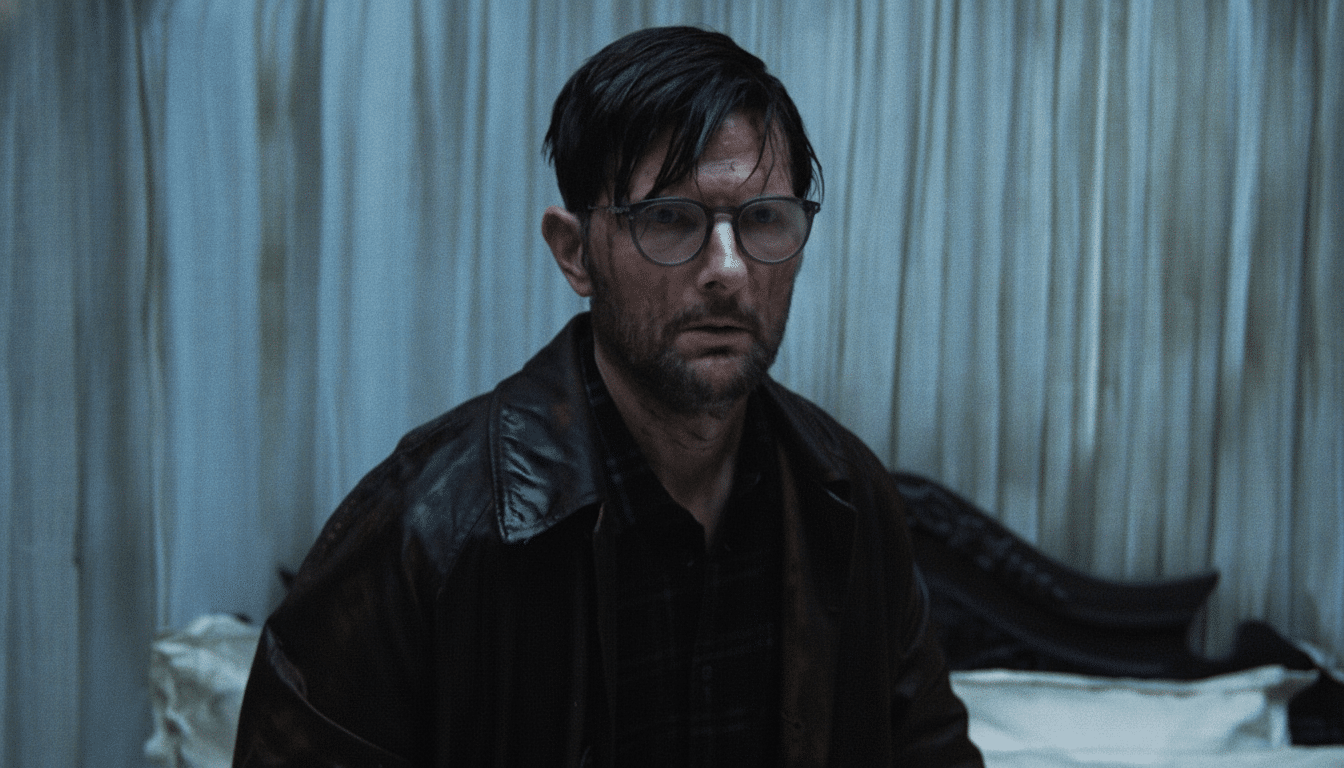
A Meaner Adam Scott Anchors The Terror In Hokum
Scott’s Ohm arrives with ashes to scatter and a chip on his shoulder, brushing off locals with the prickly entitlement of a celebrity used to soft landings. It’s a shrewd, against-type turn from an actor audiences adore in Severance and Party Down; here he weaponizes that likability, making every eye-roll and cutting aside feel like a fuse being lit.
McCarthy surrounds him with a uniformly sharp ensemble: Peter Coonan’s smarmy hotel manager, Florence Ordesh’s bartender with a too-patient smile, Will O’Connell’s overeager bellhop aching for validation, and Brendan Conroy’s owner who treats ghost stories like hospitality amenities. David Wilmot, as a forest-dwelling oddball who drinks goat’s milk and doles out uneasy wisdom, becomes the film’s unnerving compass, nudging Ohm toward choices that feel both irrational and inevitable.
Folk Horror With Teeth Not Just Jump Scares
Yes, Hokum deploys jump scares—several detonated so cleanly that I felt my ribs buzz—but McCarthy resists the bang-and-release rhythm that cheapens lesser films. He understands what the British Film Institute identifies as folk horror’s true currency: the slow violation of rational order by local myth. Here, that myth coils around a honeymoon suite, a vanished woman, and a witch’s legend that staff pass down like a warning label.
The standout sequence isn’t a jolt; it’s a slow knife. A character extends a lighter into a forbidden darkness, flame guttering, arm helplessly exposed. McCarthy holds the frame past comfort, forcing you to inventory every shadow before the reveal arrives—brief, inevitable, dreadful. It’s precision scarecraft, closer to The Wicker Man and The Babadook than to carnival-house shocks.
Craft That Tightens The Screws In Every Scene
Hokum’s design team turns the hotel into a living bruise. Wood grains feel damp to the touch; wallpaper seems to breathe; corridors exhale dust. McCarthy threads in recurring totems—bells, carved figures, animal imagery—as if the building itself is telling time in omens. Fans of his earlier films will recognize an evolving visual language rather than a stitched-together “universe.”
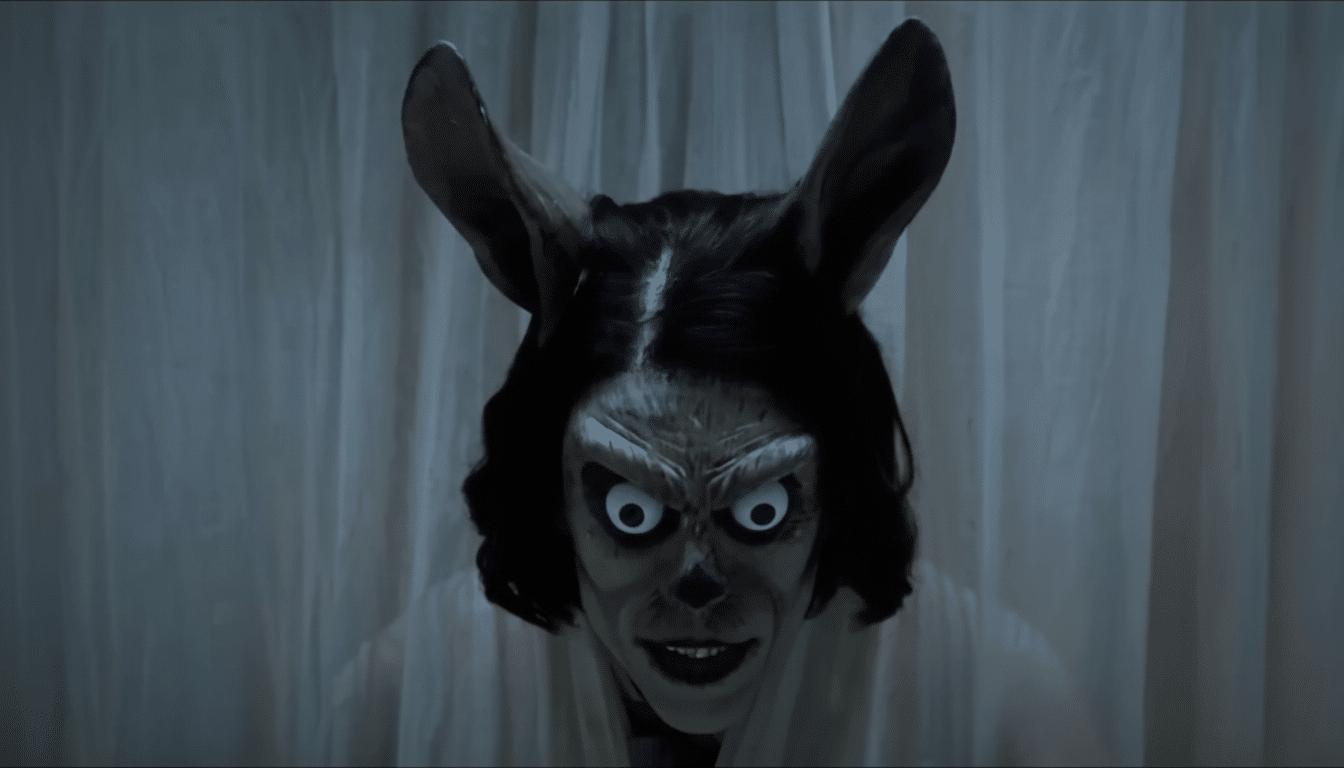
Sound design is the film’s secret sadist. Instead of leaning on orchestral shocks, the mix rides the scrape of a latch, the knock of a distant pipe, the threadbare chuckle just beyond a door. The result is physiological: you start bracing at silence. It’s the sort of audible manipulation that organizations like Dolby point to when explaining why theater exhibition can alter your heart rate even before a scare lands.
Adam Scott’s Edge Makes The Morality Bite
Hokum isn’t just punishing Ohm for being a sneering tourist. It’s about how grief curdles into cruelty, and how belief—whether in career myths or countryside witches—demands a tithe. Scott’s gift is calibrating that slide. He can snap from superior smirk to hollow-eyed panic without breaking the film’s tone, the same tightrope he walked in the Emmy-nominated Severance, now refitted for a nastier, witch-lit crucible.
McCarthy’s script threads humor through the horror, not as comic relief but as kindling. A barbed retort sets up a later comeuppance; a petty flex becomes a trapdoor. The film’s best laughs are winces: you chuckle because you know the bill is coming, and Hokum makes sure it’s itemized.
Why This Demands A Big-Screen Scream In Theaters
Horror lives on communal electricity, and Hokum feeds on it. At the SXSW premiere, the room lurched in unison, then tried to out-silence one another during the long, lacerating quiet spells. That chorus of strangled gasps is part of the design; the film uses audience breath as counterpoint, a tactic long celebrated by genre programmers at festivals from Sitges to Fantastic Fest.
This is not a puzzle-box to be solved on second screens. It’s a pressure cooker that wants your full attention and your reflexes. The nastier images are practical enough to feel tactile, the kind that return in the half-second before you switch off a bedside lamp.
The Verdict On Hokum’s Nerve-Shredding Horror Ride
Hokum is a ferocious step up for Damian McCarthy and a career-best horror turn for Adam Scott, a lean, mean story that wields folklore like a blade. I left the theater rasping, spent, and oddly eager to do it again. File this one under essential big-screen nightmares.

