


Google says it has resolved a Gmail glitch that caused legitimate emails to land in the wrong places and triggered unexpected spam warnings. The company acknowledged that some users also experienced delivery delays and noted that warning banners applied during the disruption may linger on messages received before the fix. An incident analysis is planned once Google completes its internal review.
What Happened in Gmail’s Inbox and Spam Filters
According to Google’s Workspace Status Dashboard, Gmail briefly misclassified messages, sending items that would ordinarily appear under Promotions or Social into the Primary inbox and flagging some mail from trusted senders with spam banners. Users widely reported seeing “everything in Primary” and “warnings on familiar senders,” a pattern consistent with a filtering or policy misfire rather than a full outage.
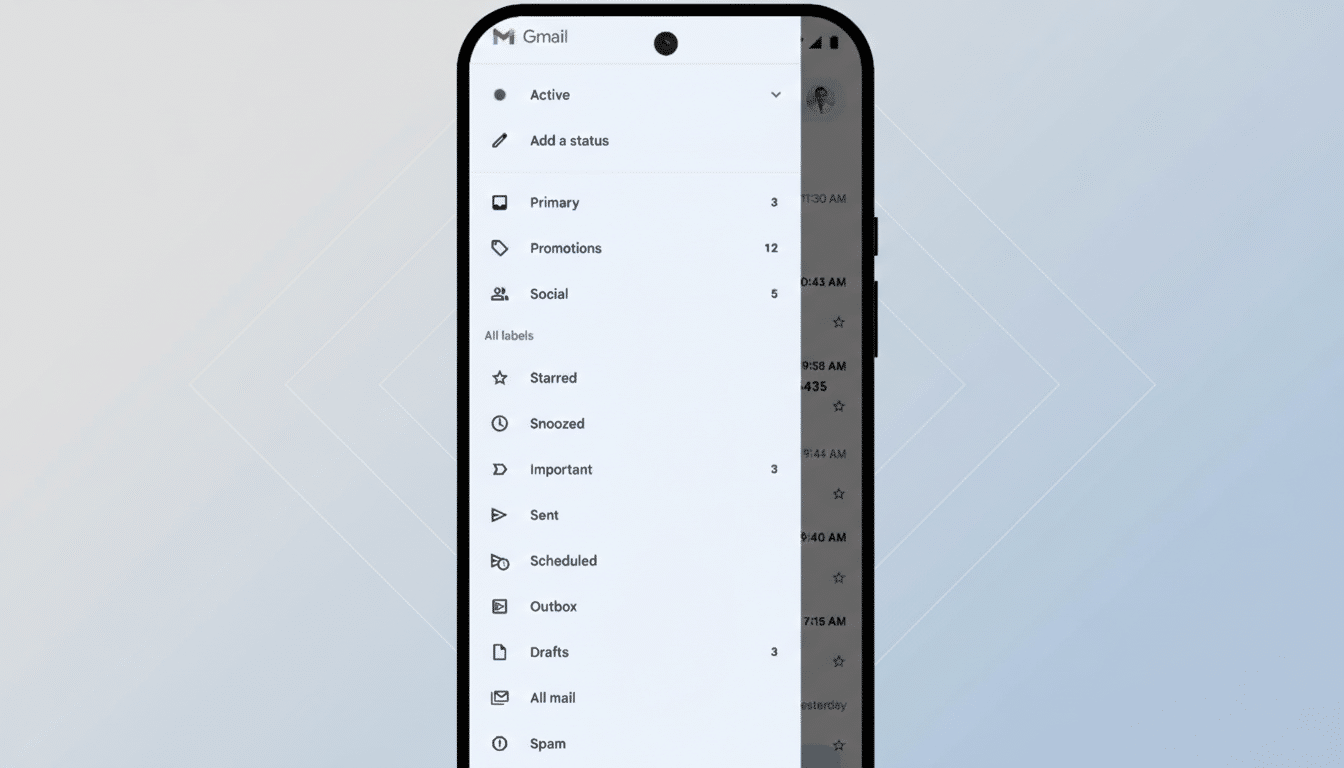
Google says service has been restored. However, the company cautions that banners added to messages during the incident will not automatically disappear, even though filtering behavior has returned to normal. In short, Gmail is working again, but old flags may persist until users manually reclassify affected emails.
How Gmail Filters Email Across Categories and Spam
Gmail’s filtering stack blends machine learning models with sender authentication signals like SPF, DKIM, and DMARC, alongside reputation systems and user feedback. Google has long said its models block more than 99.9% of spam and phishing, and previous upgrades using TensorFlow helped intercept tens of millions of additional junk emails daily. Category tabs such as Primary, Promotions, and Social are layered on top, making classification accuracy just as important as basic spam detection.
When a model or rule set drifts or misfires, the visible symptom is not just more spam, but also misplaced legitimate email and suspicious-looking banners. That can feel jarring because the system normally processes massive volumes with little error. Industry trackers such as Cisco Talos and reports aggregated by Statista routinely estimate that a large share of global email traffic is spam, which explains why even small deviations in filtering precision can create outsized user impact.
Impact on Users and Businesses During Gmail Glitch
For everyday users, the issue meant sifting through cluttered inboxes and second-guessing warning labels. For businesses and marketers, the ripple effects included potential dips in open rates, delayed responses, and confusion around deliverability. Some senders with proper authentication and good reputations still encountered banners, underscoring that a transient classification error can temporarily overshadow otherwise sound email hygiene.
Email administrators monitoring Postmaster Tools and security logs may have seen short-lived anomalies in placement and user complaints. Because DMARC, DKIM, and SPF alignment remained crucial, organizations with rigorous authentication and consistent sending patterns are likely to recover more predictably as filtering normalizes.
What Google Plans Next After Gmail Misclassification
Google says it will publish an incident review after completing its investigation. These post-incident write-ups typically describe the root cause, the scope of impact, and safeguards to prevent repeats. Given Gmail’s reliance on layered machine learning and policy rules, the review will likely address which component drifted, how it was detected, and what guardrails or rollback mechanisms are being tightened.
The company also indicates continued monitoring to ensure stability. That’s standard practice after any production change or recovery period in large-scale email systems, where small model or ruleset tweaks can have macro consequences across billions of messages.
What You Should Do Now to Fix Gmail Mislabels
Users can safely reclassify any mislabeled messages: use “Not spam” for legitimate emails in Spam, and “Report spam” for junk that slipped into Primary. If category tabs were affected, drag messages to Promotions or Social to reinforce training. For senders and admins, confirm SPF, DKIM, and DMARC alignment, check Postmaster Tools for complaint spikes, and avoid making abrupt sending-pattern changes while filters stabilize.
The bottom line: Gmail’s filtering is back to normal, persistent warning banners on older messages are a cosmetic aftereffect, and a formal postmortem is on the way. Given the volume and variability of global email, occasional misclassifications are inevitable, but the rapid rollback and forthcoming analysis suggest the issue was contained and instructive for future safeguards.
