


Google is shedding new light on Aluminium OS, its next big swing at reimagining laptops. The company’s Android Ecosystem lead, Sameer Samat, has outlined a vision that blends Android’s app universe with desktop-class multitasking, tighter phone-to-laptop continuity, and a deep focus on on-device AI. Crucially, this is not a Chrome OS replacement but a complementary path aimed squarely at consumer laptops and modern workflows.
A Unified Platform Without Replacing Chrome OS
Google’s message is unambiguous: Chrome OS isn’t going anywhere. Samat points to its strengths—zero-touch enrollment, centralized management, security by design—as reasons it remains the default for schools and many enterprises. Independent tracking from Futuresource Consulting has repeatedly shown Chrome OS leading the US K–12 category with roughly half or more of device shipments, underscoring its institutional foothold.
- A Unified Platform Without Replacing Chrome OS
- AI Is Powering A Laptop Comeback With On-Device Tools
- Android At The Center Of Continuity Between Devices
- What It Means For OEMs And Developers Building For Laptops
- Chrome OS And Aluminium OS Can Coexist Without Overlap
- Key Questions To Watch As Aluminium OS Development Advances
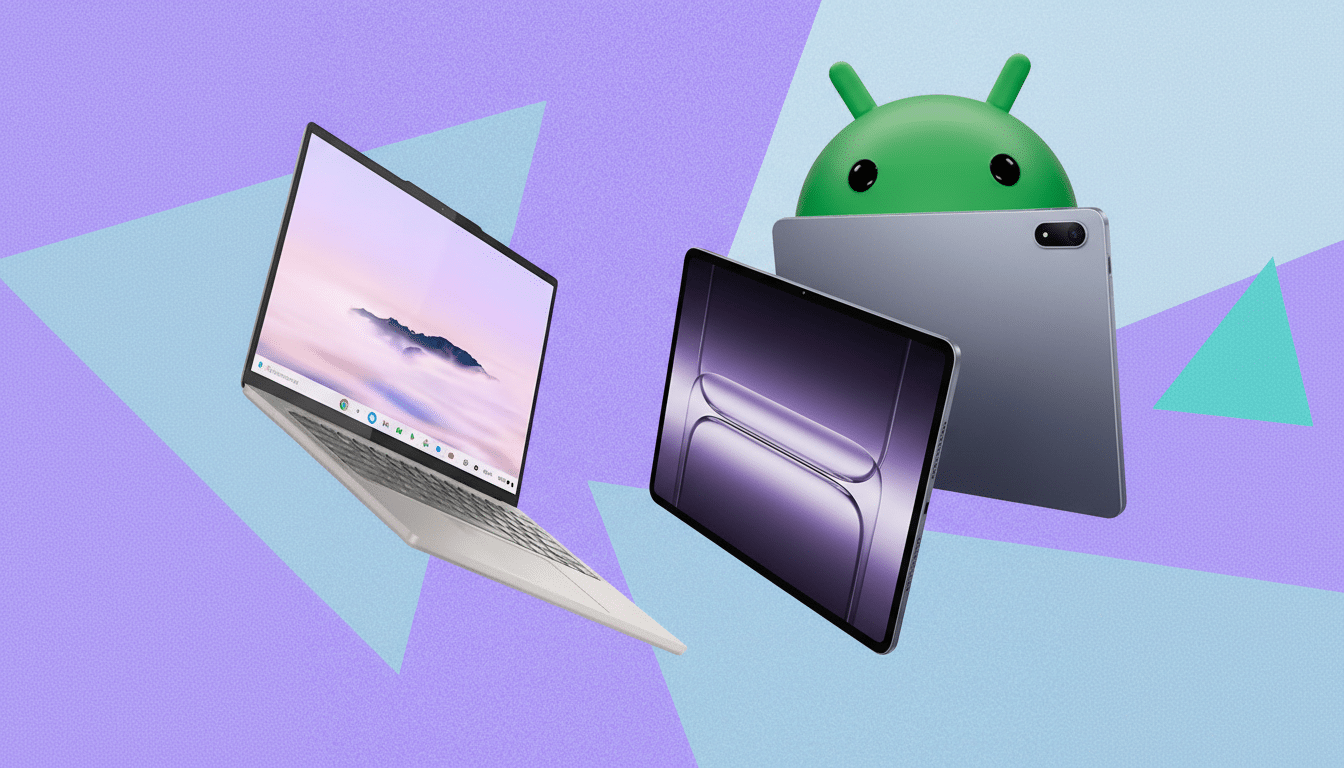
Aluminium OS targets a different lane. Think consumer-first laptops that need a broader application canvas than the browser alone and tighter synergy with Android phones. In Google’s framing, one platform continues to excel at managed, browser-led computing, while the other pushes into richer native apps, advanced AI features, and fluid continuity across screens.
AI Is Powering A Laptop Comeback With On-Device Tools
Samat argues that AI has made laptops feel fresh again. The combination of a physical keyboard, larger display, and windowed multitasking creates a sweet spot for generative AI, automation, and creative tools. That aligns with the broader hardware trend: chipmakers are racing to embed NPUs in mainstream systems—Intel’s Core Ultra, AMD’s Ryzen AI, and Qualcomm’s Snapdragon X series are designed to run models locally with lower latency and better privacy.
Market forecasters echo the shift. Canalys expects AI-capable PCs to account for over 60% of shipments within the next product cycles as OEMs standardize on on-device acceleration. For Google, Aluminium OS is a way to meet that moment: give users an OS where live transcription, summarization, creative assistance, and context-aware automation are native experiences rather than bolt-ons.
Android At The Center Of Continuity Between Devices
Aluminium OS leans into something Android users have demanded for years—seamless movement between phone and laptop. Google has been laying groundwork with features like Quick Share, Fast Pair, Phone Hub, and multi-device app experiences. New continuity APIs arriving with Android’s next releases, including a Handoff-like capability that lets app activities jump between devices, hint at where Aluminium OS is headed.
Picture this: start drafting a note on your phone, sit down at your laptop, and the exact activity is waiting—no file shuffling. Receive a call and handle it from the laptop while your phone stays in your pocket. Clipboard, notifications, and even camera input follow you across screens. The challenge is making this invisible: secure authentication, low-latency proximity detection, and developer adoption all need to click. Google says early user testing shows strong demand for precisely this kind of cross-device flow.
What It Means For OEMs And Developers Building For Laptops
Aluminium OS opens a fresh canvas for hardware makers that already invest in Android phones and tablets. Expect designs that pair thin-and-light chassis with NPUs, longer battery life, and connectivity stacks tuned for instant tethering and shared credentials. If Google executes, OEMs could market phone-laptop bundles that feel as cohesive as a single product.
For developers, the opportunity is reach. Google has cited more than 3 billion active Android devices globally. Aluminium OS could extend that audience to laptop contexts without abandoning familiar tools. Android’s large-screen guidance, Jetpack WindowManager, and adaptive layouts in Jetpack Compose are already nudging apps toward resizable windows, keyboard shortcuts, and mouse support. The promise is straightforward: one codebase that scales from pocket to desktop with deeper system hooks for AI and continuity.
Chrome OS And Aluminium OS Can Coexist Without Overlap
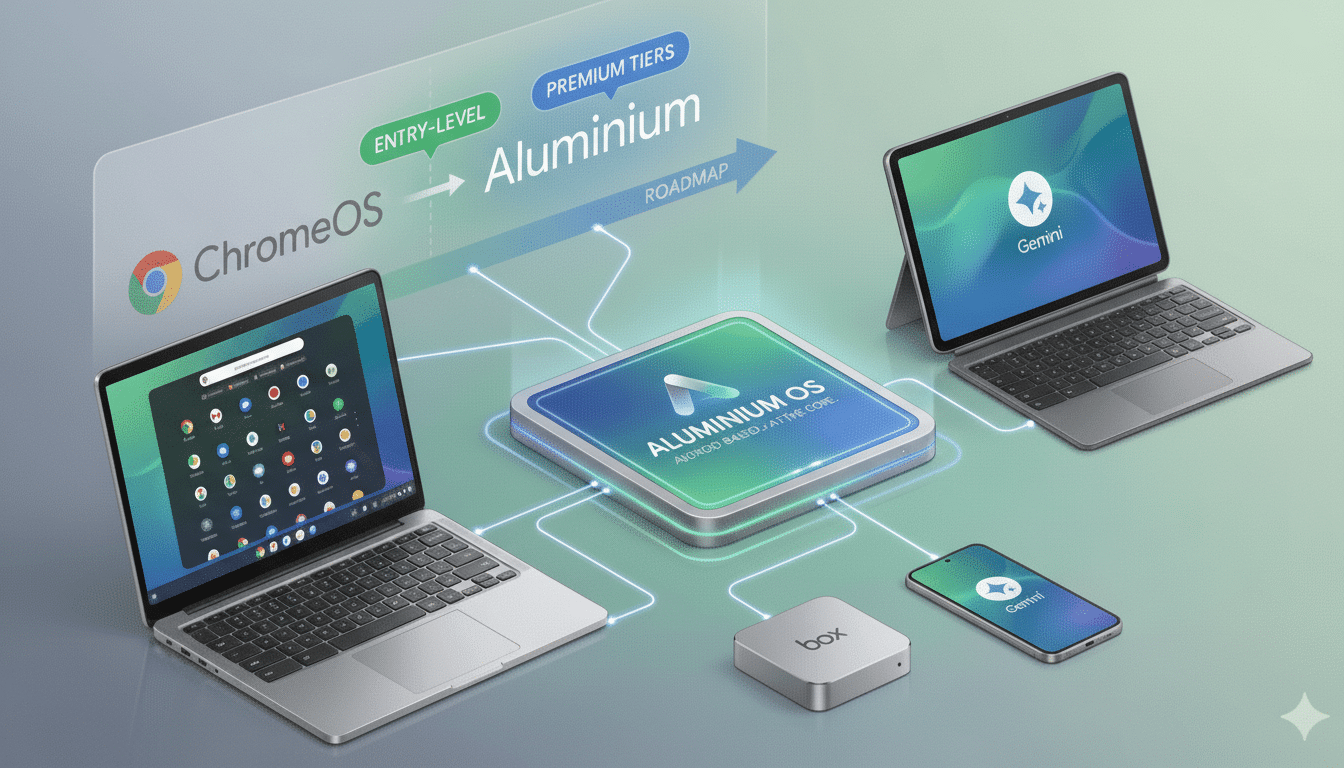
Google appears to be embracing a dual-track strategy. Chrome OS continues to dominate where simplicity, security, and fleet management matter most. Aluminium OS targets users who want full-breadth Android apps, tighter phone integration, and AI experiences tuned for local acceleration. Rather than force a fork in the road, Google is building parallel lanes that reflect how people actually compute.
Key Questions To Watch As Aluminium OS Development Advances
Several details remain under wraps. How will Google handle long-term updates, verified boot, and policy controls at enterprise scale? What’s the compatibility story for existing Android apps that haven’t yet embraced large screens? Will Aluminium OS ship with preloaded AI models or download them on demand to balance privacy and storage?
Samat’s message, however, is clear: Aluminium OS is moving forward, driven by AI’s momentum and user demand for better continuity. If Google can blend Android’s depth with laptop ergonomics—without undercutting Chrome OS—it could reshape how millions work across phone and PC, and give OEMs a fresh platform to compete in the AI laptop era.
