


Google is preparing to roll out a Registered App Stores program on Android this year, a move that formalizes how alternative app marketplaces can operate on the platform. The change arrives alongside a reworked fee structure and stems from Google’s proposed settlement with Epic Games, signaling one of the most consequential shifts to Android app distribution in years.
What Registered App Stores Mean for Android’s ecosystem
The new program allows third-party app stores to officially register with Android if they meet specified quality and safety benchmarks. Stores that join will get a streamlined, consistent installation experience for users, with clearer prompts and fewer hoops than traditional sideloading. Importantly, registration is optional—stores that don’t participate can continue using the current sideloading flow.
- What Registered App Stores Mean for Android’s ecosystem
- How Google Is Unbundling App and Billing Fees on Android
- Timeline and availability for rollout and settlement
- Why This Matters For Users And Developers
- The legal and regulatory backdrop shaping these changes
- What to watch next as Android app distribution shifts
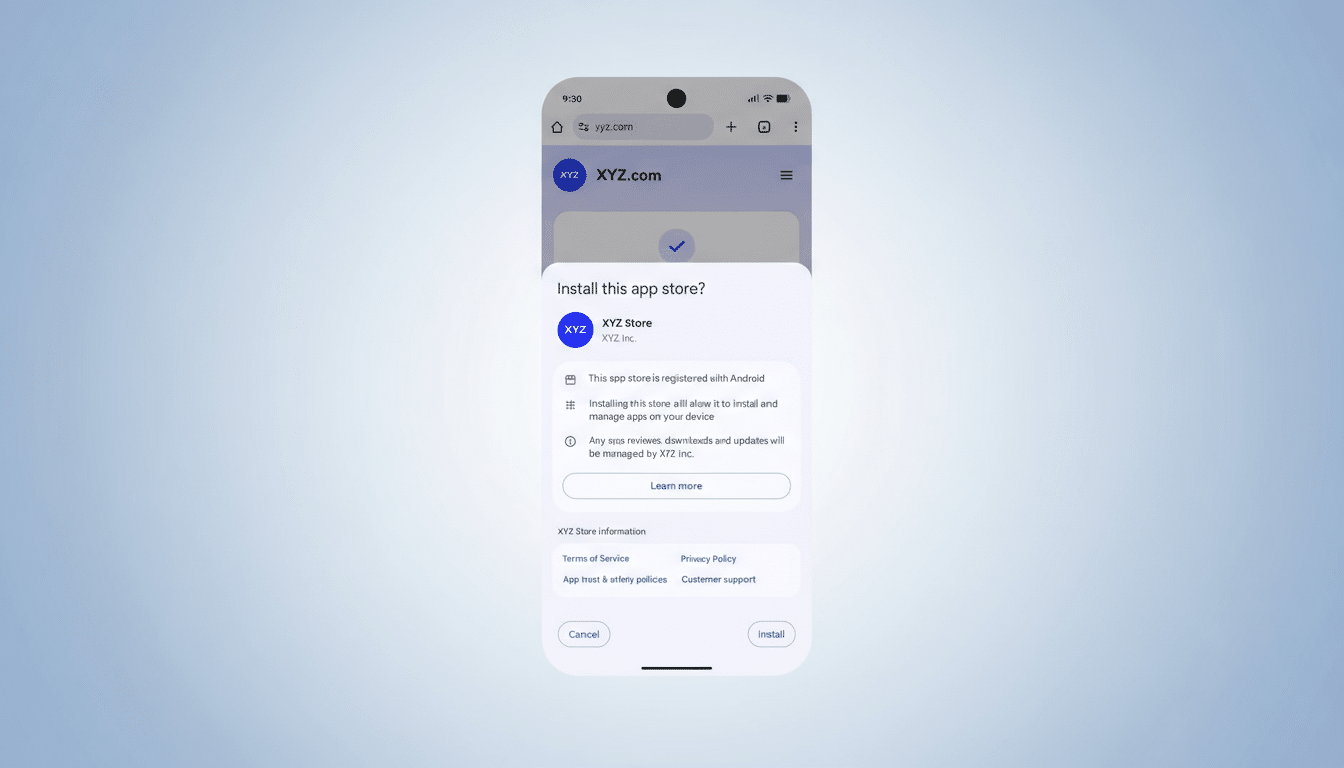
Google says the feature will debut in a major Android release this year, starting outside the US and expanding stateside once the court approves the broader settlement. The company emphasizes that user safety remains central, suggesting that registered stores will need to adhere to standards around malware protection and transparent update behavior, likely tying into Android’s existing security layers such as Play Protect scanning.
How Google Is Unbundling App and Billing Fees on Android
Alongside the new distribution pathway, Google is unbundling its fees. Historically, combined fees for app sales and in‑app purchases could reach 30%. Under the updated model, developers will pay a service fee between 15% and 20%, with an additional 5% fee when using Google Play billing in the US, Europe, and the UK. For subscriptions, the service fee drops to 10%, though the separate 5% Play billing fee can offset some of that savings.
By separating service and billing components, Google is attempting to clarify what developers are paying for—platform services versus payment processing. This follows years of pressure from game makers and subscription-heavy services that argue large, all-in fees limit innovation and push prices higher for users.
Timeline and availability for rollout and settlement
Google targets the US, UK, and Europe for the new billing structure by the end of June, with a global rollout slated to complete by September 30, 2027. The Registered App Stores program will launch first outside the US, then expand domestically pending court approval of the settlement terms. Expect the registration framework to be bundled into a major Android OS update later this year.
The company’s decision to move ahead before final approval signals confidence in the settlement’s contours and a desire to give developers and partners a roadmap well in advance of the holiday device cycle.
Why This Matters For Users And Developers
For users, registered stores could reduce friction and make alternative marketplaces feel less risky. Today, installing a third-party store typically means confronting multiple security prompts and toggling off restrictions. A more predictable, auditable flow—paired with clear safety standards—should build confidence without removing user choice.

For developers, the combination of lower service fees, clearer billing mechanics, and simpler distribution through registered stores could translate into broader reach and healthier margins. Game publishers and subscription apps, which are highly sensitive to fees and funnel friction, stand to benefit first. Established alternatives such as Samsung’s Galaxy Store, Amazon Appstore, and community-driven catalogs like F‑Droid illustrate the diversity of models that could thrive when onboarding is less cumbersome.
Critically, Google’s standards for registration will shape outcomes. If requirements emphasize robust malware screening, transparent update rights, and responsible use of permissions, the program could expand choice without opening the door to unsafe behavior. That balance—openness with guardrails—will determine whether users embrace the change at scale.
The legal and regulatory backdrop shaping these changes
The initiative grows out of Google’s long-running legal clash with Epic Games, which argued that platform policies stifled competition in app distribution and billing. While the proposed settlement awaits court approval, Google’s early implementation signals a strategic pivot toward a more pluralistic ecosystem.
It also lands amid intensifying global scrutiny of mobile platforms. Europe’s Digital Markets Act is pushing for greater openness in app distribution and payments, and major rivals have begun adapting their policies in the region. Although Android has always permitted sideloading, formal registration elevates alternative stores from a workaround to a first-class pathway.
What to watch next as Android app distribution shifts
Key details will determine industry uptake:
- The exact quality and safety thresholds for registration
- How updates and rollback protections work
- Whether OEMs gain more latitude to preload or promote registered stores
Developer response will be equally important—especially from large game publishers and streaming platforms that could test multi-store launches to optimize fees and discoverability.
If executed well, Registered App Stores could turn Android’s long-standing promise of openness into a more seamless, consumer-friendly reality. If standards are unclear or too restrictive, the ecosystem may simply preserve the status quo. Either way, the stage is set for a pivotal year in how Android apps are distributed and monetized.
