


The world of digital assets used to feel like a high-stakes scavenger hunt where one wrong move meant losing everything. We all remember the horror stories of lost hard drives and forgotten 12-word phrases. But things are moving fast. By the end of 2025, the global crypto wallet market hit a staggering $12.2 billion in value. As we cruise into 2026, experts expect that number to jump toward $25 billion. That is a lot of digital “gold” sitting in apps.
Yet, most wallets are still just passive boxes. They sit there and wait for you to tell them what to do. If you make a mistake, they watch you do it. If you send money to a scammer, they happily process the transaction. That is where Artificial Intelligence steps in. We are moving away from “dumb” storage and toward “smart” companions.
- Why Traditional Wallets Give Us a Headache
- The Tech Under the Hood: How a Wallet “Thinks”
- Security 2.0: The Digital Guard Dog
- Transaction Sorcery: Saving Money While You Sleep
- The Personal Assistant: UX That Actually Likes You
- Building the Beast: A Technical Roadmap
- The Future: Autonomous Agents and Beyond
- Final Thoughts: The Road Ahead
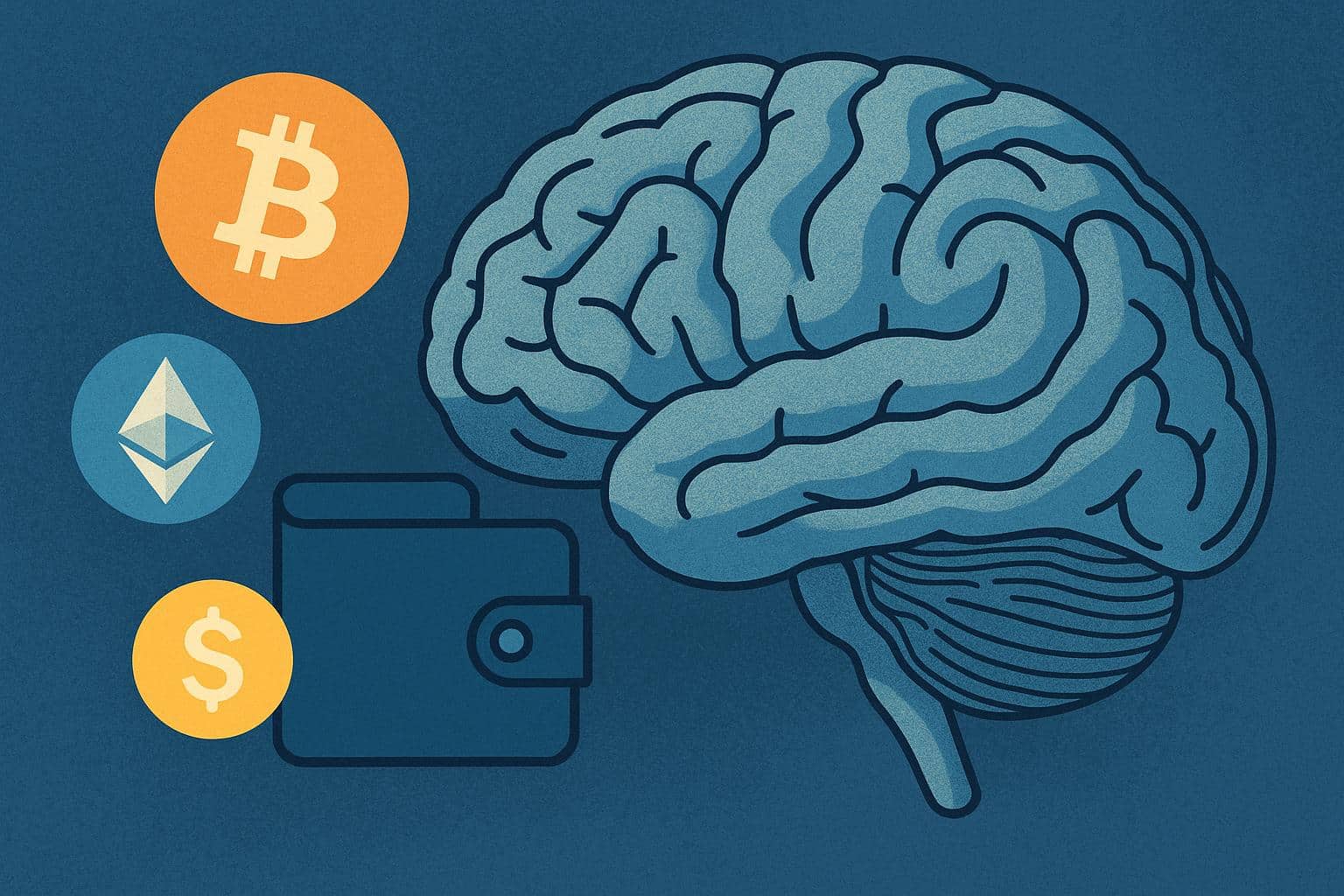
Imagine a wallet that recognizes your spending habits. One that stops you before you click a phishing link. A wallet that finds the cheapest time to send a transaction while you sleep. This isn’t sci-fi anymore. It is the new standard in cryptocurrency wallet development services that is changing how we interact with the blockchain.
Why Traditional Wallets Give Us a Headache
Let’s be real for a second. Using a standard crypto wallet is stressful. You have to understand gas fees, network slippage, and whether you are on the ERC-20 or TRC-20 chain. It is a lot of homework just to send $20 to a friend.
Traditional wallets are reactive. They don’t know who you are. They don’t care about your goals. They are basically digital spreadsheets with a “send” button. This high barrier to entry is what keeps millions of people away from crypto. People want simplicity. They want a “FaceID and done” experience, not a “copy-paste-check-three-times-and-pray” experience.
AI changes this by adding a layer of interpretation. It acts as a translator between the complex, messy world of the blockchain and the simple, human world of “I want to buy this.”
Important to Remember
Even with the smartest AI, the ultimate “on-off” switch for your funds should always stay in your hands. AI is the co-pilot, not the pilot. Always ensure your smart wallet uses non-custodial architecture so you remain the true owner of your keys.
The Tech Under the Hood: How a Wallet “Thinks”
When we talk about an AI wallet, we aren’t talking about a chatbot that tells jokes. We are talking about Machine Learning (ML) models baked into the code. These models look at millions of data points across different blockchains to find patterns that a human could never see.
Machine Learning and Pattern Recognition
The “brain” of a smart wallet is usually built using frameworks like TensorFlow or PyTorch. These systems are trained on historical transaction data. They learn what a “normal” transaction looks like and what a “malicious” one looks like.
For example, if a smart contract has been drained ten times in the last hour, the AI notices that pattern instantly. When you try to interact with that same contract, the wallet doesn’t just process it. It pops up a warning: “Hey, 99% of people who sent money here lost it. Are you sure?”
Natural Language Processing (NLP)
This is where the “cool” factor comes in. Instead of hunting for the “swap” button, finding the right pair, and setting the slippage, you could just type or say: “Swap $50 of my Bitcoin for Ethereum when the price of ETH drops below $2,500.”
The NLP engine breaks that sentence down into executable code. It identifies the intent (swap), the amount ($50), the assets (BTC to ETH), and the condition (price < $2,500). This makes the wallet feel less like a piece of software and more like a personal banker.
Predictive Analytics
This part of the AI looks into the future. It analyzes network congestion and historical price movements. Statistics show that AI gas optimization can reduce transaction costs by an average of 47%. Instead of you guessing if 20 gwei is a good price, the AI knows that in ten minutes, the network usually slows down, and you can save five bucks.
| Feature | Traditional Wallet | AI-Integrated Smart Wallet |
|---|---|---|
| Security | Static (PIN/Biometrics) | Adaptive (Behavioral Analytics) |
| Fees | Manual/Estimated | Predictive Optimization |
| Support | None/FAQ | AI Assistant / NLP |
| Transactions | User-led | Intent-based / Automated |
| Fraud Check | Manual/Blacklists | Real-time Anomaly Detection |
Security 2.0: The Digital Guard Dog
Security is the biggest selling point for AI. In 2025, phishing and social engineering remained the top threats to crypto users. A smart wallet doesn’t just wait for you to enter a password. It watches how you enter it.
Behavioral Biometrics
Did you know that the way you hold your phone and the rhythm of your typing is unique to you? AI models can create a “behavioral profile.” If someone steals your phone and tries to drain your wallet, the AI might notice the typing speed is different. It might see the thumb pressure on the screen is off. It can then trigger an extra verification step, like a face scan or a hardware key check.
Real-Time Fraud Detection
Traditional wallets use “blacklists.” These are lists of known bad addresses. The problem is that scammers create new addresses every five seconds. A blacklist is always out of date.
AI doesn’t need a list. It uses “anomaly detection.” It looks at the behavior of the destination address. Is it a new address? Is it immediately moving funds to a mixer? Does it have a history of “wash trading”? The AI assigns a risk score to every transaction. If the score is too high, the transaction is paused. This proactive defense is why AI-powered systems have shown a 92% success rate in stopping unauthorized transfers before they happen.
Our Blockchain Team Advice
When building an AI security layer, don’t rely on just one model. Use an “Ensemble” approach where multiple models (like Random Forests and Neural Networks) vote on the risk level. This reduces “false positives” so your legitimate transactions don’t get blocked by mistake.
Transaction Sorcery: Saving Money While You Sleep
We have all been there. You want to buy a cool NFT, but the gas fee is $80. You wait an hour, and now it is $120. It feels like the blockchain is mocking you.
Predictive Gas Modeling
A smart wallet uses time-series forecasting to predict gas prices. It looks at the last 24 hours of data, current mempool congestion, and even scheduled events like hard forks or major token launches. The wallet can then suggest: “If you wait 14 minutes, you will save $12.” For a frequent trader, those small wins add up to thousands of dollars a year.
Intent-Based Swaps
In a traditional setup, if you want to swap USDC on Solana for BNB on Binance Smart Chain, you have to find a bridge, move the funds, pay the bridge fee, and then swap on the other side. It is a nightmare.
With AI integration, you just state your “intent.” The AI finds the most efficient path. It might use a bridge, or it might find a liquidity provider that handles both. It does the math for you, including slippage and fees, and presents you with the best final result.
The Personal Assistant: UX That Actually Likes You
One of the weirdest things about crypto is that every wallet looks the same for every person. Whether you are a “whale” moving millions or a college student with $50, the interface is identical.
Adaptive Interfaces
An AI wallet learns what you do. If you only ever use the “Staking” and “Portfolio” tabs, those move to the front. If you never touch the “NFT” section, it hides in the background. The app reorganizes itself based on your behavior. It becomes your wallet, not just a wallet.
Smart Notifications
Stop getting pinged about every tiny price move. AI can filter the noise. Instead of a notification saying “Bitcoin is down 1%”, it says “The assets you are staking have earned $10 this week. Click here to compound them.” It gives you actionable insights instead of just raw data.
Use This Hack
Use an AI “Transaction Simulator” before signing any message. This tool runs a “dry run” of the transaction in a safe environment and shows you exactly what assets will leave your wallet and what will come in. It is the best way to avoid “drainer” contracts that hide behind “Free Mint” buttons.
Building the Beast: A Technical Roadmap
Building one of these isn’t easy. You can’t just slap a GPT-4 API on a mobile app and call it a day. You need a solid foundation.
- The Core Wallet Engine: You still need the basics. Secure key generation (using BIP-39), multi-signature support, and MPC (Multi-Party Computation) are the bread and butter.
- The Data Pipeline: AI is only as good as the data it eats. You need real-time “indexers” that pull data from Ethereum, Solana, and other chains. This data must be cleaned and formatted so the AI can understand it.
- The AI Layer: This is where the magic happens. You train your models on-chain (very expensive) or off-chain (more common). Many modern wallets use a hybrid approach where the AI logic lives on a secure server, but the actual transaction signing stays on the user’s device.
- The Interface: You need a cross-platform UI, usually built with Flutter or React Native, that can handle the dynamic changes the AI suggests.
| Technology | Purpose in the Wallet |
|---|---|
| Solidity / Rust | Smart contract logic for automated moves |
| TensorFlow | Training the fraud detection models |
| Python / FastAPI | Serving the AI predictions to the mobile app |
| MPC (Multi-Party Computation) | Splitting keys so no single point of failure exists |
| Web3.js / Ethers.js | Communicating with the blockchain nodes |
The Future: Autonomous Agents and Beyond
As we move deeper into 2026, we are seeing the rise of “Autonomous Agents.” These aren’t just wallets; they are workers.
Imagine giving your wallet a “budget” of $1,000 and the goal: “Grow this by 10% using low-risk stablecoin yields.” The AI will scan Aave, Compound, and new DeFi protocols. It will move the money automatically when a better rate appears. It will handle risk management. You just check the balance at the end of the month.
We are also seeing “Self-Healing Security.” If the AI detects a major vulnerability in a protocol you are using, it can automatically withdraw your funds to a safe address before the hack even happens. This kind of “active defense” is the ultimate goal.
Did You Know?
Some new AI wallets are experimenting with “Zero-Knowledge Proofs” (ZKP) to train their models. This allows the AI to learn from your behavior without ever actually seeing your private data or knowing who you are. It is the perfect balance of “Smart” and “Private.”
Final Thoughts: The Road Ahead
The transition from passive storage to active intelligence is the biggest leap in crypto since the invention of smart contracts. It is about making technology work for humans, not making humans work for technology.
A smart wallet removes the “fear of the unknown.” It gives beginners a safety net and gives pros a powerful set of tools to maximize their gains. As the market grows and institutional money flows in, the demand for these “thinking” wallets is only going to skyrocket.
Building something this complex requires a deep understanding of both the “boring” parts of blockchain (security, nodes, keys) and the “exciting” parts of AI (neural networks, NLP, predictive modeling). It is a balancing act.
The PixelPlex blockchain team has spent years navigating these exact challenges. We have seen the industry change from simple Bitcoin miners to complex AI-driven ecosystems. We comprised this comprehensive article because we believe the future of finance is not just decentralized – it is intelligent. If you are looking to stay ahead of the curve and bring a smart wallet to life, our team is always ready to jump in and help build the next big thing.

