


Google is widening access to Fitbit’s AI-powered personal health coach, moving the feature beyond its initial U.S. Android pilot to a much larger audience. The public preview is rolling out to Fitbit Premium members in the UK, Canada, Australia, New Zealand, and Singapore, and it’s now available on iOS in those markets as well as in the U.S. The experience remains English-only and will arrive via an update within the Fitbit app.
What The AI Coach Actually Does With Your Fitbit Data
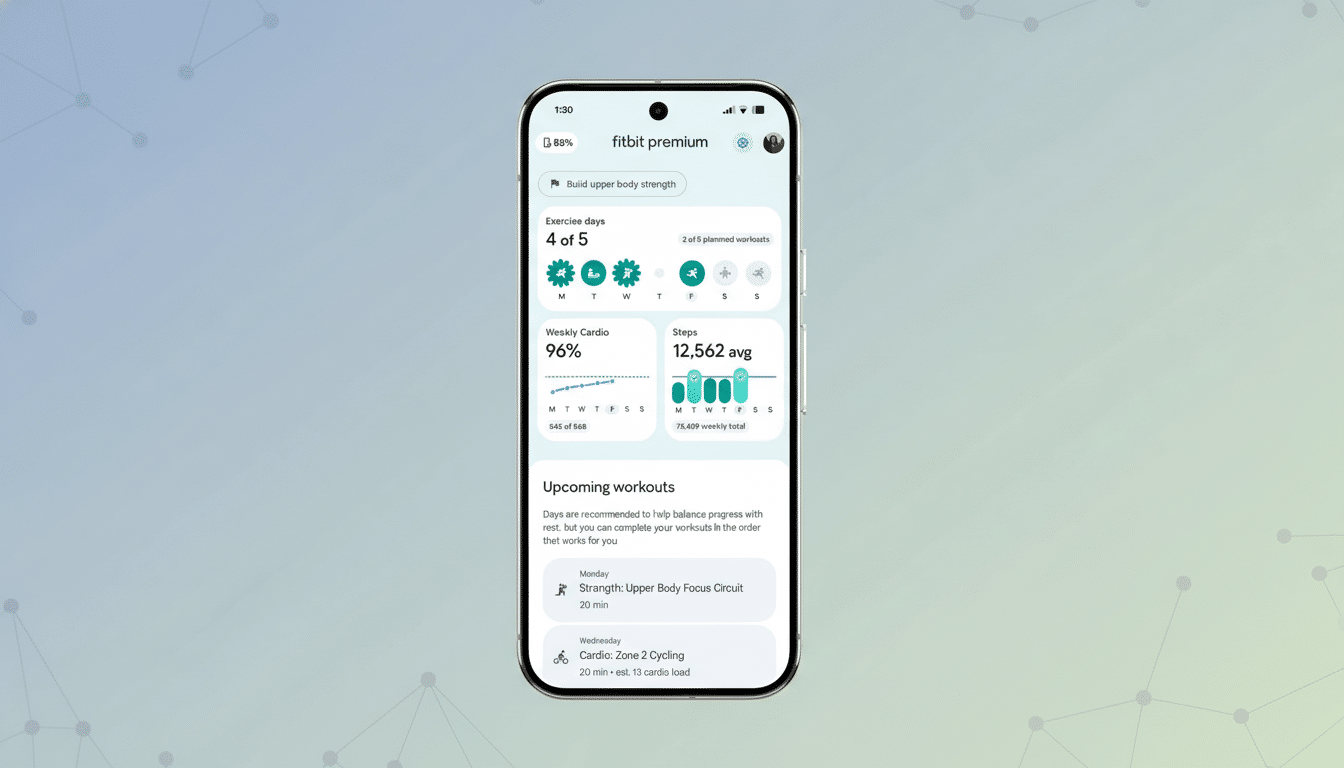
Fitbit’s personal health coach is a conversational tool that turns your daily metrics into actionable guidance. Using data already captured by your Fitbit—activity, heart rate trends, sleep stages, and recovery signals—it answers questions, builds personalized workout plans, and explains why your body might need intensity or rest on a given day.
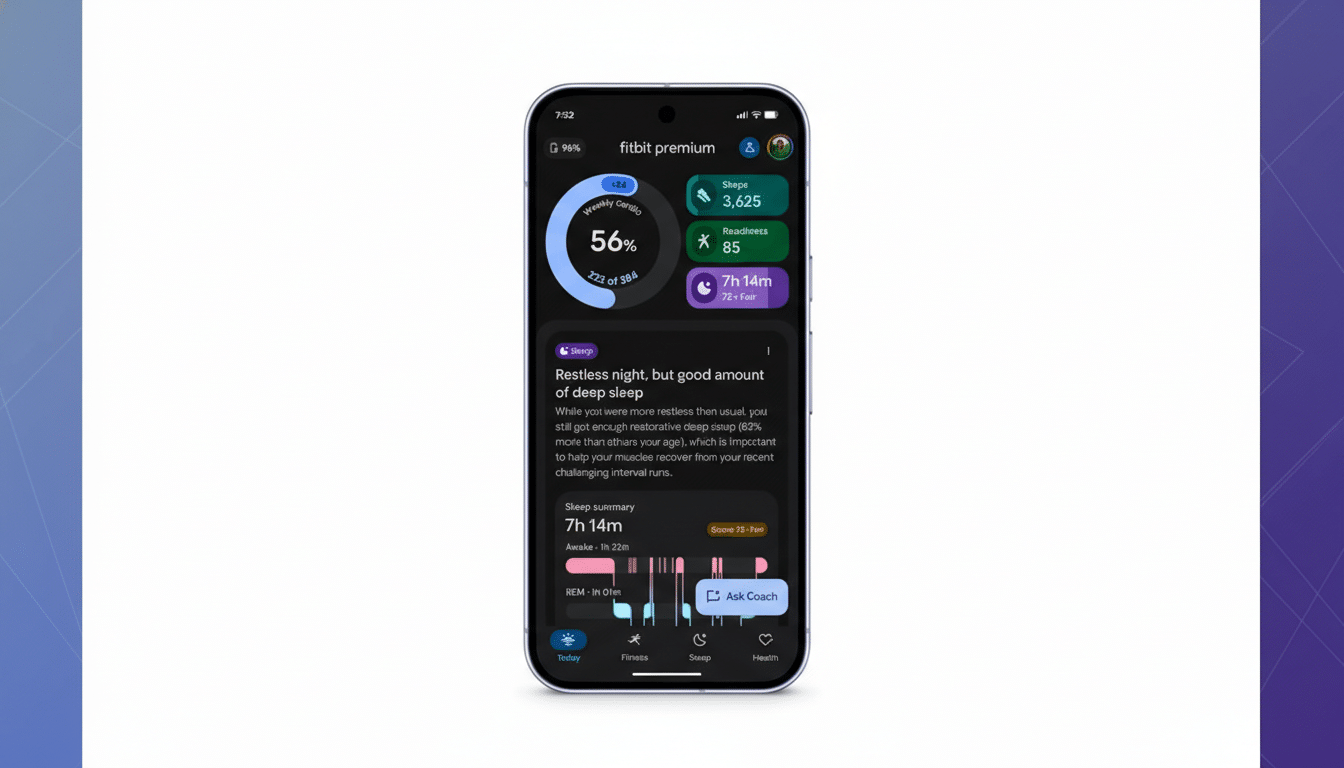
Ask about a training plateau, and the coach can correlate recent training load with metrics like resting heart rate and sleep score to suggest adjustments. If you’re ramping up for a 5K, it can assemble a progressive plan informed by your historical pace and readiness. It can also demystify numbers that users often ignore, such as heart rate variability and cardio fitness estimates, translating them into plain-language insights you can act on.
The design goal is to meet users where they are—inside the app—without forcing them to parse dashboards or browse forums. In practice, that means quick check-ins like “Why was my sleep score lower?” or “Should I swap today’s run for recovery?” receive context-aware answers grounded in your own data rather than generic health tips.
Where It’s Rolling Out And Who Can Try It
The public preview is expanding to Premium subscribers in the UK, Canada, Australia, New Zealand, and Singapore. On devices, availability now spans both Android and iOS in those countries, with iOS access also live in the U.S. As before, this is a preview, so features may evolve and the experience will continue to be refined before a broader launch.
Eligibility appears unchanged: you need a Fitbit device paired with the Fitbit app and an active Fitbit Premium membership. Users who qualify should see the feature surface through an app update and onboarding prompt. Language support is limited to English, which helps explain the initial country list and staged timeline.
Why This Matters For Wearables And Wellness
Wearables have become great at collecting data; the new frontier is making that data immediately useful. A conversational coach stitched into your daily routine is a logical step for turning numbers into nudges, especially for people who struggle to translate charts into choices. The World Health Organization recommends adults achieve at least 150–300 minutes of moderate aerobic activity each week, yet a significant share of adults fall short. Personalized, just-in-time feedback can help close that gap by reducing decision friction—what to do today, how hard to push, and when to rest.
The expansion also intensifies competition in a fast-moving category. Whoop introduced a generative AI coach to interpret strain and recovery, while established platforms like Garmin emphasize training readiness and adaptive plans without a chat interface. Apple’s ecosystem leans on Fitness+ content and trends. Fitbit’s approach combines conversational guidance with its long-standing strengths in sleep and recovery tracking, aiming to boost adherence and engagement for Premium members.
For Google, this rollout is a test of how far on-device health experiences can go without overwhelming users or overstepping clinical boundaries. Expect careful positioning: helpful for day-to-day fitness and well-being, not a substitute for medical advice. That balance will be essential as AI-driven health features scale to more markets and user profiles.
Limitations And What To Watch Next In The Rollout
This is still a preview, and it is limited by language and location. It’s not available in all regions, and the absence of non-English support narrows the addressable audience for now. As with any AI system, the quality of recommendations depends on the quality and continuity of your own data, so users who rarely wear their device or frequently edit workouts may see less precise guidance.
Privacy and transparency will remain front of mind. Fitbit data is governed by the company’s health and privacy policies, and users will expect clear explanations of what is processed, where, and why. Continued clarity about data handling—especially for sensitive health metrics—will be crucial for trust as the coach expands.
Next milestones to watch include:
- Broader language support
- Expansion to additional countries
- Deeper integrations with training plans, nutrition logging, and recovery recommendations
If early engagement is strong, the coach could become the default way many users interact with their health data—less scrolling, more conversation, and, ideally, better outcomes.
