


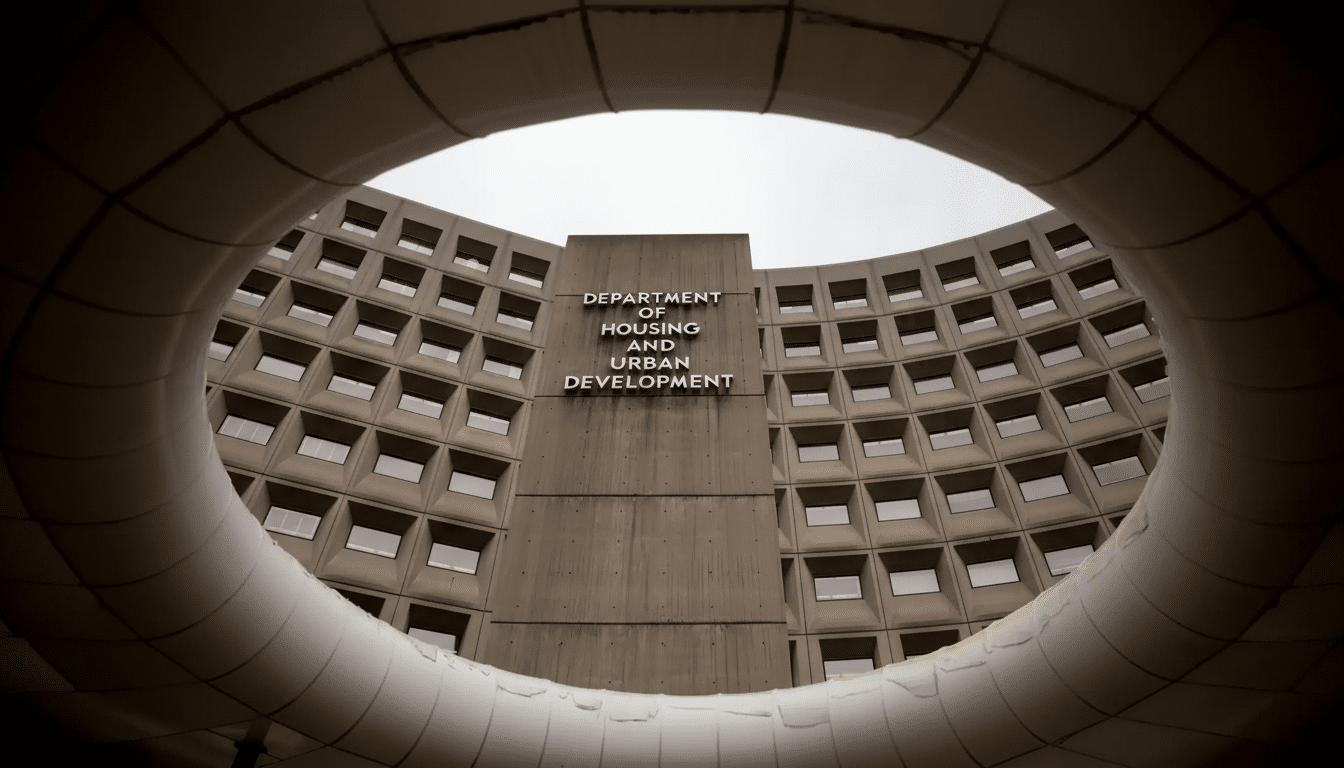
A message on an official U.S. government website accused the “radical left” of being behind a federal shutdown, in what legal experts describe as an almost certainly illegal partisan blast to the public. The message was taken down from the Department of Housing and Urban Development’s homepage, and amended later after the shutdown had started, but not before it prompted formal complaints and questions.
The consumer advocacy organization Public Citizen said it made a Hatch Act complaint against HUD’s leadership after the popup showed up. Ethics specialists say that using taxpayer-funded platforms to go after political rivals could step over some prohibitions on partisan activity by executive branch employees — even if the message doesn’t mention specific campaigns or elections.

How the HUD website message appeared and changed
The HUD homepage briefly featured a popup and red banner blaming the “radical left” for an imminent government shutdown, positioning the administration as fighting to keep the government doors open. Once the shutdown hit, that language changed, and it was then that I learned HUD could use what’s known as “recaptured funds” to help those in need even while Congress played games with government funding.
Multiple outlets reported that emails coming from the White House Office of Management and Budget conveyed a similar message to agency staff. If that coordination can be proved, it could push the Hatch Act questions to a new level because it means that the politicized message was not just the isolated post of a single office.
Why the Hatch Act likely applies to the HUD website message
The Hatch Act prohibits most employees in the executive branch from using their official authority or influence to interfere with or affect the result of a partisan political activity. The President and Vice President are not covered, but agency employees and political appointees are, and the official government website is considered a government resource.
Guidance from the U.S. Office of Special Counsel, which enforces the law, leaves no doubt that partisan messaging on official channels is prohibited. That extends to content aimed at or disparaging a party or faction. Even without a direct instruction to reelect or not, smearing opponents as shutdown enablers can be effective on a cause-and-effect level. A .gov site is the type of platform OSC has previously cautioned against in social media and communication advisories.
There is also a decades-old assumption — encoded in federal ethics rules and communications guidance — that information disseminated by government agencies be factual, nonpartisan and narrowly focused on services. Turning an agency’s homepage into a forum for political finger-pointing invites legal danger and shatters public confidence.
Enforcement mechanisms and notable Hatch Act precedents
The Office of Special Counsel investigates Hatch Act complaints and can pursue discipline by the Merit Systems Protection Board. Punishment for federal workers can range from reprimands to suspension or removal, depending on the severity and intent. Although OSC does not have authority over the President, it can punish covered officials for improperly using official resources.
Recent history suggests the law has teeth, although the outcomes have been uneven. OSC had determined in 2019 that a top White House adviser repeatedly violated the Hatch Act by blurring lines between official messaging and political advocacy, and recommended removal; while no one was removed, the episode underscored where it decided the line should be drawn. OSC generally receives hundreds of Hatch Act complaints each year, a good portion of them involving social media and digital communications — evidence that official narratives can quickly blur into the political.
And those enforcement resources matter, according to ethics advocates. “When the oversight offices are sidelined or threatened, we have abusive violations that can go without correction,” Craig Holman of Public Citizen cautioned. An extremely visible partisan banner atop a .gov homepage, he says, is the exact sort of behavior that should prompt authorities to take action quickly to stop future occurrences.
What to watch next as OSC and Congress weigh responses
Should OSC open the inquiry, investigators would examine who gave the final approval on the Department’s use of HUD messaging, whether OMB instructed similar language across agencies and if covered employees used their official authority to distribute partisan communications. The paper trail — emails, drafts and approval chains — will be key.
Congressional oversight is also possible. Committees have in the past sought records when the agency’s communications appeared political, particularly in funding fights. Should any findings emerge, the agency could take corrective actions, issue new guidelines, or have personnel consequences.
The more general problem is simple: government websites are supposed to inform and serve the public, not to promote a candidacy. An agency homepage that singles out a political “left” or “right” blurs the line between governance and electioneering — perfectly, in fact, the very line the Hatch Act was created to keep sharp.
