


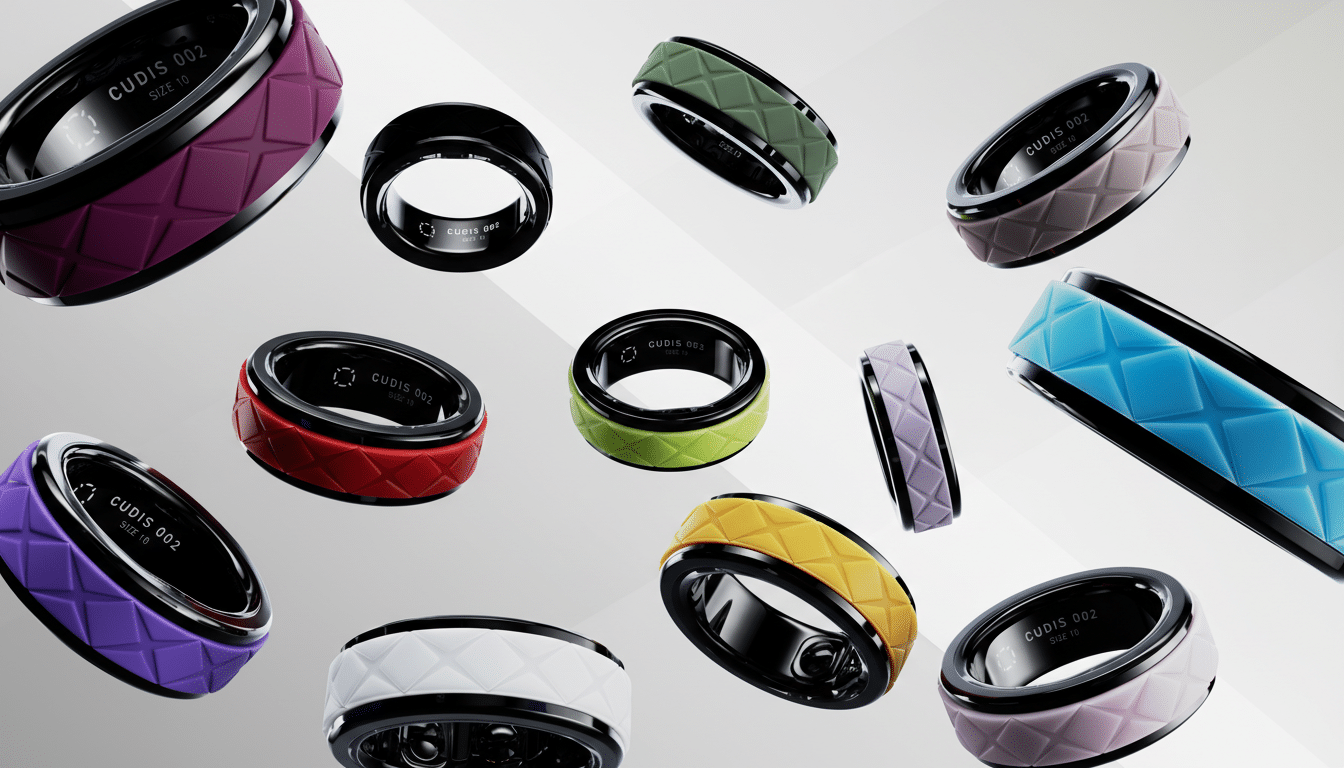
Wearables startup CUDIS is rolling out a new line of smart health rings built around an on-device and cloud-assisted AI coach that aims to do more than count steps. The system blends continuous biometrics with personalized guidance and a built-in rewards layer to nudge users toward sustainable habits, positioning the device as a behavior-change platform rather than a passive tracker.
What the New Ring Actually Does and Measures Today
At launch, the CUDIS ring monitors sleep quality, heart rate variability, resting heart rate, activity, recovery markers, and signs of stress, then rolls those signals into an adaptive plan overseen by an AI “agent coach.” The agent generates daily tasks, training and recovery protocols, and supplement suggestions, and it can escalate to licensed clinicians by directing users to professional care when trends deteriorate—think persistently poor sleep, declining HRV, or elevated resting heart rate.
Beyond standard health scores, CUDIS surfaces a Pace of Aging view, indicating whether your physiology is trending older or younger than your chronological age. The concept mirrors academic work on biological aging measures (such as DunedinPACE), but its utility hinges on the model’s transparency and calibration across populations, something prospective buyers and researchers will watch closely.
Coaching With Built-In Incentives and Rewards
CUDIS differentiates with a points economy: members earn “health points” for hitting daily sleep targets, accumulating steps, logging sports sessions, and engaging with the AI coach. Those points can be redeemed in an integrated marketplace for discounts on wellness products, creating a loop that rewards consistent behavior rather than sporadic bursts of activity.
There’s reason to think incentives matter. Randomized trials published in journals like JAMA Network Open have shown that gamification and social commitments can lift daily steps and sustain engagement when interventions are personalized and refreshed. The challenge is durability—programs that don’t adapt tend to see adherence fade. CUDIS’s bet is that a generative AI coach paired with real rewards can keep the loop novel and timely.
How It Stacks Up to Oura, Ultrahuman, and Others
Smart rings are having a moment. Oura popularized the category with deep sleep analytics; Ultrahuman has leaned into metabolism cues; and Samsung’s Galaxy Ring brought mainstream visibility. Most rivals deliver detailed metrics and insights, yet coaching often lives in static tips. CUDIS is pushing into agentic guidance—auto-generating daily playbooks, escalating care when risk rises, and adding a rewards marketplace to reinforce adherence.
If executed well, the escalation pathway could be meaningful: triaging from lifestyle tweaks to professional care when the data suggests it’s time. That said, any device broaching recommendations about supplements or medical referrals edges toward regulated territory. The company will need crisp guardrails to remain a wellness product under current guidance while ensuring users don’t mistake coaching for diagnosis.
Data Integrity and Privacy Need the Spotlight
Accuracy and explainability will matter as much as novel features. HRV and sleep staging can vary across sensors and algorithms; independent validation—ideally published or audited—builds trust. Market observers increasingly expect transparency on model performance across age, sex, and skin-tone cohorts to reduce bias in health guidance.
Privacy is equally crucial. Consumer wearables sit outside HIPAA, and regulators have scrutinized digital health apps for data sharing. The strongest approaches now include local processing where feasible, end-to-end encryption, explicit opt-ins for data sharing, and easy data export and deletion. Users will ask how CUDIS handles training data for its AI coach, whether third parties see raw biometrics, and how long records are retained.
Business Backing and Go-to-Market Plans and Outlook
CUDIS previously raised $5 million in seed funding led by Draper Associates, with participation from groups including Skybridge, DraperDragon, Monke Ventures, and Foresight Ventures. The company says a crowdfunding campaign is planned, a route that often doubles as demand testing in the hardware world while building a community around early feature feedback.
The broader wearables category remains durable, with industry trackers noting steady shipment growth and rising interest in non-wrist form factors. Rings offer 24/7 wearability and better sleep comfort than watches, a key advantage for longitudinal recovery and stress metrics. If CUDIS can pair credible biometrics with an AI coach that truly adapts and a rewards layer that keeps people coming back, it stands a chance to carve out space beside more established names.
The promise is straightforward: fewer dashboards, more decisions. The next test is whether CUDIS’s agent can turn sensor streams into timely, trustworthy actions that help users sleep better, train smarter, and intervene earlier—without overreaching on medical claims or compromising data rights.
