


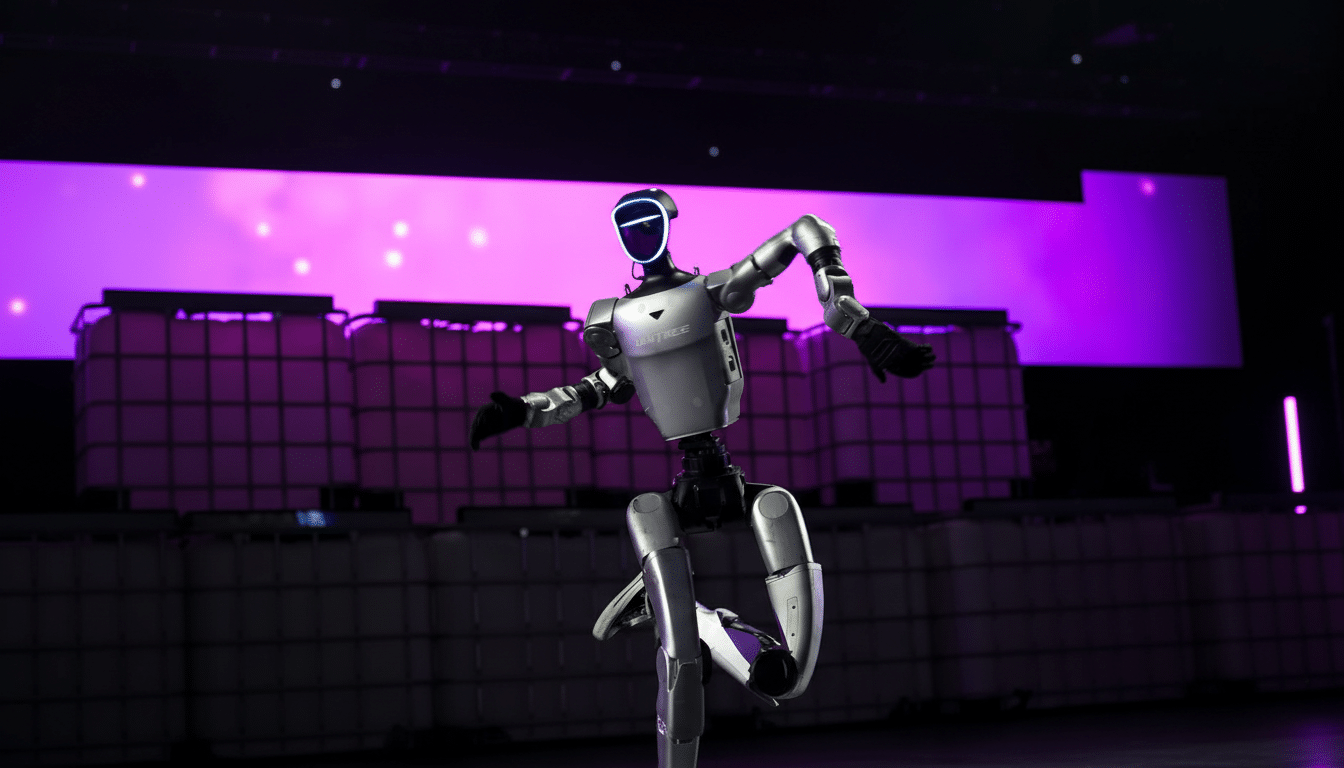
China has seized the early lead in humanoid robotics by converting a decade of industrial policy, dense supply chains, and breakneck iteration into ship-ready machines. Acrobatic stunts on national television grabbed attention, but the more consequential story is how fast Chinese firms are turning prototypes into pilots and pilots into paid deployments across factories, logistics hubs, and service environments.
The Speed-to-Scale Advantage Driving China’s Edge
Analysts tracking embodied AI say Chinese companies are outpacing U.S. rivals on speed and volume, a function of the country’s “speed-to-scale” ecosystem. Design teams sit close to actuator makers, servo suppliers, and contract manufacturers; that proximity compresses development cycles from months to weeks. One telling data point: industry watchers report Unitree shipped roughly 36 times more humanoids than well-known U.S. peers Figure and Tesla combined over the past year, underscoring a widening production gap even at this nascent stage.
- The Speed-to-Scale Advantage Driving China’s Edge
- Costs Fall as Supply Chains Align for Humanoids
- From Demos to Deployment Across Real Work Sites
- Software Is the Bottleneck to Reliable Autonomy
- Capital and Policy Tailwinds Accelerate Robotics
- Global Competition Intensifies as Rivals Scale Up
- What to Watch Next in the Race for Useful Humanoids
The cadence is not just about cranking out hardware. Fast loops with end users mean failures surface early, fixes land quickly, and models evolve with field data. That relentless iteration has created a playbook familiar from China’s smartphone and drone booms—and it travels well to humanoids.
Costs Fall as Supply Chains Align for Humanoids
China’s component stack gives local makers a pricing edge. High-torque actuators, harmonic reducers, batteries, depth cameras, and carbon-fiber parts are sourced from a vast vendor base built for consumer electronics and industrial robots. The result: lower bill-of-materials costs and shorter lead times, enabling frequent design refreshes without blowing up unit economics.
A Forbes analysis estimated global humanoid shipments at just 13,317 units recently—tiny today, yet projected to grow to 2.6 million by 2035. Within that base, shipment rankings tilt Chinese: Agibot and Unitree lead, with UBTECH, Leju Robotics, Engine AI, and Fourier Intelligence close behind. The caveat, as multiple reports note, is that not all units are commercial sales; many are demos or pilots. But even pilots matter because they build the operational data pipelines that fuel the next generation of models.
From Demos to Deployment Across Real Work Sites
What distinguishes China’s trajectory is a pragmatic focus on jobs humanoids can do today. TrendForce highlights three fertile sandboxes: industrial manufacturing, warehouse logistics, and frontline retail. These environments feature repeatable tasks, structured layouts, and long shifts—ideal conditions to prove reliability and deliver cost-per-hour advantages versus human labor.
Consumer-facing and rehabilitation use cases are rising too, helped by a domestic market willing to trial new formats. Local brands are also injecting marketing muscle—phone maker Honor teasing a humanoid at a major mobility show underlines how mainstream these machines are becoming in China’s tech narrative.
Software Is the Bottleneck to Reliable Autonomy
Hardware has leapt ahead—today’s servos and linkages can pull off feats that were research-only a few years ago—but autonomy lags. Most teams are betting on vision-language-action and “world model” approaches to let robots predict the next physical state in messy settings. Unlike language models fed by the internet, embodied AI lacks abundant, labeled physical-interaction data, forcing heavy use of simulation with careful real-world fine-tuning.
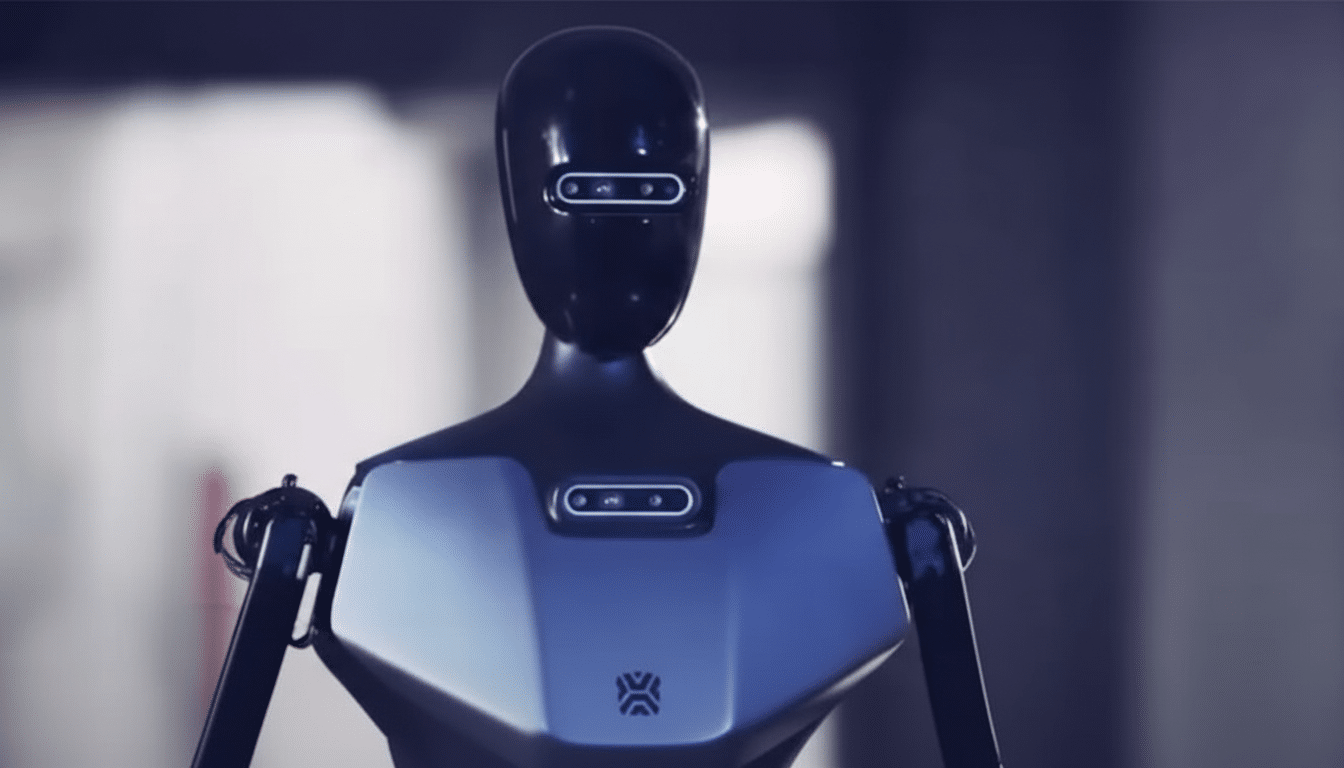
Nvidia’s stack, centered on Orin and robotics software, currently anchors many Chinese builds, according to market researchers, while domestic chipmakers race to field alternatives. Until perception, planning, and control models consistently reach high success rates across diverse tasks, widespread unchaperoned autonomy will remain out of reach—and safety will stay under close regulatory watch.
Capital and Policy Tailwinds Accelerate Robotics
Beijing’s broader industrial push, from “Made in China 2025” to local automation subsidies, has primed the pump. Private capital is following: Unitree reportedly reached about a $3 billion valuation in a recent round and is eyeing a larger public-market outcome, while Galbot raised more than $300 million at a roughly $3 billion valuation. The funding is translating into headcount, custom fabs, and pilot programs that generate the usage data everyone needs.
Crucially, the customer side is organized to buy. Tier-one auto plants, appliance makers, and third-party logistics providers are running proofs of concept with clear KPIs—mean time between failures, cost per task, and integration time with existing automation—turning flashy demos into quantifiable ROI stories.
Global Competition Intensifies as Rivals Scale Up
The race is far from one-sided. U.S. startups are shifting from viral videos to factory trials, with one venture-backed player announcing plans to build 50,000 humanoids by 2027. Hyundai Motor’s Boston Dynamics has unveiled a new Atlas for factory work, aiming for tens of thousands of units annually. Japan, long a robotics powerhouse, is pushing toward mass production by 2027 and carving out eldercare and precision-control niches, leveraging champions across components and semiconductors.
Still, China’s early lead rests on a simple equation: tight integration from lab to line. When R&D, suppliers, contract manufacturing, and end customers sit within high-speed logistics corridors, iteration compounds. That advantage is hard to copy quickly.
What to Watch Next in the Race for Useful Humanoids
Three milestones will signal the next phase.
- First, software reliability: watch for robots achieving high task success rates across varied environments without teleoperation.
- Second, cost curves: sub-$20,000 units with service contracts that undercut human labor on a per-hour basis.
- Third, standards and safety: emerging national guidelines that balance speed with public trust.
If those boxes get checked, China’s humanoid makers will not just lead the early market—they will define its benchmarks for the rest of the world.
